Review of Fahrenheit 451 (1966) by Mel V — 28 Jul 2004
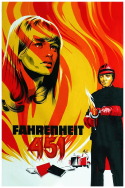
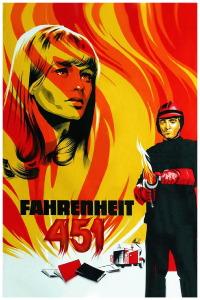
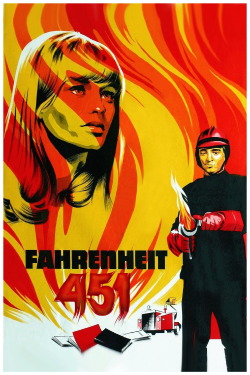
[font=Verdana]Even with Bernard Herrmann?s fantastic score, and the impressive performances by Julie Christie (as Clarisse and Linda) and Oskar Werner (as Montag), Francois Truffaut?s 1966 rendering of Ray Bradbury?s [i]Fahrenheit 451[/i] comes off extremely dated. The aged quality of the film is largely due to the absurdly plain and unimaginative sets and costumes, and not the story, which has little to be ashamed of. In its depiction of a repressive society full of psychologically fragmented individuals whose lives are dominated by television and anti-depressants, the story presents us with a world much like our own. Only, in the world of [i]Fahrenheit 451[/i] firemen no longer put out fires, they start them by burning books, houses, and occasionally people.[/font].
[font=Verdana]When I first saw [i]Fahrenheit 451[/i] I was still very young, perhaps in grade school, yet several scenes forever etched themselves into my consciousness. For me the most memorable of these imprinted scenes was a row of identical houses seen while Montag is on the run. Even as a youth I associated the memory of these houses with the nightmare of formality and systematic control, although at the time I was unsure of the source of this memory. The next scene that distressed me as a youth was the discovery of a room full of books in Clarisse?s house by Montag?s supervisor ([/font][font=Verdana]Cyril Cusack[/font][font=Verdana]) and his subsequent monolog in which he picks up a copy of Adolf Hitler?s [i]Mein Kampf[/i] and explains even this book must be burned. The last scene etched into my childhood consciousness was Montag?s discovery of the Book people, hidden in the woods at the end of the train tracks. For some reason this image, the end of the train line, has often been repeated in my own musings, like an answer to a question I forgot. I don?t know why these scenes, which I admit are hardly that interesting, made such an impact on me, only that they did.[/font].
[font=Verdana]Of course, today nothing brings me more pleasure than Montag?s torch-bearing transformation, the key to the entire film. When we first see him holding a blowtorch he is dressed in white protective gear that appears almost priest-like and ceremonial. However, when we last see him holding a blowtorch he has had a reversal of perspective, causing him to dispose of his authoritarian supervisor, his boring house, and all those so-called possessions that really [i]own[/i] him. Simply put, this is not just a film about burning books, but about a man coming alive.[/font].
This review of Fahrenheit 451 (1966) was written by Mel V on 28 Jul 2004.
Fahrenheit 451 has generally received positive reviews.
Was this review helpful?