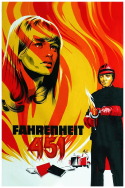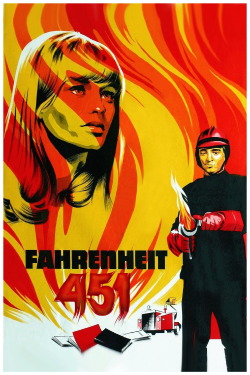
Review of Fahrenheit 451 (1966) by Ross M — 21 Jan 2011
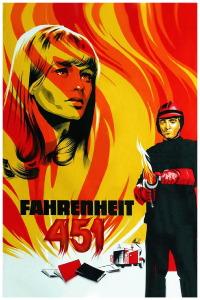
What has always impressed me about Bradbury's classic is his commitment to post-Enlightenment ideals. This film and Bradbury's novel obviously condemn book-burning. And the film lingers on the burning pages with an almost-overwrought, almost-melodramatic pathos. But it also shows Mein Kampf about to be torched. What Bradbury says is that in accordance with post-Enlightenment philosophy, when people are allowed free access to ideas, invariably the good ideas rise to the top and the bad ones fall. It is only after we trust in the goodness of human perception that we can see the burning of Hilter's work as tragic as the burning of Twain.
What I've written so far is only about the source material because that's the only part of this film I liked. We never get to see Montag's journey; he goes from book-burner to reader in the matter of a quick night and a quicker conversation.
I normally don't care about set design, but this is a shallow, half-hearted attempt at creating a Stepford Wives future, and we needed a greater commitment to this idea if Truffaut wanted to feature the design so prominently.
Finally, I was remarkable unimpressed by Oskar Werner. His command of English was a stark contrast to all the characters around him, and he remained stolid, emotionless, and ineffective throughout most of the film's action.
Overall, read the book; don't see the film.
This review of Fahrenheit 451 (1966) was written by Ross M on 21 Jan 2011.
Fahrenheit 451 has generally received positive reviews.
Was this review helpful?