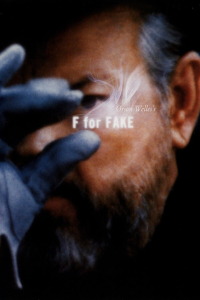
Review of F for Fake (1973) by Kenneth L — 17 Jun 2012
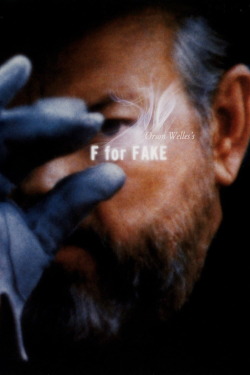
This is a truly unique, odd little movie from the vaunted Orson Welles. It's somewhat difficult to review it, since it's basically impossible to compare it to anything (the closest comparison I can think of is to Banksy's Exit Through the Gift Shop, which was made much later). It's a sort of documentary/essay by Welles on the concepts of fakery and deception. Much of it is about a couple of cases of fakery (some of the most important and famous frauds of the 20th century, actually), but the movie also incorporates a good deal of Welles's personal musings on the idea, as well as some fakery of its own.
The movie spends about its first two-thirds telling the story of two famous fakers, Elmyr de Hory and Clifford Irving. Elmyr de Hory was known as the greatest art forger of the 20th century; he could easily, almost effortlessly, reproduce the styles of many famous painters, and he could do it so well that museums routinely bought his works as if they were originals with no questions asked. He apparently even fooled one actual artist into believing that he himself had painted what was actually a fake. Clifford Irving, who wrote a biography of Elmry de Hory, was also a very famous fraud in his own right for producing the ostensible autobiography of famous movie producer Howard Hughes. (The story of Irving's fraud was adapted into the film The Hoax with Richard Gere, and Hughes's life was portrayed in Martin Scorsese's film The Aviator.) Welles tells the stories of both of these guys, and then (spoiler alert) does a little fraud of his own with a made-up story about Picasso and Oja Kodar (who was actually Welles's girlfriend).
Welles's technique in telling these stories is so technically dazzling, so intricate and so constantly playful, that you're left wondering what precisely it is that you've seen, or if indeed you've really seen anything at all. He edits the film with the flair of a magician or a guy performing an incredibly confident shell game. Welles's famous ego is all over this movie. There are a lot of scenes of Welles himself talking directly to the camera, sometimes while sitting in the editing room, ostensibly putting together the movie as we're seeing it. It's quite an impressive cinematic performance. As long as you're willing to go along with what Welles is doing here, you'll probably enjoy it (or at least not forget it anytime soon).
This review of F for Fake (1973) was written by Kenneth L on 17 Jun 2012.
F for Fake has generally received very positive reviews.
Was this review helpful?