Review of Exodus: Gods and Kings (2014) by Agarcia732 — 20 Dec 2014
First of all, I’m Christian. Nevertheless, simply because Exodus: Gods & Kings strays a bit from the Biblical account doesn’t mean I’m going to dismiss it. Us religious people shouldn’t be so seemingly harsh on E:G&K, because it kind of paints us in a bad light. (Ex: religious fanatics can’t tolerate the slightest bit of change!) Now, because so many hate on the film due to its differences with the Bible, I’m going to discuss what’s different.
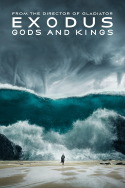
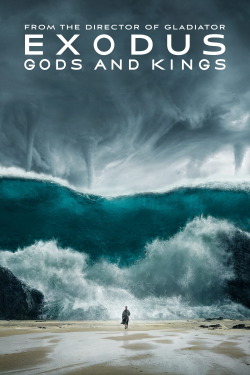
Early on in E:G&K, Moses is depicted as an experienced warrior with a sword. He later displays conflicted feelings, argues with God, and questions the severity of the plagues God inflicts on Egypt. Unlike the Bible, in E:G&K, Moses isn’t slow of speech and slow of tongue and doesn’t have his brother Aaron as his spokesperson. Unlike the movie, Moses is portrayed in the Bible as a “a quiet but firm shepherd--one who delivered his people from slavery with a staff and God’s plagues, not an Egyptian sword.” In the movie, Moses and his generals (who lead their own makeshift army) at one point prepare to hold-off the first wave of Pharaoh’s army. But Moses never created a Hebrew fighting force to combat the Egyptians.**E:G&K also shows its antagonist, Ramses, in a positive and humane light. (It should be noted that the ruling Pharaoh during the time of Exodus is never named in the Scriptures.) He is shown to refuse letting the Israelites go partly because he “doesn’t believe that Egypt could survive the loss of its primary labor force”—the enslaved Israelites. E:G&K shows “the challenges of Ramses’ predicament: the Egyptian gods were not responding–while the Hebrew god was terrorizing the Egyptian people with one terrifying and deadly plague after another.” He was probably torn and conflicted over what he should do. Later, Ramses doesn’t decide to chase after the Israelites and Moses until after his dead baby (killed by God in the final plague) is being mummified and placed in its coffin.**In E:G&K, God leaves Moses on his own; he lets Moses make most of the decisions, and he doesn’t offer much in the way of advice and guidance. In the Scriptures, Moses is instructed by God what to do, and he and Aaron actively are a part of the Plagues (sometimes beginning them). In the Bible, the 10 Plagues are shown as separate, God-derived events but in the movie they are shown to be connected to each other in a series of (slightly improbable, yet supposedly more ‘realistic’) events with a cause-and-effect relationship. When Moses and the Hebrews arrive at a seemingly dead end (trapped between Ramses’ army and the Red Sea), Moses throws his sword in the sea in anger and frustration-and the water then begins to recede because of this. The Israelites are afraid but show faith and follow Moses. Moses and Pharaoh both never are assaulted by a big wave in the climax of the parting of the Red Sea, only for both to survive. Moses leaves Egypt unscathed, and the Pharaoh dies by drowning.
Despite these changes, I don’t believe that this is some deeply offensive Hollywood abomination--it’s just a movie adaptation of a novel. And with most adaptations, changes are made to help the movie become a smoother (more slick and streamlined) cinematic tale. “Viewers at extreme ends of the audience (those hoping for a close adaptation or a drastic reimagining) may find that Scott has either taken too many or not enough liberties with the events of Exodus.” Me? If he was going to adapt it, I wouldn’t want something exactly the same as something I’ve already read. I’d want some new material that is within the spirit of the text source. I’d want changes made that make things a little different and interesting, yet nothing that completely changes the whole theme/idea of the text. The movie has nice CGI, and the scenery/costumes are great. I personally think they could’ve cast more people who weren’t white and still get the movie financed. (Scott said it would’ve been impossible to make the film with mostly black actors and get the film financed, but I think that’s BS.) Despite it’s long run time, almost all the characters in the film are somewhat one-dimensional. The actors do fine but high-profile acting talent is wasted, and G&K’s biggest problem is that there isn’t enough character development. The fact that Moses and Ramses grew up as brothers yet turn on each other so quickly isn’t believable. The 2nd biggest problem is that E: G&K is way too dark, moody, and gory/violent all the time--for what should be an awe-inspiring tale of hope. Yet, I like that Scott depicted the events of Exodus in a cynical, realistic way as he tried to get viewers to challenge their perceptions of the events of Exodus. E:G&K’s “storyline is mostly in step with the fundamental message and themes of the Hebrew scriptures–but placing added emphasis on Moses’ personal doubts and the horror of God’s violent crusade to punish the Egyptians. E: G&K is a tale of relatable faith in a world where things aren’t black and white.
This review of Exodus: Gods and Kings (2014) was written by Agarcia732 on 20 Dec 2014.
Exodus: Gods and Kings has generally received mixed reviews.
Was this review helpful?