Review of End of Watch (2012) by Ola G — 12 Sep 2015
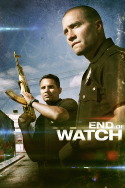
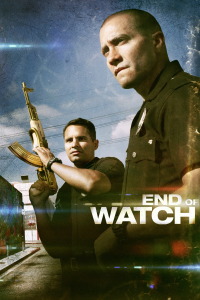
Brian Taylor (Jake Gyllenhaal) and Miguel Zavala (Michael Peña) are close friends and partners in the Newton Division of the Los Angeles Police Department (LAPD) in South Central Los Angeles. Taylor, a former Marine, is recording their police activities for a film project. Upon responding to a public disturbance call, Tre, a Bloods gang member, yells racist insults at Zavala, who responds by accepting a fight. Zavala beats and arrests him, but wins Tre's respect for not charging him with assault. Later that night, Tre and his fellow Bloods gang members are attacked by a group of Sureños in a drive-by shooting and one of Tre's friends is killed. The next day, the officers respond to a noise complaint at a house party full of Sureños, where Taylor encounters a gang member named Big Evil, whose truck he later finds is filled with ornately-decorated firearms and a large amount of money.Taylor and Zavala are awarded the Medal of Valor after rescuing two children from a house fire. Upon further investigating a house, they arrest a man who is also in possession of several ornate firearms, and is guarding a cell full of human trafficking victims. When ICE agents arrive, one agent informs the officers that the house is tied to the Sinaloa Cartel, and strongly urges them to "lay low" due to possible reprisals. Unfortunately, the Sinaloa Cartel is not impressed by Taylor and Zavala´s constant interfering with their criminal activities so they orders their deaths...
Writer/Director David Ayer is a master of "realistic" and gritty violent dramas often putting you more or less in the line of fire together with the actors. "End Of Watch" is another great example from Ayer shot in a Cinéma vérité style. The film was shot in a combination of found footage style and traditional photography. Most scenes were captured by four cameras simultaneously these included a handheld camera operated by Gyllenhaal, cameras clipped to Gyllenhaal and Peña's vests, and dashboard footage from their patrol car. Some scenes were shot entirely by Gyllenhaal. This creates such a dynamic and "alive" production with a feeling of a FPS game as well. The "authenticity" is for sure upgraded due to the fact that as part of their training, Jake Gyllenhaal and Michael Peña spent five months doing 12-hour ride-alongs with on-duty LAPD officers. Unlike many other cop dramas, "End of Watch" addresses the daily challenges of patrolling the mean streets of South Central and the comradery between the main characters. Initially the film is a bit disjointed and "messy" due to the conceptual camera work, but once you have gotten used to the this cinematic method, it truly fits this sort of film. The performances from all involved are strong and you truly believe in the bond and friendship between Taylor and Zavala. Roger Ebert of the Chicago Sun-Times gave the film 4 out of 4 stars, calling it "one of the best police movies in recent years, a virtuoso fusion of performances and often startling action", and went on to name the film the fourth best of 2012. Entertainment Weekly´s Lisa Schwarzbaum, who gave the film an A-, described it as "one of the best American cop movies I've seen in a long time [and] also one of the few I've seen that pay serious attention to what cop life feels like, both on and off duty". "End Of Watch" is dark, brutally violent, and carries strong emotional scenes with impact. The film has its flaws with some clichés and racially stereotypical characters, but that doesn´t create an unbalance in my point of view.
This review of End of Watch (2012) was written by Ola G on 12 Sep 2015.
End of Watch has generally received very positive reviews.
Was this review helpful?