Review of El Cantante (2006) by Kaarla O — 25 Aug 2007
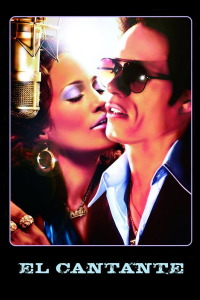
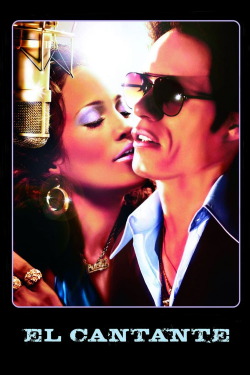
This movie is the story of Hector Lavoe's rise to fame and eventual downfall from the point of view of Puchi, his wife and companion of over 20 years. A lot was sacrificed in the telling of this story for the sake of time, and there are things that were left unsaid and unseen that shouldn't have been, like the fact that Hector and Puchi had other children besides Tito, but we never see any of them in the movie.
The narrative is hardly linear; it plays back and forth with flashbacks (most of the screenplay is based on an interview with Puchi in 2002) that start from Puchi's memory of the events. That's important to remember when critiquing this film, because it is NOT intended to be a sweeping history of salsa; that has been done before in various documentaries. I understand that "Son Sabroson: Antesala de la Salsa" is supposed to be one of the most complete of these, tracing the roots of salsa in the African and Cuban rhythms, and from there to New York and Puerto Rico.
That said the best feature of this film is its soundtrack. The sound is excellent, and the musical arrangements by Mr. Willie Colón are top notch. Mr. Marc Anthony's rendition of Lavoe's vocals was very good, capturing the subdued feeling of his voice without actually imitating it.
The movie doesn't explore directly the phenomenon of Latin influence in American pop music, but throughout the film the viewer gets a sense of the forever-expected Latin music explosion in the United States, which finally started with hits from Fania Records stars like Hector Lavoe, Celia Cruz, Ismael Miranda, etc. Their revolution was in Spanish and only reached Spanish-speaking people in the United States, but it was largely because of their efforts that Latin-influenced pop music by Hispanic artists of today like Shakira, Paulina Rubio, Ricky Martin and the stars of this movie themselves is being consumed by the millions in mainstream America; whether or not it's a blessing, only time will tell.
The acting was good, but inconsistent; at times I could completely forget who the actors were and immerse myself in their characters, but at other times the illusion was broken: in the case of Marc Anthony, because of his nervous tics; in the case of Ms. Jennifer Lopez, because of her sometimes unconvincing tone of voice in more subtle scenes. However, Marc Anthony's onstage performances were thrilling, and those were the moments when he truly shined. Their chemistry together is undeniable throughout the film, and it lessens the flaws of their individual characterizations. The other actors --most of whom, I confess, I had never seen until now-- did a lot with little that was given them, especially Mr. Nelson Vasquez in his role as Johnny Pacheco.
The translation and subtitles of the songs Lavoe sings throughout the film were a little distracting, but necessary for non-speakers of Spanish in order to follow the lyrics, since every new song introduces another dimension of Lavoe's personal life. The main song in the film and the one which gives it its title, "El Cantante", is ironic and bittersweet: while Lavoe brought happiness and joy to millions with his music, he was only expected to sing and entertain, but not allowed to express discomfort to his public at any time. There is a wonderful scene in the movie which offers a revealing contrast with artists of today, where Lavoe states how private his and Puchi's lives were kept, and how no one outside their inner circle knew about his troubles and torments.
Many salsa singers from Puerto Rico were upset by the film's emphasis on Lavoe's drug abuse, but since it was such an Achilles' heel for him, and what eventually caused his fall from grace, it is important to dwell on it. Many of these singers have had (and some still have) trouble with drugs themselves, so I guess that seeing their own behavior reflected on the screen struck a chord with them. I'm speculating, of course I could be wrong...
A curious factoid from the film is that it was directed by CUBAN-American director Mr. Leon Ichaso ("Piñero" -- another film about a tortured Puerto Rican artist--, "Sugar Hill", etc.) who was also one of the screenwriters. In the film, salsa is conveyed as a purely Puerto Rican and Nuyorican invention when, as mentioned above, it was not. I guess since Ms. Lopez was co-producing the film, Mr. Ichaso had to compromise (how often do you see something like THAT?:-).
This review of El Cantante (2006) was written by Kaarla O on 25 Aug 2007.
El Cantante has generally received mixed reviews.
Was this review helpful?