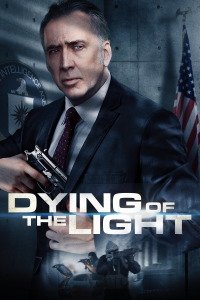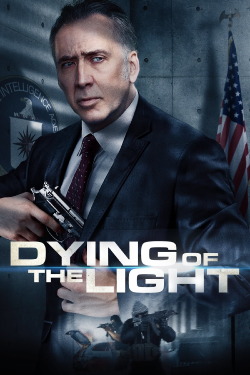
Review of Dying of the Light (2014) by Devilmath — 26 Sep 2015
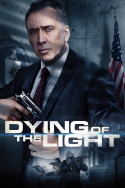
Once upon a time, there was a film called Dying of the Light. Nicolas Winding Refn was supposed to direct, the script was written by Paul Schrader, and the lead actors should have been Harrison Ford and Channing Tatum. The story revolved around the revenge quest of a terminally ill CIA agent gone rogue, trying to track down a terminally ill terrorist who’d tortured him years before. It looked like a linear, unavoidably cheesy action flick, with a medical race against time to add a bit of zest. Then Ford left due to creative differences, and the project went back to square one. Schrader got promoted to director, and Refn stayed as executive producer. Nicolas Cage was cast, and suddenly Dying of the Light became widely known as “Nicholas Cage’s Dying of the Light”, inspiring more of the tongue-in-cheek comments and contemptuous cold-shouldering that have been chasing the erratic Leaving Las Vegas actor in the recent past. Despite having given top-notch performances for the best part of his career, Cage will be forever remembered as the guy shouting “Not the bees!” in the infamous scene from The Wicker Man (2006); a blunder the Internet will never forgive him. Schrader, too, had his share of highs and lows. Famous for writing Scorsese’s Taxi Driver and Raging Bull, he is also known for more recent and less noteworthy directorial experiences, including The Canyons (starring Lindsay Lohan), and a prequel of The Exorcist you don’t want to watch.
Up until then, Dying of the Light had been no bed of roses, but still had the potential to be a decent film. Anton Yelchin (Star Trek) completed the cast, horror-fan Gabriel Kosuth joined as cinematographer, and shooting started. The real troubles began when Schrader submitted the first cut to the studio. Wordy notes from the producers started coming in, asking for changes and new cuts, pointing out that the film was much different from what they’d initially greenlit. According to Schrader, however, he was simply locked out of the editing process and “never asked back”. The pitiful catfight carried on, with the producers trying to play down their hijacking, and Refn (still attached as executive producer) openly siding with the director and talking of “artistic disrespect”. To escalate the drama, Schrader posted on his Facebook page a picture of himself, Cage, Yelchin and Refn wearing black printed T-shirts with their contract’s non-disparagement clause. His comment was: “The non-disparagement clause in an artist's contract gives the owners of the film the right to sue the artist should the owner deem anything the artist has said about the film to be 'derogatory'. I have no comment on the film or others connected with the picture”. I think what we have here is the workbook definition of “PR disaster”.
After a minuscule theatre release, Dying of the Light is now available on VOD and DVD. It might go without saying, but it’s far from satisfying. Cage’s character is an incoherent caricature, his acting and lines are all over the place; Yelchin too is completely implausible as a CIA operative, and the plot is far-fetched, mostly rattled off in ad-hoc character dialogues. The pace is thoroughly inconsistent and the third act is idiotically cut, with the climax scene repeated twice for no other purpose than showing a laughable action sequence with cap guns. How curious; who would have thought that the studio wouldn’t be able to make a better film than its director, after unilaterally taking control in post-production? An eye-opening consideration came from Kosuth’s comment in a Variety article: “I'm trying to understand why would someone deliberately ruin such a visual expression. Just because it's possible? Why would someone damage something achieved with unknown effort and sleepless nights? Just because there are people today who cannot take a human activity called artistic creation seriously?”. If anything, Dying of the Light will live as another meaningful chapter in the “cinema gone wrong” series.
This review of Dying of the Light (2014) was written by Devilmath on 26 Sep 2015.
Dying of the Light has generally received negative reviews.
Was this review helpful?