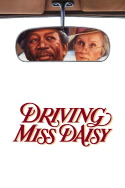
Review of Driving Miss Daisy (1989) by Harry W — 11 Dec 2017
Winning the Academy Award for Best Picture and led by a performance from Morgan Freeman, Driving Miss Daisy sounded like an entertaining romp.
The central problem in Driving Miss Daisy is the fact that the story development, or lack thereof, is really poor. There is no real consistency in the narrative as the story unfolds without much of a direct path, opting instead to go into a series of vignettes built on characterizing the relationship between Hoke Colburn and Daisy Werthan without much consistency with story development. Driving Miss Daisy is not a film about story, it is one about characters. As the relationship between them is explained and they personally develop through all the banter that they share there is a constant sense of comic charm while the drama in the film takes a back seat to it, but it just doesn't seem like enough. The film is all about the main two characters who are both stereotypes which means that the precise level of meaningfulness in them is limited primarily to the comedic gimmick. Because of this, when Driving Miss Daisy makes its half-assed attempts to be dramatic, all it does is clash with the comic themes of the film.
The problem I found with Driving Miss Daisy was that it played it too safe with its racial themes and turned them simply into an overly tame sense of comedy. It is a very light film which ignores most of the dramatic material, so the fact that it even bothers with it is puzzling to me. Driving Miss Daisy is a very simple film, mostly a comedy but with subtle elements of drama which it failed to capitalise on, and I can deal with that. But my expectations for it were too high. Why? Because Driving Miss Daisy won the Academy Award for Best Picture, among three others. I don't think it is too much to ask that a film which receives such acclaim and recognition to be insightful or well structured, but that is simply not the case. Driving Miss Daisy lies mainly in the heart of two characters who change as their relationship develops, but the story does not develops with it and instead cuts between several periods of time without much in the way of a valid transition. The film is poorly structured, and despite the screenplay being rich with intelligent banter and some funny moments, it comes up short in the story department. I really didn't learn anything I didn't already know from Driving Miss Daisy, it simply took elements that I had seen in other films and churned them out for comic benefit. It succeeded at that, but only to a very tame extent while ignoring its dramatic potential or going to any sort of edgy extent.
The humour in Driving Miss Daisy is built on the clash of character stereotypes: the grouchy old Caucasian woman and somewhat uneducated yet wise African-American man. The banter they go through as a certain distinctive charm to it, but the PG rating of the film limits its ability to really capitalise on many themes of racism in a humourous manner that much of the time, instead paving the way to do it in a strictly dramatic one. It does so in an effective way, but since Driving Miss Daisy wants to be a warm film which balances both comedy and drama, the fact that the comedy in the film failed to take advantage of its potential made it a rather tame film in parts. It is mostly well scripted, but it truly had the potential to be so much more. The fact that it didn't reach the heights it could have yet still went on to win so many awards really puzzles me. If anything, Driving Miss Daisy just feels dated now and is clearly not going to touch viewers today in the same way that it did once upon a time.
But still, there is no denying that Driving Miss Daisy is a stylish film which is good looking and acted excellently.
Although the character Morgan Freeman portrays in Driving Miss Daisy has moments of going into very racially stereotypical territory, as a whole he makes a likable presence as the lead in Driving Miss Daisy. He makes use of that stereotypical element as a way of projecting the lack of education that Hoke Colburn has received while also using his wisdom, honesty and charisma to project a sense of likability. He genuinely makes a strong character out of the stereotype by putting genuine spirit into the role and interacting with the surrounding cast with a real sense of energy, making the film worth the viewing.
Jessica Tandy also makes an interesting lead. Taking on the archetype of the bitter old Caucasian woman, Jessica Tandy gradually breaks free of the limitations put in place by that and develops in the part. Jessica Tandy is always a fairly funny figure in her role as the titular Miss Daisy, and she gradually puts more meaning into the part as it progresses. She becomes more likable and adds a stronger touching sentiment to the film as it goes through the themes of racism in the tale. She really plays the part with a sense of determination because the elements of grouchiness in her character and her interactions with Morgan Freeman really come off as strong. Her dedication to the role comes off successfully, and so she makes a strong duo with Morgan Freeman.
Dan Akroyd also delivers a nice supporting effort, playing a likable role as the disgruntled son of Daisy Werthan who has to put up with all of her annoying banter in a funny and entertaining fashion.
So Driving Miss Daisy is a somewhat funny film with strong performances from Morgan Freeman and Jessica Tandy who share a strong chemistry as their archetypes clash on screen, but the humour is as tame as the drama while the story has no development and is poorly structured, making the entire feature feel rather dated.
Winning the Academy Award for Best Picture and led by a performance from Morgan Freeman, Driving Miss Daisy sounded like an entertaining romp.
The central problem in Driving Miss Daisy is the fact that the story development, or lack thereof, is really poor. There is no real consistency in the narrative as the story unfolds without much of a direct path, opting instead to go into a series of vignettes built on characterizing the relationship between Hoke Colburn and Daisy Werthan without much consistency with story development. Driving Miss Daisy is not a film about story, it is one about characters. As the relationship between them is explained and they personally develop through all the banter that they share there is a constant sense of comic charm while the drama in the film takes a back seat to it, but it just doesn't seem like enough. The film is all about the main two characters who are both stereotypes which means that the precise level of meaningfulness in them is limited primarily to the comedic gimmick. Because of this, when Driving Miss Daisy makes its half-assed attempts to be dramatic, all it does is clash with the comic themes of the film.
The problem I found with Driving Miss Daisy was that it played it too safe with its racial themes and turned them simply into an overly tame sense of comedy. It is a very light film which ignores most of the dramatic material, so the fact that it even bothers with it is puzzling to me. Driving Miss Daisy is a very simple film, mostly a comedy but with subtle elements of drama which it failed to capitalise on, and I can deal with that. But my expectations for it were too high. Why? Because Driving Miss Daisy won the Academy Award for Best Picture, among three others. I don't think it is too much to ask that a film which receives such acclaim and recognition to be insightful or well structured, but that is simply not the case. Driving Miss Daisy lies mainly in the heart of two characters who change as their relationship develops, but the story does not develops with it and instead cuts between several periods of time without much in the way of a valid transition. The film is poorly structured, and despite the screenplay being rich with intelligent banter and some funny moments, it comes up short in the story department. I really didn't learn anything I didn't already know from Driving Miss Daisy, it simply took elements that I had seen in other films and churned them out for comic benefit. It succeeded at that, but only to a very tame extent while ignoring its dramatic potential or going to any sort of edgy extent.
The humour in Driving Miss Daisy is built on the clash of character stereotypes: the grouchy old Caucasian woman and somewhat uneducated yet wise African-American man. The banter they go through as a certain distinctive charm to it, but the PG rating of the film limits its ability to really capitalise on many themes of racism in a humourous manner that much of the time, instead paving the way to do it in a strictly dramatic one. It does so in an effective way, but since Driving Miss Daisy wants to be a warm film which balances both comedy and drama, the fact that the comedy in the film failed to take advantage of its potential made it a rather tame film in parts. It is mostly well scripted, but it truly had the potential to be so much more. The fact that it didn't reach the heights it could have yet still went on to win so many awards really puzzles me. If anything, Driving Miss Daisy just feels dated now and is clearly not going to touch viewers today in the same way that it did once upon a time.
But still, there is no denying that Driving Miss Daisy is a stylish film which is good looking and acted excellently.
Although the character Morgan Freeman portrays in Driving Miss Daisy has moments of going into very racially stereotypical territory, as a whole he makes a likable presence as the lead in Driving Miss Daisy. He makes use of that stereotypical element as a way of projecting the lack of education that Hoke Colburn has received while also using his wisdom, honesty and charisma to project a sense of likability. He genuinely makes a strong character out of the stereotype by putting genuine spirit into the role and interacting with the surrounding cast with a real sense of energy, making the film worth the viewing.
Jessica Tandy also makes an interesting lead. Taking on the archetype of the bitter old Caucasian woman, Jessica Tandy gradually breaks free of the limitations put in place by that and develops in the part. Jessica Tandy is always a fairly funny figure in her role as the titular Miss Daisy, and she gradually puts more meaning into the part as it progresses. She becomes more likable and adds a stronger touching sentiment to the film as it goes through the themes of racism in the tale. She really plays the part with a sense of determination because the elements of grouchiness in her character and her interactions with Morgan Freeman really come off as strong. Her dedication to the role comes off successfully, and so she makes a strong duo with Morgan Freeman.
Dan Akroyd also delivers a nice supporting effort, playing a likable role as the disgruntled son of Daisy Werthan who has to put up with all of her annoying banter in a funny and entertaining fashion.
So Driving Miss Daisy is a somewhat funny film with strong performances from Morgan Freeman and Jessica Tandy who share a strong chemistry as their archetypes clash on screen, but the humour is as tame as the drama while the story has no development and is poorly structured, making the entire feature feel rather dated.
This review of Driving Miss Daisy (1989) was written by Harry W on 11 Dec 2017.
Driving Miss Daisy has generally received very positive reviews.
Was this review helpful?