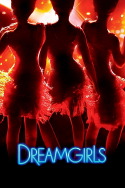
Review of Dreamgirls (2006) by Markbayer — 15 Feb 2007
It's sad that much of the current discussion involving this picture centers on how its snub in the Best Picture Oscar nominations indicates the end of the overly agressive, "we'll tell you what the best film is, it's ours" approach to Academy Award promotions and campaigning.
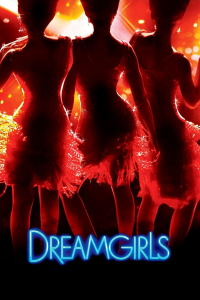
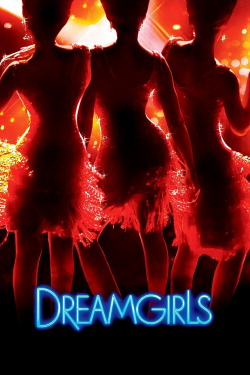
While it's comforting (if ultimately self-defeating) to believe that modern-day equivalents of The Alamo, Cleopatra, Doctor Doolittle and The Towering Inferno no longer stand a chance in the top race, the truth in this case remains that occasionally the publicity machine turns out to be right, that the Academy's adolescent nose-thumbing in favor of movies with lower-key stealth campaigns resulted this year in honoring such unworthy contenders as the admittedly well-made but seemingly endless globe-trotting depress-o-thon and the likable but wildly overrated National Lampoon's Vacation clone, and that, except for United 93, Dreamgirls IS the best film of 2006.
In fact, it's the best American nonanimated musical movie since Cabaret. (Not that there's been much real competition: Rent was clunky, The Producers clunkier, Moulin Rouge! plain obnoxious, Grease accurately labeled by Pauline Kael as a "klutzburger", and Chicago.
..well, more about that later.) Writer-director Bill Condon, adapting Tom Eyen's and Henry Krieger's Broadway hit roman a clef dealing with the rise of pop/ R&B girl group The Dreams (based of course on You-Know-Who and The You-Know-Whats, despite all the denials) brings the same incredible roller-coaster pacing and propulsion that made his 2005 film biography of Dr.
Alfred C. Kinsey so powerful (OK, maybe this has a couple of montages too many, but why complain about too much of a good thing?) giving this movie not only an epic feel but also making it one of the fastest two-hours-plus I've ever spent in a theater.
Jamie Foxx, as The Dreams' boundlessly unscrupulous manager, proves to be such an effectively despicable movie slimeball that I genuinely fear that his performance here will effectively limit some of his future choices of roles; Anika Noni Rose provides delightful comic relief as the "third" member; Beyonce Knowles as the cagily-promoted lead singer not only proves that she really CAN act (which The Pink Panther and Austin Powers in Goldmember certainly didn't) but her courage in allowing herself to be described in a certain way at a key moment is, in light of her ongoing musical success, remarkably admirable.
Oscar DID get the movie's two acting nods right: Eddie Murphy, as the record label's brilliant but mercurial and immature male star, displays depths of talent and versatility that all the Norbits and Pluto Nashes in the world can't erase.
And Jennifer Hudson, as The dreams' rightful lead singer, who's unjustly shunted aside for (to put it crudely but frankly) being too fat and singing too Black, is a force of nature whose power isn't at all limited to her breathtaking, already legendary rendition of "And I Am Telling You I'm Not Going"; the hugely emotional and demonstrative response she received from the mostly White patrons at my showing indicates that this is a performance whose richness cuts across all racial barriers.
Dreamgirls' abrupt, mid-movie shift from being an "organic; movie musical (in which the characters only sing in situations that would realistically call for it) to a traditional one (in which they burst into song at any given moment) has been the source of much criticism but to me is one of its greatest strengths: after the Condon-written Chicago's gambit of hedging its bets by placing all the musical numbers "inside Roxie's head" it's a joy to watch a musical that proudly and fearlessly admits it IS one.
And while it's fun to identify all the real-life musical references (James Brown, Marvin Gaye, Donna Summer and even Jim Morrison among many others are catalogued) Dreamgirls also provides the sobering reminder of a truth that we pop culture fans so often forget: thar every successful record, movie, TV show or other endeavor is the result of somebody getting hurt or excluded.
2006 has seen a lot of mainstream advocacy filmmaking, but most of it has consisted in my case of preaching to the choir: I don't drive a car or buy jewelry so An Inconvenient Truth and Blood Diamond caused me to change very little of my behavior because I was already doing what they wanted.
But Dreamgirls, because of its power and passion (and in particular that of Murphy's and Hudson's work) has gotten me to make one very significant change: since seeing it I've been listening to my Motown anthologies a little bit less and my Stax compilations quite a bit more.
This review of Dreamgirls (2006) was written by Markbayer on 15 Feb 2007.
Dreamgirls has generally received positive reviews.
Was this review helpful?