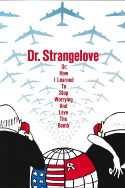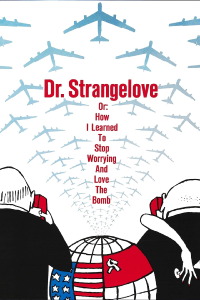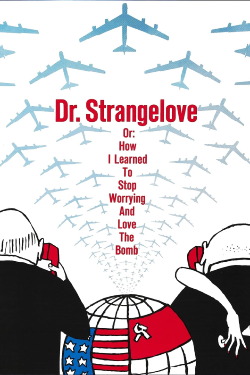
Review of Dr. Strangelove or: How I Learned to Stop Worrying and Love the Bomb (1964) by Tjman09 — 21 Oct 2015
Out of one of the most tense times in U.S. history came one of the more crude and witty satires on the U.S. approach and policies. The film was a spoof of the entire American special forces, and their protocols. Dr. Strangelove was a witty satire of the paranoia towards communism, the overly complex emergency protocols, and the U.S. special forces leadership. It was also most likely a film that would predict the future culture of america.
In the mid 1960’s, when Dr. Strangelove came out, respect for the government was paramount to the masses, this trust would be violated just a few years later with the war of vietnam. Looking at that maybe it’s best to say Dr. Strangelove was slightly ahead of it’s time, and maybe it even helped shape the future cultures opinions. Either way the irreverence that Dr. Strangelove showed towards the U.S. politicians and special forces was at the time, controversial, mostly because the most accepted idea was that these people and institutions were off limits.
The film was brimming with irony, most likely symbolizing that Kubrick felt the cold war, and paranoia had an ironic air to it. The film seems to reinforce that Kubrick thought the whole situation was ridiculous, and the irony of the hysteria wasn’t lost on Kubrick either. There are examples of this littered throughout the film, and Kubrick obviously found something funny about it all, it’s easy to look back and laugh, but at the time this film was bold, because it was as scary as it was funny to those watching it.
As was mentioned earlier the film’s cornerstone is the ironic humor, for example the ironic scoring. Kubrick was a master of using music to further his movie, especially in 2001: A Space Odyssey, but in this instance the music was an extension of Kubrick’s opinions. Used brilliantly the music had a peaceful scariness, as soft melodic music plays over bomb carriers flying through the sky. Another element Kubrick wouldn’t shy away from, especially with irony, was the overly masculine posturing of both countries.
Irony was also used to satirize the U.S. leadership, often showing the irony of the special forces. Good examples of this are the poster reading “Peace is our Profession”, or Slim Picken’s talking about promotions as they unknowingly go rogue, or the most famous quote of the film “Gentlemen you can’t fight here, this is the war room.” All of these are great examples of the overly militarized society that we were living in, something Kubrick must have hated.
Coming at a time of change for the country, and possibly helping that change happen Kubrick boldly satirized one of the most respected organizations in the United States with reckless abandon. However, maybe in doing so gave the country exactly what it needed, a vehicle to laugh and poke fun at how ridiculous the countries were acting. Considering the opinions of culture towards the military, and other satirized organizations, it seems obvious that Dr. Strangelove was drastically ahead of it’s time.
This review of Dr. Strangelove or: How I Learned to Stop Worrying and Love the Bomb (1964) was written by Tjman09 on 21 Oct 2015.
Dr. Strangelove or: How I Learned to Stop Worrying and Love the Bomb has generally received very positive reviews.
Was this review helpful?