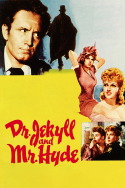
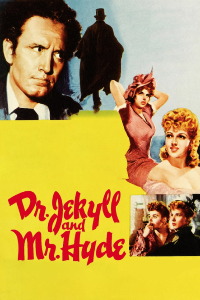
Review of Dr. Jekyll and Mr. Hyde (1941) by Hades N. Spades — 11 Jun 2008
Why do they always feel the need to throw in a girl? In the case of the two later ones, two girls, one for each personality. There's no girl in the original novel, which I have actually read. In fact, most of what happens in the original novel is left out of the movie versions so that an entirely new plot can be slipped in. Ergo, while generations of movie-watchers think they know the character, they don't, really. They know what Hollywood has made of him over the last ninety years.
John Barrymore makes a good Jekyll, I think the best of the lot for all Fredric March's Oscar for the role. I also think the first adaptation was the closest, for all there's the superfluous fiancee. At least they didn't try to throw in a superfluous music hall girl as a love interest for Hyde. Hyde, I think, would not have a kept woman; Hyde would not feel any particular attachment to any particular woman. Still, at least all three seem to have gotten the idea that Hyde doesn't have to be [i]too[/i] over-the-top. The March version is pretty interesting from a makeup perspective; they made him look rather like our idea of a Neanderthal, as though Hyde is less evolved than Jekyll.
Famously, this is the novel that Stevenson wrote in a fury, that so scared his wife that he burned the manuscript--and the story consumed him so that he rewrote it almost as quickly as he'd written it in the first place. While I'm not particularly frightened by the novel, it's eerier than all the movie versions I've seen so far. (Yes, there are more. There are dozens.) The original Dr. Jekyll is more distant. The original Mr. Hyde is more menacing. The [i]contrast[/i] between the two men is heightened, despite the addition of the girl. Maybe because of it; it's hard to say in retrospect. But in the book, Jekyll is all intellect and Hyde is all emotion. I think that makes a difference.
I'm not sure that there will be a proper adaptation even if I watched all two dozen, a thing I cannot face even if the library made it possible. The thing is, neither side of this famous character is particularly likable. It's hard to appreciate the good of such a cold character as Dr. Jekyll, and it's easy to note his hypocrisy. He [i]wants[/i] to be all good, but he also wants to let out his Dionysian side. So he takes the potion, and he lets loose Hyde. He gives up quite a lot for the pleasure of being the darker Hyde. Not a fiancee, blessedly--she's such a burden to the story--but his better work, and worse, his better self. As for Hyde, he is evil. There is no other word that describes him so clearly.
Maybe it's that three in two days was a little much. Maybe I'm right, however, and none of them are all that good. The most interesting thing in the series of films is that, in the Barrymore, most of the cast is credited on their first appearance. It's an interesting way of doing things, but I don't think it would work now that the age of title cards is over.
This review of Dr. Jekyll and Mr. Hyde (1941) was written by Hades N. Spades on 11 Jun 2008.
Dr. Jekyll and Mr. Hyde has generally received positive reviews.
Was this review helpful?