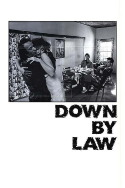
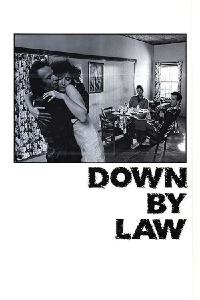
Review of Down by Law (1986) by Victor M — 14 Apr 2014
Any Jim Jarmusch film that boasts the talents of excellent actor Roberto Benigni is a film that I can't miss.
Like with many Jim Jarmusch films, Down by Law is an example of a film that takes place in a very small setting and has the importance of the story rest on the complicated characters involved with each other. Yet surprisingly after taking the time to make the characters interesting and establish the complicated relationship between them, he moves them from prison on a journey for escape. The film is a large step up from Jim Jarmusch's previous effort Stranger than Paradise because the journey the characters take is a significantly more interesting one.
While the slow pacing in Down by Law and lack of big dramatic events may disappoint some viewers, the gentle movement of the story in Down by Law is iconic of Jim Jarmusch's film style. It is a film about characters, and not about events. And while admittedly I felt that the effect of this was occasionally dull as well, I had an appreciation for Jim Jarmusch's film style and could sit back and relax while the events unfolded around the characters in Down by Law.
Although the characters are the most important aspect in Down by Law, the scenery of the film is great because it produces an interesting setting for the story to wade through, shifting from prison into an escape and the locations the characters progress through. And all against the black and white colour palette of the film which in its own way symbolizes the way that the characters in the film view the world in a very simple black and white manner. Down by Law's simplicity and gentle atmosphere combined with its visual style of black and white and still cinematography reminds audiences of the older films that chronicled similar themes using the now dated form of technical storytelling that can be looked back on. Down by Law's simplistic style reveals Jim Jarmusch's passion for the older film style which he brings out through his means of independent filmmaking, and it is a bold and ambitious move which is a very admirable one.
Down by Law also boasts a strong script. By capturing the real humanistic language of its characters as they are stripped down to the bare nature of them as men, we are given a look into their souls and establish their differences which gradually become the source of how they take different approaches to complicated situations and develop conflict. Essentially, there is a lot of complex humanism that comes from the relationships between the three protagonists in Down by Law, and Jim Jarmusch's intelligent and thought provoking writing style establishes strong figures for the cast to work with.
Tom Waits' lead performance is great. Most of the time in Down by Law, Tom Waits is a very stoic figure who doesn't say too much and allows the majority of the emotion to simply come from his facial gestures. He doesn't talk his way out of things, he silently sits them out which causes audiences to really wonder just what is going on in his head. It is a question that nobody can answer because the characters is very complicated, and Tom Waits' strong performance suggests that he spends the film trying to figure it out. His mere presence in the film alone is very appealing, but his performance manages to do a strong job and give Down by Law the appropriate lead character to explore the themes and dynamics as he comes to terms with them. Tom Waits gives a great performance in Down by Law.
John Lurie's supporting performance is an effective one as well. Engaging with the surrounding cast in Down by Law very well, John Lurie manages to give a strong effort that reminds us how well he works with Jim Jarmusch again after their previous pairing. And while his performance doesn't stand out as much as the other cast members, his chemistry with Tom Waits is effective because it is easy to really see the dramatic tension going on between them which makes the rough edge of the film even more intense and effective. John Lurie handles his material well as one of the leads in Down by Law, and the result is a meaningful and effective performance.
Roberto Benigni's presence in Down by Law is the source of most of the comedy. As his natural comedic charisma is excellently energetic in most films he stars in, it is no surprise that in Down by Law he is the main thing leaving audiences laughing. Roberto Bengini quickly and sharply says his lines with a natural charisma and his charm makes him embody the role perfectly. His interactions with both Tom Waits and John Lurie prove to lighten the mood and prevent it from descending into dull melodramatic territory which makes the atmosphere of Down by Law more enjoyable and enlightening. Roberto Benigini is an excellent cast member in Down by Law, and the scenes involving his chemistry with Nicoletta Braschi are always a nice touch.
Ellen Barkin's opening tirade in Down by Law is one of the best things she has ever done as an actress. She has a big name but hasn't done too much high profile stuff in the recent years, so it is good to see her working in small scale material such as Down by Law and putting her actual acting passion into the part even for only a brief amount of time is just terrific. She gives the drama of the story a good start with her brief performance, and she make a memorable presence in Down by Law.
So while Down by Law may have difficulties appealing to audiences who are not already familiar with Jim Jarmusch's iconic film style, its intelligently written screenplay, strong cast and simple story mostly make up for that and render it a fair step up for Jim Jarmusch's career as a writer and director of independent cinema.
This review of Down by Law (1986) was written by Victor M on 14 Apr 2014.
Down by Law has generally received very positive reviews.
Was this review helpful?