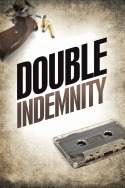
Review of Double Indemnity (1973) by Tim R — 27 Jul 2011
Based on the novel by James M. Cain, "Double Indemnity" is one of the finest examples of film noir. It features many of the genre's common attributes: the femme fatale, low-key lighting, voice-over narration, somberness, murder, etc. Thanks to the focused direction of Billy Wilder, the elaborate screenplay by Wilder and Raymond Chandler, and the glorious cinematography of John Seitz, one or more of those noir attributes are dramatically conveyed in practically every scene. They are skillfully combined to shape and continuously reinforce the overall tone of the movie.
The story begins one day when insurance salesman, Walter Neff (Fred MacMurray), visits the Dietrichson residence to inform Mr. Dietrichson that his auto insurance has expired. He's not home during Walter's visit, but his wife, Phyllis (Barbara Stanwyck) is present. The minute Walter lays eyes on her, his life will never be the same. She exudes plenty of sex appeal which Walter cannot resist.
Phyllis wants to take out an accident insurance policy on her husband without his knowledge. Her husband works in the oil fields and she's worried, or so it seems, that he may become the victim of a tragic accident. She would feel more at ease if he was insured. However, Walter sees through her scheme. Her plan is to have her husband murdered and make it look unintentional so she can collect.
Walter is initially disgusted at the idea, but Phyllis has made an impression on him and right after he leaves her house, he begins a journey down a dangerous path of suspense and intrigue. The two fall in love with each other and begin to carefully plot the murder. They plan it in such a way that upon her husband's death, Phyllis will receive two times the amount of money due to the Double Indemnity clause of the insurance policy.
Also central to the plot is Barton Keyes (Edward G. Robinson), the claims manager. Keyes is a cautious, attentive person and fooling him is virtually impossible. The "little man" inside of him acts up whenever something is fishy, and the murder plot is no exception. He will not rest until he discovers the truth of the matter. Nothing slips past Keyes. Well, almost nothing.
The movie features a stellar cast. Barbara Stanwyck brilliantly personifies the facets of her character. She can easily go from being a friendly person to a romantic to a heartless criminal. And when she talks so smoothly, it's easy to see why MacMurray's character quickly takes a shine to her. MacMurray naturally possesses and magnifies the qualities of a leading man that appeal the most on the screen. His charm, masculinity, confidence, and fluent delivery of dialogue all combine to form a strong screen presence.
Edward G. Robinson's role is not as prominent, but he's just as memorable as the hard-nosed, albeit lovable claims manager. He also delivers his dialogue rapidly and flawlessly, but with more authority and directness. That's appropriate not just because he's an authority figure, but he's the one who slowly puts together the pieces of the crime. His intimidating nature (despite his rather small size) and grim determination aggressively push the story closer to the exposure of Walter and Phyllis. He's going to figure out this crime if it's the last thing he does. His little man will see to that.
It would appear that Billy Wilder's main purpose is to display definite darkness, with John Seitz's help of course, and they display it in more ways than one. The lighting techniques used in this movie bring out the stress and angst that the main characters feel. Low-key lighting is present right from the opening scene and in almost every subsequent scene. Several scenes that take place inside a building are dimly lit. Shadows of window blinds are frequently visible on the wall or on one of the characters. And sometimes, the room is mostly dark with portions of light in various spots. One notable scene shows Walter standing at the window in his apartment. The room is dark except for the light shining on him through the window with rain on the outside. We hear his narration of how his thoughts are dominated by Phyllis and her evil plot. He is essentially overshadowed by darkness, both literally and figuratively.
Voice-over narration is used to great effects. During a scene where Walter walks along the street at night, he explains how he can't hear his footsteps and that it's "the walk of a dead man." If the narration had been absent, then Walter's anxiety wouldn't have been as evident as it is in that scene. The voice-overs also emphasize simple, subtle things such as the scent of honeysuckle near Phyllis's house and stopping for a beer to wash away the sour taste of her tea. Basically, the narrations connect the audience with the character's inner most thoughts and feelings, which become the walls he builds around himself separating him from his former, simpler life when he was nothing more than an insurance salesman.
In bringing James M. Cain's novel to the screen, Billy Wilder and Raymond Chandler have created a film that focuses on many things. It's about the cynical nature of the crime. It's about the characters, what they're saying, what they're doing, and what they're thinking. It's about the plot and the careful progression of it. This is a reminder of how the basic elements of filmmaking can have a strong, expressive impact, much more so than a mindless special effects extravaganza. "Double Indemnity" is not just classic film noir, but classic filmmaking, period.
This review of Double Indemnity (1973) was written by Tim R on 27 Jul 2011.
Double Indemnity has generally received positive reviews.
Was this review helpful?