Review of Dot the I (2003) by Jason Y — 18 Jun 2005
In fairness to [i]Dot the I[/i], don't read those comments if you have any interest in seeing it. I'll put them at the bottom so you know when to stop. Release dates are American, of course.
[b]Batman Begins[/b] (Christopher Nolan, 2005) [b]84[/b].
This is in the general vicinity of what I've always wanted in a Batman film. It doesn't outstrip the Burton films in every respect (Burton's Gotham, for instance, is far more imaginative and appropriately fantastic), but it does improve in ways significant enough to make those films look wanting by comparison.
The key to Nolan's approach is that his film is [i]about [/i]Batman. [i]Batman [/i]treated Batman's personal development is a paint-by-numbers skeleton for the confrontations and visual excess in which Burton glories. And while those were quite fun, Batman the character remained an essentially opaque, iconic figure. Parents killed, justice (revenge) sought, alter ego created. By the time we got to him, however, the mask was already in place and what came before was lost. The character then proceeded to fade into the background of his own movies, the romance with Catwoman in [i]Batman Returns[/i] being essentially the only instance where the Batman character was treated even equally with the various villains and sidekicks.
In this movie, Batman's character is the constant focus of the film; from the moment the film opens it begins putting us into his head. Nolan's deft interplay of past tragedy with Bruce Wayne's raging, obsessive present establishes an emotionally resonant starting point for the character. Rather than just check off the familiar touchstones of the origin story, Nolan imbues them with depth and power and it makes Batman a living, breathing person for essentially the first time in a live action setting.
The rest of the movie is full to the brim with Batman goodness - countless nods to Batman lore (especially Frank Miller's [i]Year One[/i]), an orgasmic tour of Arkham Asylum (located in "The Narrows," the one part of Nolan's Gotham that felt as inspired as Burton's city), and some inspired touches with the villainy. My personal favorite Bat-villain, the Scarecrow, is on hand and respectably rendered and Tom Wilkinson has some great scenes as Carmine Falcone, but the real centerpiece is Ra's al Ghul - Batman's most dangerous enemy in the comics effectively re-imagined here to suit the purposes of Nolan's re-telling of Batman's origin. It's an eclectic, interesting group but it never threatens to steal the thunder of the protagonist like previous franchise's Joker, Catwoman, Riddler, and Mr. Freeze all did to varying degrees.
Despite everything that goes right, this isn't the perfect Batman movie by any means. There are action movie one-liners left and right, many of them seemingly without rhyme or reason (watch out for "didn't you get the memo?"), which is especially jarring in a Batman movie. Much of the important dialogue is quite unnatural, with some of the conversations between Bruce and Rachel Dawes springing to mind; Rachel often sounds like she was instructed by some omniscient observer to say the precise thing to accentuate irony or parallel Batman's character arc, including a sequence near the end where essentially explains word-for-word to the viewer the Batman aphorism that the mask is Wayne's true identity and "Bruce Wayne" a foppish alter ego. True, but plainly obvious from Bruce's burning obsession early in the film and his out-of-character behavior as a socialite.
Perhaps even more egregious is the god-awful costume. One of the absolute thrills of seeing a movie like this for fans of the source material is to see the beloved character brought to life. With the Superman and Spider-Man films, the costume survives intact and the effect is breathtaking on first viewing. Even with Burton's tweaked costume, the profile of the character remained true to the comic incarnation. When I see [i]Batman [/i]leap out of the Batmobile in Batman Returns, it looks exactly like I'd expect such a thing to look. This costume never accomplishes that. The profile of the costume is utterly wrong in several respects: it is too wide and has an enormous hump on the back of the neck - it looks like no Batman I've ever seen on the printed page and that shatters the illusion that I'm watching Batman come-to-life. That mask also seems to force Bale to hunch down and lean his head forward, which is not at all an imposing posture. He doesn't look iconic, he looks uncomfortable. It's tough to see a movie doing so much so right but doing something so essential so wrong. It jars the illusion for me in a non-fatal but certainly noticeable way. The costume designer should never work again.
Those don't seem like minor quibbles to me (the costume doesn't, at least), but the movie does get the broad strokes right and does give us a flesh-and-blood Bruce Wayne whose motivations and emotions are palpably accessible. On that alone, the movie is a tremendous success and a welcome excursion for the Batman junkie. It certainly did enough right that the final conversation between Batman and Gordon, with a key prop, produced an undeniable faboy-gasm. Now when they make the sequel I just hope they'll fix the fucking costume.
[b]The Big Heat[/b] (Fritz Lang, 1953) [b]62[/b].
This is a pretty straight-forward noirish film that I found rather conventional. It's fiery and tough, but doesn't take many steps that you wouldn't expect, despite what initially seemed to be a few opportunities to subvert the typical Hollywood convention. Glenn Ford's protagonist, a homicide detective named Bannion, becomes so disgusted with the venality of the thriving metropolis of Kenport that he burns every bridge he has and a few more just for kicks. It's the kind of righteous indignation that feels appropriate on one level, but on further inspection is dangerously excessive, which is brought out in one conversation that ends up being almost inconsequential. No man is an island, we're told, but that's only because not long after Bannion moves off shore, everyone goes to great lengths to build a causeway to him. Over-extended analogies aside, in the end, this is just a very well made formula picture.
[b]Howl's Moving Castle[/b] (Hayao Miyazaki, 2005) [b]54[/b].
This is easily the least impressive Miyazaki outing I've seen thus far (I'm missing [i]Castle of Cogliostro[/i], [i]Porco Rosso[/i], and [i]Nausicaa[/i]). The visual imagination is still on display - the castle is brilliant, the highly detailed different cities, and the various flying machines, for which I have long been a sucker ([i]Laputa [/i]is probably my favorite Miyazaki movie). This one has precious little to offer beyond that, however. The motivations of the characters are extremely under-developed and many of their actions are almost inexplicable. Certain things happen for the sake of keeping an interesting design on screen or providing future conflict, rather than for reasons legitimately arising from the film. The result is a set of characters, a plot, and a grand scale in which it is very difficult to invest. I genuinely cared about so little of what was going on (the reasons for the war ares so far in the background that its resolution seems to take up far more screentime than is warranted, although it's only a few seconds) that it was difficult to invest in much of anything here emotionally. [i]Laputa[/i], [i]Spirited Away[/i], and [i]Mononoke [/i]have just as much visual splendor with much more to care about, so [i]Moving Castle[/i] is eminently unessential.
...
...
[i]Dot the I[/i] spoiler warning.
...
...
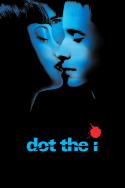
[b]Dot the I[/b] (Matthew Parkhill, 2005).
[i]Dot the I[/i] wants to be a serious mindfuck of a "gear shift" movie (Mike D'Angelo's term for a film that takes a dramatic turn in subject, tone, and/or atmosphere a good bit of the way in - examples being [i]Audition [/i]and [i]Something Wild[/i]), but the shift is pretty retrospectively appropriate (which is a credit to the build, I suppose, but sort of defeats the discombobulatory purpose) and in my opinion, was rather tame to boot. Whatever positives it did have, however, were completely flushed by some monologuing from the villain that is so mind-numbingly exaggerated and drawn out that it would have made Syndrome blush, and extended bit of irony in the denouement.
This review of Dot the I (2003) was written by Jason Y on 18 Jun 2005.
Dot the I has generally received positive reviews.
Was this review helpful?