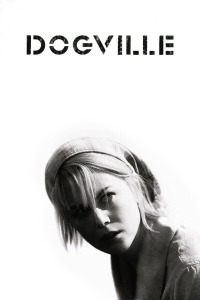
Review of Dogville (2003) by Frank J — 03 Jun 2012
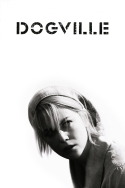
It's a dog-eat-dog world (Man, as messed up as Lars von Trier is, it's only a matter of time before he actually makes a three hour drama about dog cannibalism, or rather, caninebalism) this Dogville afternoon. Jeez, as long as this film is, there goes my afternoon and, by extension, my next couple of afternoons, because after this film, I feel like just rolling up on the couch and not going anywhere for a while. No, not because the movie is depressing, but because I think that I could go for a good, long, comfortable coma after watching this snoozefest. No, surprisingly, this film really isn't all that slow, yet it is slow enough for me to think about how this is a slow, overlong film of a disturbing, underwritten meditative film that features Nicole Kidman, so this is pretty much "Eyes Wide Shut II" only Kidman's acting and the film itself are immensely better, as well much less gratuitously elongated and boring as "Eyes Wide Shut", and this film is set entirely on a sound stage; that's how bad "Eyes Wide Shut" was, so shut up, Kubrick brown-nosers. Well, come to think of it, I don't think that it's so much the critics' blinding he-can-do-no-wrong attitude towards Kubrick that made them like "Eyes Wide Shut", as much it's their love of overlong pretty stuff that doesn't seem to make a whole lot of sense, which makes me wonder why this film isn't a 94% or something. It could never be a 100% because, well, come on, we're not music critics, there's enough credibility among us to where someone would have stepped up and said, "Okay, this film really is kind of just limping along." Well, to those people, I say that, even with that, the film still rewarded more than it fell flat, which isn't to say that it doesn't fall flat in some spots, and just enough for some sadness to set in, due to a degree of disappointment in some false steps.
Breaking down the film's style, your usual dramatic storytelling methods can be found, yet it's all segmented into chapters and set on a sound stage, with most structures, environment pieces and animals being mere sketchings and markings along the ground for the performers to work off of until the dramatisations find themselves interrupted by extended narration pieces by John Hurt that consist of a type of writing and narrator voice that make it sound like an audiobook, while an aura of intentional unsubtlety drenches the atmosphere throughout the product. If you're like, or anyone else sane, the method sounds interesting, though most certainly to fail quickly and render a two hour film tedious, much less a three hour film. Much to my surprise and relief, the stylistic method works more often than not, yet here and there, that novelty lapses, rendering the film distancingly silly, yet rather arrogant in its being so stylish. Still, more consistent than that is an aspect that would have stood, style or no style, and that is slowness, for the film drags along with a lightly quiet air that rarely bears down dullness, yet still reaches that point eventually. Still, even with all of its slowness and excessive length, the story progression bump the film still hits the hardest is its points in which it feels extremely hurried in certain significant points of later exposition and the unraveling of character layers, a situation that both renders the film and its characters very jarringly uneven and further drags down the film's impact, and without it, the film could have hit harder, and could have made an even deeper strike were stripped of not only the hurried exposition, but also of, well, its style, which is commendable, though ultimately detrimental to the film's level of satisfaction. This story is not a terribly original one, yet the way its dramatisation is structured is very celebratory of the story and could have left the picture to tanscend its conventions to a state of deep satisfaction, if not all around excellence, even with its slower spots, yet Lar von Trier's overly gimmicky stylistic choice of tainting the more humanly intimate storytelling method of cinematic dramatisation with interpretations in the style of such more staged-feeling storytelling methods as that of a book and play strips the final product of scope and taints its human resonance of depth, while the aforementioned hurrying of some signficiant exposition delivers the death blow that leaves this film to fall beneath its full potential, when it could have been an upstanding example of more conventional story methods, were it to conform to them, because as that great, yet repetitiously overlong four minute piano solo that took over the second half of Eric Clapton's "Layla" taught us, not every extremely unconvetional stylistic method makes something that should be excellent better. Still, that potential loss wouldn't be so palpable, unless it actually did quite a number of things quite right, and sure enough, for every fault in the film that leaves it falling a bit short on the promises within its concepts, there is a move pulled that really keeps you going, and that includes stylistic moves.
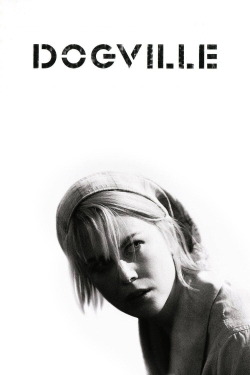
As much as the film's perhaps too unique style of being told as though it were a book and play actually squanders the power of the film and wears down you here and there, it remains quite a fascinating method, and one that's surprisingly executed in a generally effective manner. This staging and literary novelty gives the film a sense of engaging class and uniqueness that, during the calmer moments, gives the film a kind of engrossing, winning charm, yet when the darker aspects fall upon the picture, with the help of extremely clever camerawork, it supplements the tone and themes of entrapment and emptiness in a fashion that continues the intensity of the engagement value that would have been sharper were it to go down a different storytelling route, yet still stands strong, with the support of a still very commendable and unique stylistic choice. For this effectiveness, credit is due to Lars von Trier, whose own screenplay and storytelling concepts betray his ambitions, as they taint subtlety and evenness within the story, yet where the film could have gone totally flat in the hands of a less competent director, it holds a consistent kick, thanks to von Trier's inspired direction of a charmingly secure tone that flows into an uneasing one, a transition that is decidedly jarring, yet the way von Trier works that tonal shift gives insight into this world and its characters by reflecting the film's defining themes of betrayal in a tense, thoughtful and ultimately compelling fashion. Still, it's not only von Trier who sells the unsubtlety better than it should be sold, for each supporting performer delivers a layered acting job that also goes betrayed by the screenplay, as the character shifts are written to be so unsubtle and jarring that there's no way around the unevenness, yet it's palpable that this is no fault of the performers, as each one boasts a consistently uneasing aura that softens the blow of the jarring shifts and earns your investment in the slew of antagonists, both as the plot devices they are ever so supposed to be, as well as deeply flawed humans. All the while, Nicole Kidman owns her role as both the central avatar for the audience and a struggling soul, by her own right, with subtlety and, well, the grace that her character is named after. Kidman is initially consistent in her charisma as a good and humanly noble soul looking to belong, yet as the betrayal bears down on the Grace Mulligan character and leaves her to unravel in the most crushing of ways, you can pretty much mute John Hurt's stupid, subtlety tainting narration and watch Kidman portray the breaking of our lead with haunting expressiveness, broken up by sharp emotional range, that soberingly and effectively meditates upon the limitations of our lead and, by extension, the humanity she represents. The lovely Miss Bryce Dallas Howard has quite a high bar to reach for "Manderlay", as Kidman becomes Grace Mulligan, both as audience avatar and lead, carrying the role that the films centers around, thus carrying the film, helping in making it the compelling and provoctative study that ultimately stands as.
As the stage lights go dim... or the book closes... or whatever happens to end whatever this film wants to be that's not an actual film, when you look back, you don't so much think of the slowness and lapses in novelty effectiveness as problematic, as much as you find the intense active lack of subtlety and unevenness heavily damaging within the often hurried story that, with more comfort in its flow and much less depth-tainting stylistic choices, could have made for a remarkable picture, yet the film still remains engaging, partially thanks to its faulty, yet generally intriguingly unique and, at times, theme-supplementing stylistic choices, as well as the emotional resonance and subtlety that does, in fact, break through with the help of Lars von Trier's inspired direction and across-the-board effective performances, with leading lady Nicole Kidman especially stepping up with a hauntingly transformative and emotional lead performances that carries "Dogville" and helps in making it the generally rewarding and thought-provoking experiment that ultimately stands as.
3/5 - Good.
This review of Dogville (2003) was written by Frank J on 03 Jun 2012.
Dogville has generally received very positive reviews.
Was this review helpful?