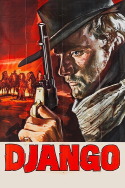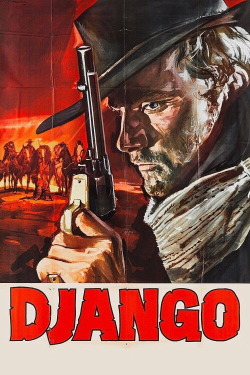
Review of Django (1966) by Bryan G — 31 May 2010
If I were to pick which genres of film were my favorites, Horror would be my number one choice but Westerns would be a very close second. And if you want to get technical about it, the sub-genre Spaghetti westerns (named that because they were produced and directed by Italians) is where most of my favorite western films reside. Notable films by directors of the genre like Sergio Leone come to mind, but there are a few other Spaghetti westerns that I've grown to admire greatly and hope that they continue to be discovered by curious film lovers. One such film is Sergio Corbucci's Django, which during its initial release was one of the most violent films ever produced.
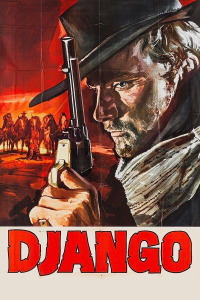
The title of the film refers to a mysterious man who arrives in a rundown, muddy little town dragging a coffin behind him. Django (Franco Nero) is seeking revenge against Major Jackson (Eduardo Fajardo), the man who murdered his wife, and this town acts as a safe haven for Jackson and his gang of bandits. After striking a deal with a rival Mexican gang, Django wages a sort of war against Jackson and his men, stealing a large sum of gold and leaving many of his men riddled with bullet holes.
Like many of these more exploitative Spaghetti westerns, Django isn't much for plot. But it more than makes up for that with an undeniable level of cool that is unmatched by many other films of the genre. I was hooked right away from the opening credits, and that sweet theme song that accompanies it. But what really makes Django so memorable is the performance given by Franco Nero. There are so many awesome characters that have emerged from this genre, and Django is one of the best. Like I said with the film having an undeniable level of cool, most of that is due to Nero's slick performance.
While violent for its time, Django is rather tame by today's standards. But the film still holds up rather nicely today. The movie's runtime is only about 90 minutes, but Sergio Corbucci fills it with a fantastic collection of bullets, blood and mayhem. The film also includes some of the most iconic images in cinema history. I like the look of Django as he is dragging that coffin behind him, and I especially like it when he reveals that the coffin is concealing an enormous Gatling-gun.
The ending comes rather abruptly, and doesn't let the character of Django close out the movie as grandly as he probably could have. But in the end the film as a whole is a rather enjoyable one. It is said that after the success of this film there were a little over thirty unofficial sequels. I'm sure that a few of them might be entertaining movies, but I'm sure that none of them could come nearly as close to the sheer awesomeness that is Django.
This review of Django (1966) was written by Bryan G on 31 May 2010.
Django has generally received positive reviews.
Was this review helpful?