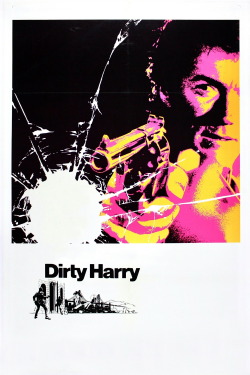
Review of Dirty Harry (1971) by Wesley M — 17 May 2010
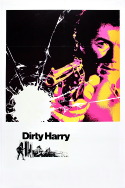
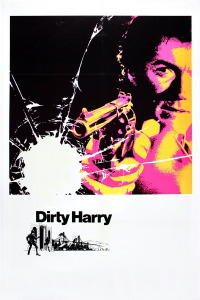
Cast as the eponymous protagonist in Don Siegel's urban thriller "Dirty Harry" (1971), Clint Eastwood plays San Francisco Police Inspector Harry Callahan. He can spot a crime in progress and proves it early on when he thwarts a bank robbery while eating a hotdog for lunch. When the assailants emerge from the bank, Harry wields his massive Smith & Wesson revolver, stops a car, kills one black robber and wounds another. Sprawled on the sidewalk in front of the bank with his pump-action shotgun inches away from his fingertips, the robber (Albert Popwell) glares back at Callahan. Harry taunts him. "I know what're thinking. Did he fire six shots or only five? Well, to tell you the truth, in all this excitement, I kind of lost track myself. But being as this is a .44 magnum, the most powerful handgun in the world and would blow your head clean off, you've got to ask yourself one question, do I feel, lucky? Well, do you, punk?" Harry grins, confiscates the shotgun and saunters off. The robber wants to know, so Harry takes aim and squeezes the trigger. CLICK! In this memorable scene, Siegel and his scenarists summed up everything about their abrasive protagonist. Later, Callahan coaxes a suicide jumper off a high-rise building by badgering the man. Audiences ate up "Dirty Harry." Eastwood reprised his role as the insubordinate but saintly cop in "Magnum Force" (1972), "The Enforcer" (1976), "Sudden Impact" (1984), and "The Dead Pool" (1987), but the sequels lacked the spontaneity of the original. Eastwood accommodated Warner Brothers so the studio would release his personal projects, such as "The Honkytonk Man" (1982).
Seasoned director Don Siegel of "Invasion of the Body Snatchers" had collaborated earlier with Eastwood in another police procedural, "Coogan's Bluff" (1968), that explored similar issues about another contemporary, non-conformist Arizona lawman on the trail of a murderer who had fled to New York City. Altogether, Siegel and Eastwood made five films, but "Dirty Harry" ranked as their finest work. Like "Invasion of the Body Snatchers," "Dirty Harry" appeared during a time of social unrest. The Vietnam War was raging. The "New York Times" had published the secret Pentagon Papers. Inspector Callahan represented another of Siegel's pariahs that refused to join the status quo. This controversial, R-rated, police procedural about a cynical cop who gets "every dirty job that comes along" generated a debate between liberals and conservatives about police brutality and a suspect's civil rights. Recent court rulings in favor of criminal suspects, namely the Miranda Rights and Escobedo rulings had extended rights to criminals. Liberals lambasted "Dirty Harry" as a fascist's manifesto. Later "Dirty Harry" sequels would clarify Harry's behavior. "A man has got to know his limitations," Harry says in the sequel when he refuses to join a group of vigilante cops that acts as self-appointed judges, juries and executioners.
Callahan clashes with a psychotic sniper who initially holds San Francisco for ransom to the tune of $100-thousand dollars. He targets minorities, Catholic priests and young women. Ostensibly based on the real-life Zodiac killer, Scorpio (Andy Robinson) wears a peace sign as a belt buckle and shows no qualms about killing. The film unfolds with Scorpio atop one skyscraper calmly killing a bikini-clad woman in a swimming pool atop another skyscraper. Eventually, Harry captures Scorpio, but the District Attorney releases him. Our heroâ??it seems--infringed on the felon's liberties in the Bill of Rights. Harry arrested Scorpio without reading him his Miranda rights, tortured him, and confiscated his sniper's rifle without a search warrant. Worse, Harry knew what he was doing when he violated Scorpio's rights. Callahan wanted to rescue the kidnap victim that Scorpio had buried with limited oxygen in a hole before she died. Later, Scorpio hijacks a school bus carrying children and demands a $200-thousand ransom and a jetliner. Harry refuses to serve as the intermediary. Instead, he thwarts Scorpio, kills him and hurls his badge awayâ??"High Noon" styleâ??in disgust.
Interestingly, several prominent stars, including Frank Sinatra, Paul Newman, and John Wayne, passed up "Dirty Harry." Siegel wrung nail-biting suspense out of every predicament that Harry finds himself in against the cunning sniper. Although "Dirty Harry" earned more money than his previous films, Siegel preferred an earlier Clint Eastwood Gothic movie "The Beguiled." The complexity of "Dirty Harry" is reflected Siegel's attitude toward him. Although Harry is the hero, Siegel found himself at odds with Harry's conduct and told one interviewer, "This doesn't mean I agree with him.".
This review of Dirty Harry (1971) was written by Wesley M on 17 May 2010.
Dirty Harry has generally received very positive reviews.
Was this review helpful?