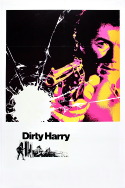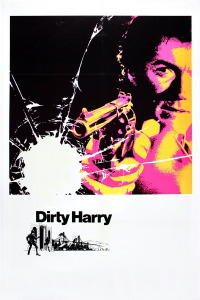
Review of Dirty Harry (1971) by Adam R — 21 May 2011
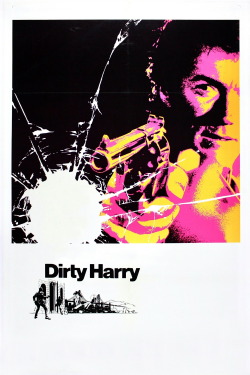
1971 gave us not one but two blond-haired, youthful psychos who would forever define what it is to be a screen villain in this modern age. While "A Clockwork Orange's" Alex De Large represented the culmination of a post-apocalyptic society run amok, "Dirty Harry's" Scorpio (Andy Robinson) symbolizes the culmination of a polarized, warring society on the brink. After years of blind disrespect for authority and unwise advocacy of extremism, hippies everywhere were too blind to see that their views would lead to just as much public discord and breakdown as their elders had allegedly cause in the private sphere.
Scorpio (based on the real-life Zodiac Killer) holds the city of San Francisco hostage, demanding ransom money so the slew of victims on the wrong end of his sniper rifle will no longer have to live in fear. Unfortunately, Scorpio meets a powerful adversary in Harry Callahan (Clint Eastwood), an SFPD inspector whose rogue tactics are often deemed brutal and even unconstitutional by his superiors but appreciated by those who wish to see the deleterious criminal element reduced in its ranks.
Given this description of the cop/criminal duality that drives "Dirty Harry," it's easy to see why detractors proclaimed the film a "fascist masterpiece" upon release. However, even a little scrutiny doesn't support this argument.
Callahan is hardly a tool of the state; high-level functionaries in both the police department and city hall certainly don't approve of his actions, and they're often outright embarrassed when his strategies lead to death and property damage. The inspector is also openly contemptuous of authority, those he apprehends and kills in the line of duty, the very people he serves to protect and even those who might classify him as a friend. Anyone who doesn't praise the state or do its bidding with pleasure certainly can't be a fascist hero.
Ceteris paribus, Callahan is a free agent, a man clear in what he believes justice to be and unafraid to enforce that ideal his way. He takes initiative, fights in the trenches and doesn't give up in the face of institutionalized disapproval and the efforts of bad people to upset his path. Succinctly put, Harry Callahan represents everything '60s and '70s-era "intellectual" liberals hated, a man willing to support an "archaic" concept -- justice -- and, through powers vested to him by the state no less, see that his principles benefit the world (though the gunfire, car chases and destruction was probably an externality everyone could have done without).
Frankly, the "fascist" title seems more like one of convenience for a group oblivious -- or unwilling -- to recognize their high-mindedness could create a backlash best exemplified by a once and future hero: a policeman.
This review of Dirty Harry (1971) was written by Adam R on 21 May 2011.
Dirty Harry has generally received very positive reviews.
Was this review helpful?