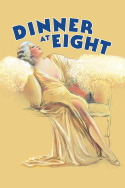
Review of Dinner at Eight (1933) by Bob W — 22 Nov 2014
"Grand Hotel" took the fifth-ever Best Picture Oscar in 1932, and the next year MGM figured there were worse things to do than to make a copy. The studio cast a lot of the same actors-burly Wallace Beery and both John and Lionel Barrymore-and picked a similarly dark, comedic play to serve as the basis of the script.
Yet whereas "Grand Hotel" follows the intertwining lives of ostensibly-everyday people such as workers and businessmen and secretaries, "Dinner at Eight" belongs more to the tradition of mannered, parlor-room plays.
Its humor and pathos are less broad, and indeed are so narrow that it feels almost as if 1930s Hollywood is gazing at its own naval. Characters talk about wanting to see the new Garbo picture (at least Garbo is not in this film; she had been in "Grand Hotel") and two of the chief protagonists are washed-up stars who hadn't made the transition to talkies (a topic Hollywood would revisit again and again over the decades, to great effect almost every time).
The Academy wasn't interested this time, though, and issued not a single nomination to "Dinner at Eight." It took in less than half of "Grand Hotel"'s revenue at the box office.
Yet "Dinner at Eight" is a fun movie for classic film fans all the same, not only because we now recognize it is a last gasp of the pre-Code era, with innuendo and heated bedroom exchanges galore, but because of remarkable performances from Marie Dressler, Billie Burke, and Jean Harlow.
There are also a number of references to "this depression," and nearly every character struggles with financial insecurity, so viewers interested in Hollywood's depictions of the Great Depression should not overlook it.
This review of Dinner at Eight (1933) was written by Bob W on 22 Nov 2014.
Dinner at Eight has generally received positive reviews.
Was this review helpful?