Review of Diana (2013) by Thegodfatherson — 01 Nov 2013
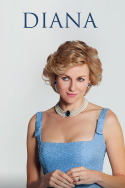
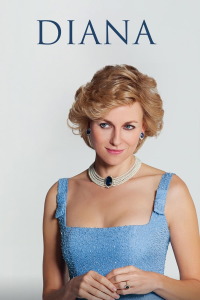
German director Oliver Hirschbiegel has made a puzzling contribution to the oeuvre of films about Diana, the late Princess of Wales. His new film, simply titled Diana, is very narrowly focused. Set during the last two years of Diana’s life, the picture highlights Diana’s (Naomi Watts) relationship with a London-based Pakistani heart surgeon, Dr.
Hasnat Khan (Naveen Andrews). Hirschbiegel directed 2004’s critically acclaimed Downfall, so this misstep is both surprising and disappointing. The picture plays like a made-for-TV movie (appropriate perhaps for Lifetime), and does nothing to make the viewer remember Diana with any fondness or respect.
In Hirschbiegel’s depiction, in fact, Diana comes across as nothing more than a mopey, love-starved teenager. She tries to immerse herself in her new boyfriend’s interests, buying a copy of Gray’s Anatomy and listening to jazz albums (jazz is his favorite).
She cooks for him (if microwaving the pasta your assistant prepares in advance counts as cooking) and sneaks around so she can see him, donning a long black wig so she can dance in discos to “West End Girls” with him and sit by his side in groovy jazz clubs.
She gossips idly to her acupuncturist friend about him, and even sneaks into his apartment after a fight to make it up to him by cleaning his entire apartment. These scenes are no doubt meant to convey the lengths Diana will go to for her crush (the Princess of Wales vacuuming and washing dirty dishes? Really?), but, instead, they just make her seem prosaic and sort of desperate; they are an odd contrast to the scenes of her engaged in her more serious charity work (landmine victims, HIV funding), which are presented almost as side elements to the main love interest plot, which seems backwards.
Andrews fares better as Dr. Khan; in fact, between the two characters, in this picture, he comes across as the more interesting of the two. Whereas Diana has an almost unfathomable life of wealth and privilege, Dr.
Kahn is earning a Ph.D. and spends long hours at the hospital, performing technically difficult and life-saving surgeries. He’s aware that a life with Diana would mean he would be so in the public eye that he could no longer pursue his passion.
On top of that, his Pakistani family refuses to give their blessing to a union with Diana; not only is she not Pakistani and not a Muslim, but they, too, do not want to be unwittingly thrust into the public spotlight.
Andrews conveys Hasnat’s conflicted feelings well; he’s alternately charmed by Diana and frustrated by her, and he really is the one with the major dilemma give up his life’s work for romance with a princess, at the cost of his family’s approval? You really can’t blame the guy when he expresses reservations to Diana.
Naomi Watts’s portrayal of Diana doesn’t help matters much, either; for one thing, she bears virtually no resemblance to the Princess, so whenever she’s face front on screen, it’s a distraction.
It’s hard to engage in the story when all you can think is, “here’s Naomi Watts pretending to be Diana.” The filmmakers must have realized this problem, too, as for almost the first quarter of the film, Watts is shot either from the back (with good posture and the right hair cut, any tall, slim, blonde woman can be taken for Diana from behind) or from a profile view.
Watts imbues Diana with a wounded, coquettish manner that, instead of eliciting empathy, just makes her seem sort of insipid and vacuous. You want to tell her to forget about the doctor and just concentrate on her humanitarian work, which she enjoyed, was good at, and which earned her the love and respect of her country.
According to this film, though, such inner rewards weren’t enough for Diana; like a girl not asked to the prom, all she really wanted was the cute boy she liked so, so much. Writer Stephen Jeffreys also doesn’t help matters much; his screenplay calls for an inordinate amount of time to be spent on Diana and Hasnat looking into each other’s eyes as soulful French music plays on the soundtrack.
And Watts and Andrews are both saddled with clunky, heavy-handed dialog: “You don’t perform the operation; the operation performs you,” is one gem Hasnat condescendingly drops on Diana to describe his work.
Diana, meanwhile often seems to be reading lines out of a Harlequin novel, lamenting how she’ll never be happy, and flirtatiously asking her cardiac surgeon boyfriend deep questions like, “Can hearts actually break?” When we walked out of the film, my friend asked me “Who do you think this film is for?” It’s a good question.
If you know nothing about Diana, this film seems like a poor introduction; you walk out of it thinking less of, not more of her, which I’m sure was not the filmmakers’ intent, but is the unfortunate result of a weak script and a central one-note performance.
Even if you are a huge fan and follower of the royals, Diana’s story has been covered so extensively that this stupid movie sucks.
This review of Diana (2013) was written by Thegodfatherson on 01 Nov 2013.
Diana has generally received mixed reviews.
Was this review helpful?