Review of Dersu Uzala (1961) by Alex V — 22 May 2013
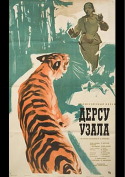
This is one world-class piece of work desperately in the waiting line for a BluRay revamp, watched this Kurosawa's Soviet Union film in DVD format, the quality is discouraging, but the film speaks for itself in shedding bells and whistles and homing in on a camaraderie between a Soviet military explorer and a seasoned local hunter among the bleak Ussuri inhospitable region.
Storyline-aside, it is another Kurosawa's awesome visual spectacle, a tremendous field shooting endeavor, epitomizes by the sun-moon co-existence with solemn placidness, furthermore, it is a hymn to mother nature, Dersu personifies as the harmonious co-habitant of the mighty wilderness, a sublime soul with well-versed survival skills, on the contrary to my recent watched documentary TOUCHING THE VOID (2003, 8/10), DERSU UZALA owns a purer and more admirable prospect, instead of conquering the insurmountable to chase a spur of glory and invincibility, it is far more intrepid and unpretentious to be a part of it with reverence and be respectful to its law and act, in addition to its indefatigable undertone against industrialized modernism (it is the brand-new rifle, a token of friendship, actually wreaks the somber demise of Dersu).
Strictly speaking, there is merely two characters in the film, Dersu (Munzuk) and the Russian Captain (Solomin), a bond is tenably formed through their expedition in the wild, from lush jungle to walking-on-the-thin-ice frozen river, the life-saving bravado during a squalling night when they lost their track on a snow land or a torrent peril, Kurosawa moulds a great range of topography with taut excitement where it is required. The character study of Dersu also is been executed through the observation and the interaction from Captain (viewers' proxy), who is enthralled by Dersu's simple yet ethereal nature, a rare bird may or may not be extinct now. The dual-acting from Munzuk and Solomin is the fruit of naturalistic emancipation and unassuming engagement.
Also a memorable presence is Isaak Shvarts's accompanying score segues from lithe to menacing, eerie to sonorous, with Russian folklore and shanty as well.
Being a Chinese, I cannot avoid mentioning the sensitive timing (after China and Japan's rapprochement in 1972 and China and Soviet Union's dispute in 1969) of the film-making, which prompted an accusation from Chinese government concerns a so-called political libel on Chinese people, mainly by vilifying Hunhutsi (which literally means red beard in Mandarin) as the villain and the nature-balance defier. But honestly, this episode is largely overstated since there is no direct confrontation at all in the film, at least for my compatriots, don't let this smokescreen blinds your eyes, DERSU UZALA is a spirited ethnological oeuvre could inspire whoever has a chance to watch it, preferably on a big screen or at least a BluRay edition.
This review of Dersu Uzala (1961) was written by Alex V on 22 May 2013.
Dersu Uzala has generally received very positive reviews.
Was this review helpful?