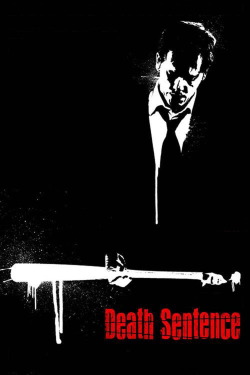
Review of Death Sentence (2007) by Any N — 25 Jan 2009
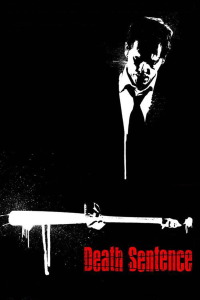
First-off Death Sentence is a gruesome movie loaded with ?foul language?. So, if you are the kind of person who finds this offensive or just simply cannot handle it then I do not suggest this movie for you. Of course, this movie is not family friendly because an important element of being ?family friendly? means little to no foul language. I wish to now summarize the movie and attempt to explain it?s message to the audience. NOTE: I will be given important parts that may ruin the movie for a viewer. So, please if you haven?t seen this movie or are the kind of person who will be disappointed by this, please don?t read. Death Sentence attempts to portray a message concerning ?justice?. Two importance questions will be implied through the film: (1) What is justice? and (2) is justice really some thing that ?balances? or harmonizes? Also, you may ask ?is it ever O.K. to take justice into our own hands? ? Why do I think this about this film? Firstly because the main character, Nick Hume (played by Kevin Bacon), has a brief discussion early in the movie about ?balance? in the universe. What kind of balance? Well, context of the brief dialog suggests a balance of deeds and rewards; for, Hume says (as the risk assessment agent that he is) that marriage, children, watching our health and taking caution throughout life are all good things. People who do such (or have) good things live longer (good reward for their good deeds). People who do not do such things typically live shorter lives (bad deeds re-paid). Hume says that he is glad all this ?crap is still true?. I will use part of the movie to continue to show why I think this movie is about justice but it will spoil the movie if you haven?t seen it. Read over this part of the text if you haven?t seen it and do not want to know what happens.
Hume?s son is brutally murdered during an initiation killing (where some person kills another in order to be accepted into a gang). Hume quickly realizes that the justice system is not very adequate (and the film really shows just how apathetic and useless those who uphold the law are during this film) and that the person who killed his son will get only 3-5 years of jail time (at best). Hume is utterly shocked. This doesn?t seem very just! Indeed, it is at this point in the film the audience will most likely ask themselves whether this gang-banger deserves some equal punishment in order to ?balance out? the deeds that have been done; they will ask whether this is fair or not. All this suggests something being said about justice. Hume will take matters into his own hands (addressing this issue of whether we should take justice into our own hands or not) but enough about that for a moment.
Plato, an early Greek Philosopher, poetically showed his view of justice in his most popular work The Republic. Plato thought that justice was a virtue that balanced the soul, preparing the individual to live a ?good life?. It was he who really first proposed that justice balanced or harmonized. Plato also believed in order for there to be a good society justice must also exist as something that harmonizes the community. It?s not important to discuss here what this all means exactly. The point is that this can be called the ?traditional view of justice?. Christians have typically held similar views (justice being something whereby people render to other people what they are deserving of). For Christians this means there are kinds of people ?good? and ?bad? each deserving different things due to the kind of persons they are. For instance, since all people (Christian or not) have sinned and are sinners they are also deserving of death. The ?sinner? being a kind of person who deserves a specific kind of punishment. People who are considered to be ?saved? are a person who has received a reward: God?s grace and mercy. This makes them righteous in the eyes of God because Christ stood in the place of those who sinned. So a ?saved? person is a kind of person who receives a kind of reward for being the person that they are. So, we are saying that justice, in a traditional sense, implies we can know and do know that certain actions are deserving of specific allotments (whether it?s money, praise, love or whether it?s prison or a spanking).
It?s important to note that Hume seems to accept this view. Firstly because of his ?balance? in the universe speech where good people get good rewards (now, whether this is by God or some ?higher power? Hume never says). He also suggest that the criminal who killed his son is deserving of more than just 3-5 years of prison; he wants his life to be taken away from him by putting him in prison until his death. Holding this view seems to be Hume?s flaw and ultimately begins to destroy him and his family. Hume becomes so consumed over the tragedy that occurred, and the justice he thinks is deserving of his families untimely deaths, that Hume begins his own personal mission to distribute what he thinks is just.
Eventually Hume becomes nothing more than what he sought out to destroy: a gang-member who killed his son. Billy Darley, the antagonist of the film, looks at Hume and boldly says: ?Look at you, you look like one of us. Look what I?ve made you.? suggesting Hume?s transformation ultimately brought on by his belief that justice is about rendering allotments deserving of various actions committed. It?s important to note here that the ?traditional view of justice? is now indistinguishable from revenge (or an ?eye for an eye? belief). This is the movie?s real opinion of the ?traditional view?: it ultimately is no different than revenge. That is, believing that justice is some virtue that harmonizes or balances a person or community is inherently no different from revenge. Hume does admit that ?sometimes there is just chaos, and that?s all there is?. Here he means that sometimes there isn?t order or balance (sometimes there isn?t justice for the things that happen in life). It is in this scene the we begin to see Hume confront his belief at the beginning ( you know, the one about there being a kind of balance in the universe). Hume never really changes his belief about justice and eventually shows that it really is all about revenge (rather than justice, at least he realizes his view isn?t anything different--this is what the movie is saying to the audience) and for this reason the movie is tragic rather than a drama. Still, a problem I really had with this film is that the movie, even though challenging the ?traditional view of justice?, never tells the audience what justice should be viewed as. This probably shows a more skeptical view of justice, perhaps being something we cannot understand or know; or, perhaps reinforcing that idea that there sometimes IS only chaos and no justice at all.
This review of Death Sentence (2007) was written by Any N on 25 Jan 2009.
Death Sentence has generally received positive reviews.
Was this review helpful?