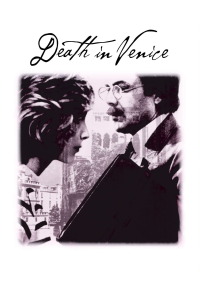
Review of Death in Venice (1971) by Peter G — 23 Dec 2005
[size=1]"Sometimes I think artists are like hunter's aiming in the dark; they don't know what their target is and they don't know if they've hit it. But you can't expect life to illuminate your target and steady your aim." -- Gustav, Death in Venice.
[b]Morte a Venizia (Death in Venice).
Drama.
Year: 1971.
Country: Italy/France.
Director: Luchino Visconti.
Writer: Luchino Visconti (Adapted from the Thomas Mann novel of the same name).
Starring: Dirk Bogarde, and Bjørn Andresen[/b].
[b]Grade:[color=Silver]A+[/color][/b].
Death in Venice is one of those impossibly rare films that I find to be perfect in every conceivable way. Every single frame, from start to end, is of the highest form of beauty, and although the movie can be a little slow at times I see this not at all as a fault, but, instead, the longetivity of its beauty and the poetic ease in which it lures us into its plot and world.
The movie is the story of a professor and controversial composer, Gustav von Aschenbach, who had grown ill, with his bad heart, at home in Munich, and travels to Venice to stay at a posh hotel to get away from it all at home. There, while attempting to read a newspaper in the hotel's lounge, just before dinner is served, he sees, for the first time, the very fair and feminine adolescent boy Tadzio.
Ever since the first moment he saw Tadzio, his mind has been on him, and the utter beauty, which Gustav has been seeking his entire career in the art of music and of the soul, that Tadzio represents compels him more than anything in life.
Tadzio notices the attention, and relishes it with intensity. He seems to be completely unperturbed by the interest of the older man, and gives him seductive gazes that keep Gustav's attention all too well.
In every scene that we see Tadzio, it is a beautiful scene. His angelic presence, in Gustav's view, makes everything else beautiful; his radiance makes everything around him an ethereal dream. Tadzio, in effect, gives Gustav something to live for again, as he has already met and breached the height of his artistic expression, and is told by an ever-challenging friend of his says that "truth, wisdom, human dignity; all finished. Now there is no reason you cannot go to your grave, with your music," a fact that, as he is shown through audience reactions and his own inner turmoil, truly haunts him and fills him with melancholy. There is just no more happiness in Gustav's life. No more happiness, that is, except for the presence of the beautiful Tadzio.
Gustav is not at all comfortable with his attraction to Tadzio. We are reminded, in perfect flashbacks and in a sweet scene where he kisses their photos, that he is a loving father, and is in a very deep, loving and understanding relationship with his lovely wife. At one point his shame completely consumes him and he decides to leave Venice, to return to Munich, so that he can, now, get away from this traumatic sexual and soulful affliction. But, alas, circumstances at the train station, which would never have occurred without his large ego which he shows numerous times but this time at breakfast when he must go, find him back at his hotel. On his return he is more comfortable. Not completely comfortable, but more comfortable as he says, after smiling at Tadzio while passing him, ?You must never smile like that. You must never smile like that at anyone," only to give in and conclude why he is acting the way he is, and, while thinking of young Tadzio he concludes with, "I love you.".
The actors fully embody their characters. We can see every little shift of Gustav's shame, and his confusion at what he is doing, at what he thinks he is becoming ("what road have I taken?"), is made perfectly clear with Bogarde in this fantastic performance. Tadzio, although he doesn't have any English speaking lines, as he is just a boy from a Polish family he speaks only Polish, we can see very well why Gustav is so attracted to him, despite his never showing love except for his beloved wife and daughter, as he is the very embodiment of not just beauty, but sex, in the way he walks, in the way he gazes, in the way he lounges, it is truly like an erotic dream... But, we are constantly reminded that he is just a boy, with all of a boy's innocence, as he smiles sweetly when his boyfriend walks with him, kisses him on the cheek. The hotel manager, who is a constant presence trying to please the clientele as much as possible, is exactly the suck-up that we all know and try to avoid.
Another pleasing quality is the constant, sweeping, powerful, and at times overpowering, presence of Gustav Mahler's fifth symphony and its perfection as it sails high in grand climaxes and falls low in a haunting arrangement that perfectly suits the movie.
Death in Venice is one of the finest movies, I strongly believe, in the history of cinema. As I said earlier, I can find no fault with this movie and is perfect. The slow pace turns many off to this film, but I believe every scene is needed to create the utter masterpiece that is Death in Venice.[/size].
This review of Death in Venice (1971) was written by Peter G on 23 Dec 2005.
Death in Venice has generally received very positive reviews.
Was this review helpful?