Review of Death and the Maiden (1994) by Paul Z — 14 Nov 2008
Death and the Maiden is one of those darkly comfortable films where the opening moments are so intriguing and spot-on perfect that almost any continuation would be a disappointment. But, alas, movies have to be about something, and so slowly the purity of the situation settles as carefully as it can into the decisively paced story.
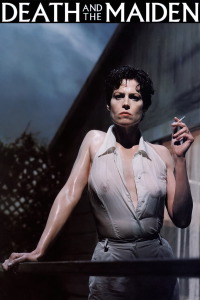
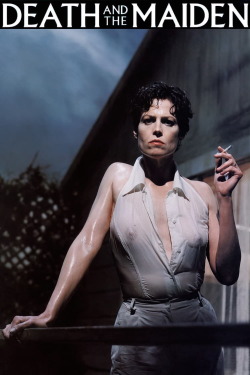
Sigourney Weaver plays an intuitive and imperious specimen, a troubled housewife, playing her as a woman performing rather than personifying her traditionally feminine position. She is married to a renowned lawyer in an unclarified South American country. One night, a storm forces her husband, played by Stuart Wilson, to ride home with a kind stranger, played by Ben Kingsley. That is the exposition for this absorbing film, directed by Roman Polanski, a natural player in the realm of this story, based on a play by Chilean exile Ariel Dorfman, and clearly so. In the movie's lingering dark of the heart, Kingsley, crudely tied to a chair, will claim his innocence. Weaver will taunt him and interrogate him. And Wilson, her husband, will shudder first in one direction and then in the other, because this doctor is a pleasant and harmlessly polite man and a very intelligent one, and if there is a way for him to talk his way to freedom, he will realize it.
This atmospheric drama is, somewhat, on the subject of real shame: Is this the man who raped and tortured her? To some extent, it concerns the character of guilt and its function in one's identity: If this is the same guy, maybe he has changed. Was he a product of the times or a victim of them? If he is guilty, does he atone? Is his crime forgivable to the human standard? Is the woman's husband somehow hindered by a male bonding with this man allegedly hostile to women? All of these reservations lie in wait provocatively beneath the brooding facade of this masterpiece, enriching and intensifying its insatiably vindictive story, which oddly enough is not so much about whether or not this is the man who tortured her, but about the unpredictability of Weaver's behavior, if she really knows what she's doing, if she has an idea of what she will do if she is right and he is in fact her scarring tormentor.
The whole story leads up to a moving, unforgettable three-minute monologue by the doctor, giftedly delivered by Kingsley, so that we have to resolve not only the issue of his guilt or innocence in this makeshift trial, but the issue of its value. It is at this stirring climax that one can truly say that this minor string quartet-based masterpiece of claustrophobia is all as regards acting. Kingsley here can compare to the best of the rest of his work with his shrewd performance: He makes his character so smart that whether he's guilty or not, we have a definite appreciation for his struggle, and thus he not only fleshes out the character in Dorfman's drama but also heightens the drama without compromising anything about the script. Another actor, even one just as gifted, may easily have lacked the creative initiative to compel the character as such, a pivotal one at the core of the story.
Moreover, without the Sigourney Weaver performance, the film could easily have been a lot less impactful. There must have been the pull to emphasize the years-pent rage of her character, but she not only brings so many other colors to this apparent maven, but understands that in a character who is seeking revenge, less is more, because less can be a whole lot more fulfilling in its jeering and mischief. Characterization is a side-effect that emanates from action and dialogue, and there are times, during the dialogue, when the film certainly clues us into its stage origins, when we feel we have almost been carried back to the tangible events she recalls. And Polanski uses the camera in these time-transcendent moments as a spectator, standing facing her and listening, just as one may want to even when seeing this performed on stage.
The conflicted lawyer is credibly by Wilson as a man who would sincerely love to discern the truth, he is a deputy for the audience, the character whose feelings we share when he listens to Weaver's horror stories through Polanski's camera's eyes. But she and Kingsley both know that no jury can satisfy, or grasp, the personality of the circumstances. No more than the torturer and the tortured have shared that information, and perhaps only by changing places can they understand it, and that is what justifies her actions to anyone in the audience, even those who starkly oppose the concept of revenge.
This review of Death and the Maiden (1994) was written by Paul Z on 14 Nov 2008.
Death and the Maiden has generally received positive reviews.
Was this review helpful?