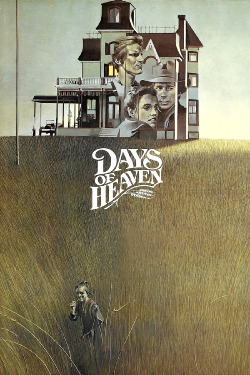
Review of Days of Heaven (1978) by Byron B — 01 Dec 2008
[font=Times New Roman]?Hannibal Rising? is one magical film, following on the heels of ?Red Dragon? and ?Hannibal.? How else but the dark arts can you explain the power to turn ?The Silence of the Lambs? ? one of the greatest suspense-horror films ever made, and a high point in feminism on screen ? into a launching pad for a most mediocre collection of films? Hannibal Lector, the greatest film villain, has gone a long way down since the psychiatrist terrified Jodie Foster and [/font][font=Times New Roman]America[/font][font=Times New Roman] in 1990. Anthony Hopkins isn?t even in this prequel installment, having mumbled his way through the previous pointless Lector film, ?Red Dragon? (a remake of the far superior, Michael Mann-directed ?Manhunter? that preceded ?Silence? by several years and starred Brian Cox as Lector.) In ?Hannibal Rising,? novelist Thomas Harris, who really ought to quit writing, director Peter Webber take Lector back to his childhood and do the impossible ? they not only start him out as a sad-eyed sympathetic orphan, they turn him into a vengeful combo of Batman-Jason Bourne. The gist: Poor [/font][font=Times New Roman]Hannibal[/font][font=Times New Roman], orphaned by war, sees his kid sister eaten by cannibalistic soldiers. And the boy, too, is forced to eat portions of baby sis. Sick, yes, and wholly unnecessary. That the plot revolves around Lector growing up to enact revenge on these monstrous men destroys any suspense; [i]anyone [/i]might do the same. If one of his victims were a sympathetic born-again Christian, Islamic convert or otherwise reformed man, it might have created a whisper of suspense. But there?s nothing. Worse yet, as young Lector, Gaspard Ulliel is so utterly not terrifying, he?s forced to hold a light under his face to make creepy campfire faces. Lector is supposed to be the ultimate boogieman of our nightmares, the human monster who wants to pick you apart piece by piece intellectually before he does the same physically. We should fear him; this film asks us to cheer for him. My pick for the worst of 2007.[/font].
[font=Times New Roman]?The Devil?s Backbone? is an earlier film made by Guillermo Del Toro, who?s fast becoming one of my favorite directors after ?Pan?s Labyrinth? and the kick-butt, fun ?Hellboy? films. In this 2001 release, he tells the story of an orphanage in 1930s [/font][font=Times New Roman]Spain[/font][font=Times New Roman], ripped apart by civil war. The orphanage is stuck in the middle of the carnage, and in the middle of the orphanage is a vertical unexploded bomb ? smashed into the ground years before. The bomb is dormant, and the orphanage itself seems to be barely functioning. Into this world, young Carlos (Fernando Tielve) is dropped. His father is dead, and no mention is made of his mother. He?s an average child -- he likes toys, comic books and marbles -- but here, there?s little room for childish play. He?s bullied by Jaime (Inigo Garces), an older boy, and then visited by a mysterious, creepy as hell child ghost that seems to be falling apart. There?s much more in this ghost/war story, but to reveal too much would spoil surprises. What can be said is Del Toro captures the horrors of children forced to grow up too soon with vivid detail, especially those who are lost and looking for a parent/guardian. Not as deep or fantastical as ?Pan?s,? this film nonetheless has a lot going for it, including the softening of Jaime and the dashed dreams/demons of the adults. I don?t know where Del Toro finds his child actors, but [/font][font=Times New Roman]Hollywood[/font][font=Times New Roman] should start dipping into his pool. It?s foretold early that these children quickly will become men, and will have to fight and take control of their lives to survive. The darkness visited on these children, and likewise the girl in ?Pan?s,? certainly would never be found in an American film. ?The Devil?s Backbone? is that rare magical combo of heart-breaking and uplifting. The title?s meaning is explained in a scene creepy, sad and hilarious.[/font].
[font=Times New Roman]?The Polar Express? is the traditional Christmas-season kick-off movie in our house. My wife loves its joy, innocence and animation. Me, I?m a Scrooge. See, it?s the eyes. I can?t get past the lifeless, dead-as-a- marble [i]stare[/i] of every computer-generated character in this Robert Zemekis-directed tale of a boy who travels to the North Pole. I?m not a hater. I think the story is fantastic for children, especially with the brilliant Tom Hanks providing most of the voices, and the music by Alan Silvestri that is instant Christmas classic worthy. I even love whole chunks of the animation including the travels of the train up and down mountains, across frozen bodies of water and through a wonderfully designed elf village that looks like a [/font][font=Times New Roman]Pennsylvania[/font][font=Times New Roman] factory town. But watching what amounts to computer-animated department store mannequins attempt feeling is not my idea of Christmas magic. Bah humbug![/font].
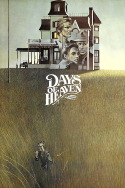
[font=Times New Roman]If Terrence Malick were put in charge of the world, this would be a better place to live. Seriously. Who else makes a war film (?The Thin Red Line?), and shows us the effects that bombs not only have on people, but animals and trees? ?Days of Heaven? is a late 70s classic film from this classic director/writer, who ought to work more. If you know Malick, you know that he isn?t necessarily interested in the linear mechanics of plot or expository dialogue. The viewer needs to fill in some holes and suggestions that would otherwise kill the pace of Malick?s art. His films movies seem like visual poems or glimpses of a person?s memory, fragmented, but nonetheless beautiful (or scary). Richard Gere plays a [/font][font=Times New Roman]Chicago[/font][font=Times New Roman] factory worker, who in a fit of rage, attacks his boss and then flees to [/font][font=Times New Roman]Texas[/font][font=Times New Roman] with his ?sister? Abby (Brooke Adams), and a young friend (Linda Manz). They eventually find work on the endless fields of a dying wheat frmer (Sam Shepard), who soon falls for Abby, not realizing her ?brother? is her lover. (Set in the early 1900, at the height of the Industrial Revolution, unmarried lovers were considered prime sinners in Christian America, hence the lie. Malick does not judge his characters.) The love triangle is, of course, doomed to a violent end. The story is almost secondary to what?s on film: the sight of two lovers looking at each other, then washing each other, or workers tiling in the fields, or giant polluting machines replacing those workers. The film?s climax involves hordes of locusts and a massive fire that burns the land, and it?s breathtaking to watch. One can?t describe a Malick film; you just need to experience it. Every shot is an Andrew Wyeth painting come to life, and even without a lot of dialogue or character depth and motivation, ?Days of Heaven? feels more alive than 99 percent of the films out there. The cast is marvelous, and Gere has never seemed more hungry and alive on screen than here. Shepard is equally amazing, and quite frankly one of the most sympathetic characters in the film.[/font].
This review of Days of Heaven (1978) was written by Byron B on 01 Dec 2008.
Days of Heaven has generally received very positive reviews.
Was this review helpful?