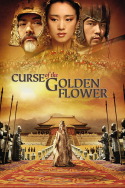
Review of Curse of the Golden Flower (2006) by Paul Z — 08 May 2010
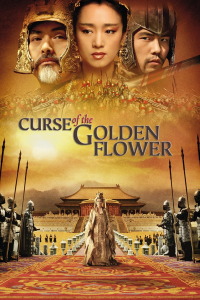
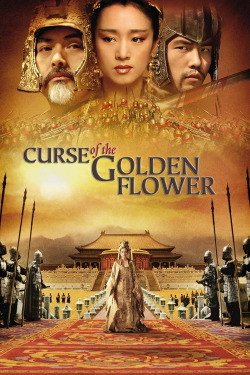
The palace is a Technicolor reverie, with its colorful curtains and carpets, a prodigious field of yellow chrysanthemums filling the massive courtyard. Reds and yellows in particular are almost tangible. Everything looks so vivid and ablaze, but these, alas, are only looks. The servants, royal guards, subjects, royalty, all take strict example from the curtains, carpets and chrysanthemums. And one little wiggle out of line, and everything comes toppling down.
There is an utter oppression inherent in Zhang Yimou's Shakespearian depiction of the Tang Dynasty, cloaked in elaborate decoration, etiquette and grandiosity. It even infects the Empress. Whenever she has one of her strange attacks, she reacts with defensive posturing, panicked by her perception that she appears weak to her subjects. She can hardly even accept it when she is alone.
The plot is slowly revealed. The laborious nature of the characters' world functions to offset brief, quiet, evasive dialogue exchanges. Secrets and suspicions are buried beneath the subjugations of the pervasive hierarchy. Everything seems starved and silenced. Indeed, no one speaks freely or can do anything without concrete permission.
This is achieved through incredibly subtle and detailed performances from all, not least from Gong Li and Chow Yun-Fat. Of all his performances, no matter how jaw-clenched and taurine, Yun-Fat has never dissociated us so affectingly. He often doesn't move, and exudes absolute inscrutability and impenetrable ego. Likewise, Li's fear and sorrow are counter-pointed matter-of-factly by small tiffs of intimidating coldness. All of Yimou's actors play their roles, big and small, entirely with faces. Whether or not they speak---in deliberately composed solipsisms---they cannot depend on language to express themselves, only proper gestures and the slightest triggers of emoting.
The film is a painstaking composition that weaves unabashed, logistically overwhelming spectacle side by side with delicate, almost fleeting subtlety. This is not Hero, and it is certainly not House of Flying Daggers. It is more like a hearkening back to Yimou's earliest work, like Ju Dou. There are gargantuan battle sequences, greased-lightning swordfights, even flying ninjas, but they do not lie at the heart of the film. What does is the stultifying oppression of absolute power, depicted as a labor of love and a unique, genre-bending, purely visual piece of cinema.
This review of Curse of the Golden Flower (2006) was written by Paul Z on 08 May 2010.
Curse of the Golden Flower has generally received positive reviews.
Was this review helpful?