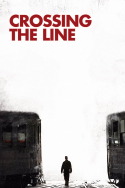
Review of Crossing the Line (2007) by Thomas A — 17 Jan 2013
A Portrait of a Man, Not a Land.
Wikipedia only lists reasons given by two of the four post-Korean War defectors to North Korea as to why they defected (a third article references this film, in which the man's reasons are characterized as "personal"), and contrary to what the North Korean government would have you believe, neither of them were ideological. Frankly, James Joseph Dresnok doesn't sound to me like the kind of citizen a country would go out of its way to acquire. He was a US Army Private First Class, stationed near the Demilitarized Zone between North and South Korea. He was told he couldn't have leave, so he forged some papers to have a pass. The person who supposedly signed them asked about it, and of course knew he'd never signed a pass for Dresnok, since he'd denied one. Dresnok was to be court martialed, and rather than face it, he took off walking across the DMZ. Hardly a great revolutionary hero.
Dresnok lives to this day in Pyongyang. He walked away from his unit in 1962. He was born in Richmond, Virginia, and seems to have joined the army because that's why someone in that time and place did. He got married, served two years in Germany, and came back to find that he wife was leaving him for someone else. He reenlisted, but it really appears that Army life wasn't for him. After the little kerfuffle with his CO, he just walked into North Korea, the second man to defect in nearly ten years. He spent most of his time with the first one, Larry Allen Abshier, and the two who came after, Jerry Parrish and Charles Robert Jenkins. They were put into the North Korean propaganda machine, including appearing in the twenty-hour saga [i]Unsung Heroes[/i]--as villains, of course. To this day, Dresnok is referred to by North Koreans as "Arthur," the character he played in the movie. He is now old and in poor health, but he says that nothing will ever make him leave his adopted country.
I can only assume, though the film doesn't go into a lot of detail about it, that Dresnok, the others, and their families live and have lived better lives than the average North Korean citizen. Dresnok maintains throughout the film that North Korea is a kind of paradise. There's no mention of starvation or prison camps! Dresnok doesn't even seem aware of any particular antagonism the North Koreans would have against him as an American. He raised his children as Koreans--but his older son apparently doesn't want to marry a Korean woman, for all that. He is frankly disbelieving of the idea that people are kidnapped by the North Korean government, despite having known for many years that the wife of one of the other defectors had been kidnapped from Japan. (Claims that his own first wife, Doina Bumbea, was kidnapped from Romania are unconfirmed.) Whether he's brainwashed or just not very bright--or presenting a good front for the camera--is more complicated than can be resolved with the limited information available.
A contradictory story was told by fellow defector Charles Robert Jenkins, and his allegations are covered some in the movie as well. Jenkins (by his own account drunk and depressed at the time he defected--and possibly not even a true defector but himself an abductee) is the only one of the four to have left North Korea and now lives with his wife in Japan. Among other things, he claims that Dresnok was a horrible bully who beat him up over thirty times and picked on Abshier. (Dresnok, not surprisingly, denies it.) He insists that both he and Dresnok had tattoos forcibly cut out of their skin; Dresnok says it was voluntary, which I'm not sure is that much better. He speaks of cruelty from their North Korean guards; the most Dresnok seems willing to acknowledge is that they were supervised and tested for loyalty. I'd have to read the book Jenkins wrote after he got out to be sure, but I suspect not even he knew the full extent of how unpleasant North Korea can be.
Even if Dresnok wanted to leave North Korea, I am not sure there's anywhere for him to go. That's even leaving aside the fact that the US has shown no particular interest in pardoning the defectors for their desertion; Jenkins served time, albeit less than a month, in confinement when he finally left North Korea. Certainly a man who defected to North Korea, deserting from the military in the process, could not expect to be welcomed back to Richmond with open arms. I'm not sure Dresnok is a communist, but I'm not sure he cares much about any ideology at all. He is shown fishing, and one of the old men who fishes alongside him observes that he does not seem to like it very much. The idea seems to astonish him; he doesn't ever seem to have considered whether he likes fishing or not. It's an odd moment, but it also seems to sum up quite a lot about this man. He is proud that, as "Arthur," he doesn't need to buy a license like the others do. However, he doesn't seem to get pleasure out of it, either. All that matters is that he is special.
This review of Crossing the Line (2007) was written by Thomas A on 17 Jan 2013.
Crossing the Line has generally received positive reviews.
Was this review helpful?