Review of Collateral (2004) by Reelviews94 — 23 Mar 2016
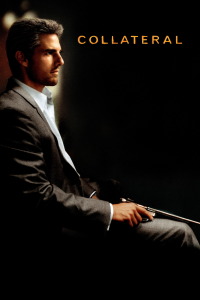
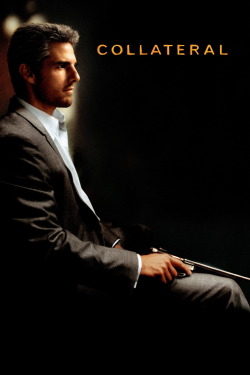
Reasserting his status as the cinematic master poet of nocturnal Los Angeles, Michael Mann has elevated a gritty but straightforward story — about a hit man forcing a taxi driver to take him on his appointed rounds during one violent night — into a mesmerizing, sometimes thrilling ride in “Collateral.” Occupying a dramatic, philosophical and sensory twilight zone that casts a considerable spell, this intensely focused piece soars not only on the director’s precision-tooled style but also on the outstanding interplay between leads Tom Cruise and Jamie Foxx. Star power, top reviews and powerfully delivered crime movie pleasures should translate into muscular B.O. in all markets.
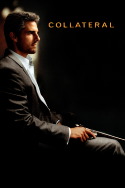
Everything, from the gun-metal gray of Cruise’s hair and suit, the exceptional selection of precise locations and the dense mix of the soundtrack to the psychological overlays among the characters and Mann’s creative leap that led him to shoot most of the picture on high-definition digital video, evinces an enormous sense of artistic concentration that translates into complete audience absorption in matters at hand.
After his excursions into corporate, political and biographical drama in “The Insider” and “Ali,” Mann returns to the home turf he so voluptuously explored in “Heat.” New film is not as ambitious as that staggering 1995 release — it’s like a series of striking pen-and-ink drawings compared with a multicolored mural too big even for the giant wall it’s painted on — and it deflates a bit toward the end, as relatively conventional cat-and-mouse chase dynamics through an office building and subway take front and center after the bracing long-arc build-up. It’s a smaller film, but one that — as a trawl through the city’s scary underworld — reminds at times of “Training Day,” but also stands as a worthy Left Coast response to Scorsese’s indelible portraits of nighttime New York, “Taxi Driver” and “After Hours.”.
Mann’s decision to shoot about 80% of the film in high def (a modified Thomson Grass Valley Viper FilmStream and the Sony CineAlta were both used) came from his conviction that the format more closely represents, and exceeds, what the human eye sees at night than does celluloid. Compared with the rich, intense color palettes Mann has employed in his previous work, “Collateral” has a more monochrome look that, paradoxically, combines a sense of deep darkness with a certain washed-out thinness and lack of visual weight. Punctuating this at all times, though, are the pervasive lights of the sprawling city, the appearance of which justifies the use of the new technology; to be sure, the sight of a succession of planes lined up in the air to land at LAX at night, or the spooky yellow glare in coyotes’ eyes, have never been so strikingly or realistically rendered as they are here.
Through the film’s ever-strengthening midsection, one memorable set piece follows another: A visit to a Crenshaw jazz club hinges on a meaning-laden exchange about Miles Davis between Vincent and the boite’s trumpet-playing owner (a superb Barry Shabaka Henley); Irma P. Hall invigorates a hospital visit the men pay to Max’s ailing mother; Max manages to turn the tables on his nemesis in a surprising chase that ends over a freeway, and the great Javier Bardem nails his one scene as a drug lord who relates a telling little parable to his guest.
But it’s all preparation for a sensational 10-minute Asian nightclub melee in which all the opposing forces — Vincent and Max, the cops led by Fanning and joined by Feds headed by Pedrosa (Bruce McGill), the suspicious drug lord’s goons and club henchmen there to protect Vincent’s quarry — converge amid hundreds of oblivious revelers partying to a throbbing techno beat. The action, in which many are killed, is intentionally confusing up to a point but clear enough in the end, and conveyed with cinematic command that’s breathtaking.
Shifting gears to play an outright villain, Cruise is at or near his best here. Hard and cold and endowed with sharp practical intelligence, Vincent has vulnerabilities that the actor reveals in carefully chosen moments. But it’s his ability to keep his eyes on the prize that defines him, and it’s this trait that Max adopts of necessity to get through the night.
Entirely dropping his comic persona, Foxx proves a terrific foil. Establishing Max as someone others find easy to talk to, Foxx doesn’t overdo the character’s shock and hysteria at his sudden misfortune, nor does he make him seem overly weak only to become falsely brave. What he does do is create a memorable portrait of a very ordinary man placed in extraordinary circumstances.
James Newton Howard’s score with source music, tunes of diverse origins and ambient noises, plays a very large role in sustaining the hypnotic mood.
This review of Collateral (2004) was written by Reelviews94 on 23 Mar 2016.
Collateral has generally received very positive reviews.
Was this review helpful?