Review of Code 46 (2003) by Hugh T — 12 Aug 2004
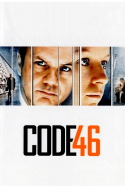
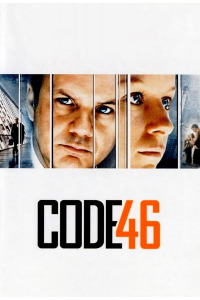
Michael Winterbottom?s latest film, [i]Code 46[/i], starring Tim Robbins ([i]The Shawshank Redemption[/i], [i]Mystic River[/i]) and Samantha Morton ([i]In America[/i], [i]Minority Report[/i]), can best be described as dramatically inert and (occasionally) visually impressive. A loose, meandering narrative, unsympathetic, poorly realized characters, and the clumsy, misguided use of portentous voice-over narration all contribute to a deeply unsatisfying film.
Set in a polyglot, near-future dystopia (modern-day Shanghai stands in as the city of the future), the "Code 46" of the film?s title refers to a legal regulation that governs (and limits) procreation between members of that society. The basis for that limitation is multiple, including genetic deficiency and close genetic backgrounds. In the near future, the danger lies in siblings or near siblings inadvertently meeting and procreating, due to the dispersion of genetic clones within the population. The near future is divided between the sleek, modern city offering the benefits of technology and (apparent) economic security and the barren, dusty, outside world of material scarcity and social Darwinism. Winterbottom and his screenwriter, Frank Cottrell Boyce, upend the dichotomy found in an earlier dystopia, [I]Blade Runner[/I]. In [I]Blade Runner[/I], physical danger (and chaotic, unpredictable violence), economic stagnation, and environmental degradation are all present in the Los Angeles of the future, with the Offworld Colonies offering the only means of escape for the moneyed elite. What both films share, however, is a similar vision of a polyglot, multicultural future where the dominant language, English, has been richly infused by other languages, including Spanish, Italian, French (all Romance languages) as well as Arabic and Chinese (presumably the local Wu dialect). [I]Blade Runner[/I] symbolic opposition can be described as vertical, even Judeo-Christian (earth and Offworld), whereas in [I]Code 46[/I], the opposition is distinctly horizontal, the choice between Inside (the city) and Outside (the barrens outside the city). [I]Blade Runner?s[/I] world, however, reflects a strong anxiety with foreigners and multiculturalism. In [I]Code 46[/I], multiculturalism itself is less a positive value than an objective fact. In both films, rigid social controls leave little room for personal choice or unregulated intimacy.
In Winterbottom?s city of the future travel is sharply limited and controlled by the government. Temporary visas are called ?papelles? (a linguistic riff on the word ?paper? in Spanish). Papelles are necessary for internal travel (as well as external travel), similar to the internal controls the former Soviet Union used to control the flow of information and people within it?s own borders. In Winterbottom?s world, proper authorization to travel is called ?cover.? Without authorization, citizens in the near future are essentially prisoners in their own cities. To leave without authorization is to risk banishment into the outside world. Winterbottom?s conceptualization of his near-future world seems to stop there, however. He offers the audience little additional information about the legal and social parameters of this oppressive society. He hints at, without elaboration, that an overarching, one-world government ties and binds all the remaining cities together. Presumably, ecological catastrophe and overpopulation contributed to the creation and maintenance of the rigid separation between the cities and the outside world.
Into this vaguely defined world, Winterbottom introduces the audience to his protagonist, William (Tim Robbins), a fraud investigator in Shanghai under temporary ?cover.? He has been sent by his Seattle-based company to investigate fraudulent ?papelles? at a Shanghai manufacturing plant. His interviews of the employees (more echoes of [i]Blade Runner[/i]) naturally lead to the female lead, Maria Gonzalez (Samantha Morton). Winterbottom, however, isn?t interested in creating dramatic conflict between the two characters, which would have inevitably led to the discovery of her connection to the fraudulent papelles as well as their increasing romantic attachment. Winterbottom instead chooses to bypass conflict and tension in favor of initiating and resolving the romance between the characters quickly. There?s no conflict, neither within the individual characters, nor with each other. The forces of external antagonism are either near-invisible (the social norms and laws that circumscribe their relationship) or, possibly, biological (the "Code 46" of the film?s title). Without internal or external conflict, the film meanders between passion-free encounters between the characters, finally culminating in the inevitable (and unsurprising) discovery/revelation that leads the narrative into the final, tensionless plot turns. Winterbottom further signals his disinterest in developing the plot by resolving the external, personalized conflict with the representatives of their inflexible, repressive society through the use of a [I]deus ex machina[/I] plot device at the abrupt, unimaginative climax of the film.
There are other issues with [I]Code 46[/I] that interfere with the audience's participation in the film, most notably Winterbottom?s misguided use of an intermittent, awkward, and clichéd voice-over narration by the female lead, Samantha. The voice-over narration opens and closes the film, with the past tense used throughout the narration indicating that the film itself unfolds in the past, with Samantha as the storyteller and protagonist. The voice-over narration is problematic because (1) Samantha isn?t presented as the main character, William appears to be (his choices, such as they are, drive and shape the narrative), and (2) even if the events depicted in the film are actually a glimpse inside her memories, her absence in multiple scenes which follow William alone indicate an omniscient point of view, an invisible, unacknowledged narrator, not one limited to one character, or one point-of-view. Winterbottom also borrows a now clichéd, [I]nouveau vague[/I] film technique, direct-to-camera shots of Samantha from William?s perspective, primarily in moments of intimacy. The selection of these shots reinforce the understanding that William, and not Samantha, is the protagonist in [I]Code 46[/I]. The audience then is left confused with both the structure of the narrative (flashback or real-time?) and with the identity of the protagonist, if any.
Given the problems with the material, it?s no surprise that the performances also fail to impress. Tim Robbins gives one of his most taciturn, disengaged performances and Samantha Morton, in a shallow, underwritten role, can herself do little to energize the script (predictable, given reports from the set that a great deal of rewriting occurred during filming, in part because Winterbottom wanted to use the loose dramatic structure as the basis for improvisation). Is there anything, then, to recommend [i]Code 46[/I]? Sadly, very little, outside the visuals of Shanghai, especially the night time cinematography (by Alwin H. Kuchler and Marcel Zyskind) and the overhead shots of the desert wastelands that encircle the cities. The soundtrack (scored by David Holmes) is equally impressive, closing with a contemporary pop song, ?I Miss You,? by Coldplay that ends the film on an undeservedly melancholy note. There?s also a cameo by an ex-punk rock star (a personal favorite of mine) in a Shanghai karaoke bar; he sings along with one of his band?s standards. I can only offer a marginal recommendation for [i]Code 46[/I], and only for fans of the film?s two stars, the director?s earlier work, or those interested in depictions of near-future dystopias on film.
This review of Code 46 (2003) was written by Hugh T on 12 Aug 2004.
Code 46 has generally received mixed reviews.
Was this review helpful?