Review of City Lights (1931) by Chrismizerak — 05 Jan 2020
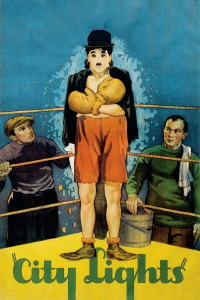
Charlie Chaplin's silent romantic comedy sees his famous Little Tramp character come across a blind flower girl whom he befriends and vows to aid. The Little Tramp by contrast also shares an on-and-off friendship with a drunken millionaire who treats him like an equal when smashed but becomes a completely different person when sober.
Basically, the Tramp finds himself in two opposing yet comparable relationships with two people that are essentially blind in some shape or form. The flower girl with her literal sight, and the millionaire with his sense of self. It's a splendidly off-setting contrast that is masterfully executed by Chaplin with one brilliant comedic sequence and plot development after another.
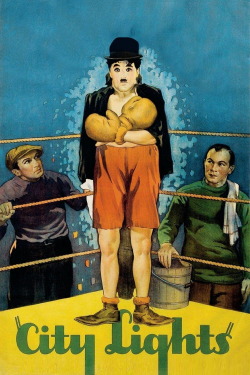
One of the film's best comedic scenes involves the Tramp attempting to earn money for the flower girl's eye operation by contending in a boxing match. I wouldn't want to ruin what makes this scene so hilarious, but let's just say that there's always a purpose for a referee in the boxing ring, sometimes to the added benefit of the underdog.
Even if it's far from the comedy that made me laugh the hardest, that honor belonging to another film, "City Lights" is at the very least amongst the most elegantly poetic. It's no secret that Chaplin devotes much careful thought and craftsmanship into his works, and that dedication is clearly in full display with this title.
From the little details such as the Tramp's outfit being filled with holes in his jacket to bigger plot details such as the flower girl visually mistaking the Tramp for a millionaire. "City Lights" remains one of the finest examples to come from the romantic comedy genre some 90 years after its release, and no one can fail at seeing that.
This review of City Lights (1931) was written by Chrismizerak on 05 Jan 2020.
City Lights has generally received very positive reviews.
Was this review helpful?