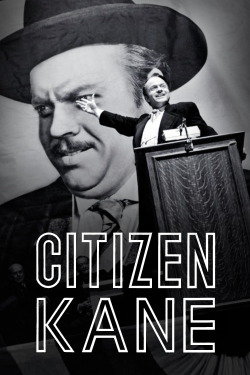
Review of Citizen Kane (1941) by Harry M — 29 Aug 2012
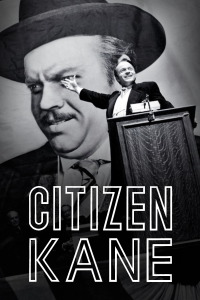
Orson Welles created a masterpiece; a masterpiece that is both shallow and yet contains so much about everything. Citizen Kane cares very little about what it knows: it was made less to reveal truths and more to prove that Welles was a genius, and that he was not only a brilliant theatre director, but cinema director as well. He succeeded, but controversy kept him from being recognized for years, and his subsequent work suffered. Somehow he continued to make masterpieces.
Thinking back on Kane, it's intriguing how little attention is paid to the theme of memory in the film. The non-linear storyline somewhat replicates how we remember: unless we concentrate, we don't think in order, and even when we do concentrate, we often mix up our timelines. Bernstein's speech about the girl in the white dress always struck me as particularly wise. It contains musings on not only memory, but time: something no man can escape. Jed Leland's note that memory is the greatest curse inflicted on humans serves as another thought on the matter. There's so much to think about when dissecting Kane, but the idea of memory stands out more than anything else to me. (I think that may have been Herman Mankiewicz's contribution: he seemed more interested in constructing a work of art than Welles in this film.).
Citizen Kane was released in 1941. It was directed by Orson Welles and filmed by Gregg Toland.
This review of Citizen Kane (1941) was written by Harry M on 29 Aug 2012.
Citizen Kane has generally received very positive reviews.
Was this review helpful?