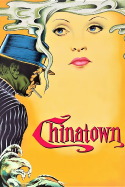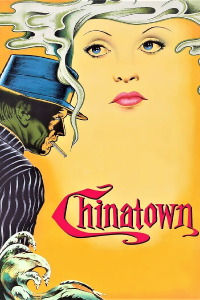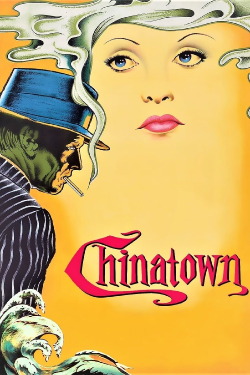
Review of Chinatown (1974) by Brett C — 30 Jan 2014
Chinatown is a film that I never admired or understood after watching it the first time, but perceptions can change during a second, or even a third viewing. I can't say this film is perfect because it does have it's shortcomings. Expectations were high the first time I watched this, due to it being handled by a praised director and that the film is now regarded as a classic by many. It is difficult to say negative things towards a film that is universally loved, but I don't believe in hiding my true feelings towards something and just go along with everyone else. I may be coming off, soundling like I'm going to say that this film is awful but I'm not. I'm just trying to say that this film does have minor flaws and that an opinion is an opinion, and one shouldn't be nervous or repressed into showing it. Getting a bit off topic, anyways on to the review.
The film was written by Robert Towne. Other notable films he has worked on were Mission Impossible and Bonnie and Clyde. I cannot say Chinatown is his best work as this is the only film I have seen from him, but what I can say is that he has made quite a good script. The film's plot focuses on a detective working on a case that seems deeper than what he thinks. The film is full of story, Towne isn't afraid to give the audience such a complex tale and the audience has to give their full attention, because if one key information is missed, one might mistake it for being a plot hole. The film is full of plot twists and half-hearted stories that it isn't short of keeping us surprised. The film has achieved in having the audience in thinking they have finished the puzzle but only to be fooled. In my first viewing, I never was able to grasp why the film was called Chinatown and what the line at the end of the film meant, as very little of the film takes place at the location and is only mentioned a couple of times throughout the film. After repeated viewings, I now understood what Towne was trying to tell us. Chinatown is a representation of the horrors of being too overly involved and that sometimes it's just better to just let things lie. Chinatown is also a symbol of Gittes' past, and the horrible events that transpired during his time there. Towne never lets Gittes fully explain his experience there because the film allows it to be explained as the film goes on. The film overall is like a huge conspiracy that involves more than just career disputes and disagreements, as it also personal relationships. Towne has written a protagonist that is empathatic and likable. Gittes is a character that I see as just a regular guy who has involved himself in something deep that he now can't get out of, not because it is against his will but rather his own curiousity got the better of him. The film's dialogue was a delight as it takes inspirations from the hard-boiled dialogue from classic noir films while making it appropriate for the new style of cinema. Towne has also written the dialogue to make it sound like gossip that is being passed along from one person to another, as gossips in general are usually misleading and is executed in a way to get us hooked. My issue with Towne's screenplay is the story relating to the mystery of the water. I just never found it that interesting and the payoff wasn't all that great, but luckily Towne has provided us with a very exciting story about family drama.
Chinatown was the first time Roman Polanksi has ever been nominated for Best Director, and the first time for his film to be nominated for Best Picture. He doesn't win an Oscar for the former until his 2003 film, The Pianist. Chinatown had stiff competition that year, facing up against films like The Godfather Part 2, The Conversation and Lenny. I honestly felt that The Conversation should have won that year, but Chinatown was a close second in my book. Chinatown is a well directed film, as the director wanted the film to truly be a throwback to the days of noir films in the 40s and 50s but also instill the style that was found during the time of shooting. Though the movie feels stylish, it doesn't draw itself away from the film's plot which is still the main focus of the film. Polanski wanted the film's plot to be followed in the mindset and perspective of the protagonist in order for us to have this first hand experience of the plot unfolding and at the same time it allowing us to get in touch with the character, allowing us to feel empathetic to his actions and decisions. Polanski only allows us to hear what Jake hears and see what Jake sees. Polanksi has employed this style before on Rosemary's Baby. If Polanski allowed us to see the whole picture before the protagonist does, then this film would have failed completely in keeping the audience interested or invested. The film doesn't so much play with our emotions as it stays at a constant tone throughout, it's as if the film is telling us that things will just get worse from here. Chinatown is a talky film and Polanski seems to use it as a driving force in creating the mystery and developing our curiousity of what comes next. Polanski didn't need the film to be stuffed with gun play and action sequences to keep our attention, keeping this film very minimal. This approach was also similarly found on his previous film, Rosemary's Baby. I admire that Polanski wanted this film to move at a slow pace, as this allowed the audience to take in the information and giving us time to grasp on to it. Though there were a few times where the film was giving me so much plot, that I needed a little bit more time to kind of wrap my brain around it. The film's plot could be better understood with repeated viewings.
John Alonzo is the film's director of photography and he has worked on other notable films like Scarface and Harold and Maude. I truly enjoyed what he has done for those films, and judging from those and this film, it seems that he is a man who truly understands a director's vision. His films rarely looks the same, and this is because every director has a different vision on what their films would look like. Chinatown may be a period piece but Polanski never wanted the film to feel ultra stylish or pay too much homage to the look of the period, instead he wanted the photography to support the film's story. As Polanski has the film following the protagonist throughout the film, Alonzo has the camera following our character from behind kind of like we are investigating the case with him. Sometimes, Alonzo allows us to see things from Gitties' perspective like when he looks through the binoculars, subtly having the audience be put in his shoes. There are a few moments where Alonzo truly captures a time and place that has passed by us, by having the costumes and production design show off a sense of nostalgia.
The film's score was created by Jeff Goldsmith who has worked extensively on a large number of films, with some regarded as classics. Chinatown is one of those classics. Goldsmith's score in Chinatown is a nice throwback to the films during the height of the noir genre. The score creates this sensuality and sorrow due to the trumpets and piano. It truly creates a presence when it comes on. Polanski and Goldsmith has limited their use of the score though, only appearing in brief moments, casually not getting in the way of the dialogue. It is more used as a mood amplifier, in order for the scene to feel more than what it is.
The film's acting was great with Jack Nicholson giving a stand out performance. Nicholson was able to convey a man who is experienced in his profession and subtly carrying a sense of weight that seems to still haunt him. Faye Dunaway was great as Evelyn Mulwray. Dunaway, like Nicholson, plays off as someone who has a dirty past but she gives off more a sense of paranoia as if the walls were closing in on her. We can really see that there is more behind her words and her subtle reactions to certain moments or questions truly sells her acting. John Huston and Perry Lopez were also great in their supporting roles.
Chinatown's screenplay truly sells the film, even if I don't completely find every single detail of it very interesting. All the other components of the film are present to support the film's plot and overall they have done a wonderful job. I am torn whether I prefer this than Rosemary's Baby but even if the other fares better on me in the future, I still can't deny that this is a great film.
This review of Chinatown (1974) was written by Brett C on 30 Jan 2014.
Chinatown has generally received very positive reviews.
Was this review helpful?