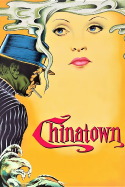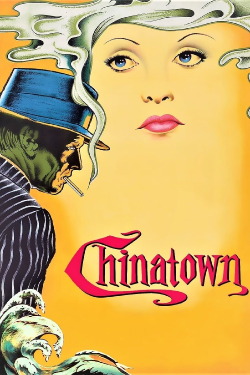
Review of Chinatown (1974) by Cameron H — 19 Jul 2014
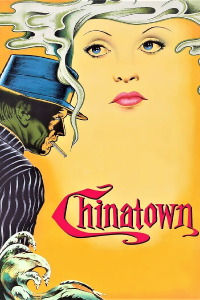
In Chinatown's presentation as, partially, an ode to black-and-white detective mysteries, I had a few expectations and fears as to what this could have been: a gimmicky, or perhaps satirical, tribute to film noir that takes the genre's cliches to the extreme, or sheds modern light onto what was, in the 1970s, an outdated genre for storytelling. None of that quite accurately describes Chinatown. The setting is Los Angeles, early 1930s. Private Detective Gittes (Jack Nicholson) has completed what was his typical catch-cheating-husband-in-the-act case. This husband, Mr. Mulwray, is an important figure in L.A. He was co-owner of the city's water department, and then gave it to the government so water would no longer be privatized. Not too long after Gittes takes photos of Mulwray and his secret lover, Mulwray is found dead in the ocean. Mulwray's widowed wife, Evelyn (Faye Dunaway), and her father Noah Cross (John Huston), former co-owner of the water department, hire Gittes for separate matters all linked to the death of Mr. Mulwray. On a larger scale issue, before his death, Mulwray was fighting against a dam that, unbeknownst to the public, would not be used to cure the city's drought, but instead for privatized land owners. This is as much as I can say without feeling I have revealed too much. There are countless plot points, and the film wastes no time in uncovering each one. You see everything through the eyes of Detective Gittes (not as literal as that may sound). That direction bridges a strong connection between the audience and Gittes, and it's a choice of Polanski I very much like. His other life choices.... errrrrr.
Damn, do I want to talk about the story. I will abide to my no-spoiler rule and simply state that Chinatown is far more uncompromising and vicious than I expected, even as my expectations changed throughout the progress of the film. Nicholson and Dunaway, while arguably not the most versatile actors, each add juicy character to their roles. Nicholson is as devilishly charming as he always is, and Dunaway can turn from cold and callous to victimized in a heartbeat. An unrelated tone of the movie I really liked is that there is a light modern touch of how the era is depicted. When I say modern touch, I mean a more realistic touch -- profanity is stronger and racist jokes are addressed as racist, though I would never resist a good China man joke. I loved the story, the style, the acting, the scenery (it's not just Chinatown), the dialogue, everything. I was so involved that when I had to poop in the middle of the movie, I brought the movie with me to the bathroom.
This review of Chinatown (1974) was written by Cameron H on 19 Jul 2014.
Chinatown has generally received very positive reviews.
Was this review helpful?