Review of China Seas (1935) by Dan S — 01 Feb 2013
Those Dresses Will Take Some Altering!
Okay, so I admit it. Someone on IMDb made the claim that, at one point in the movie, Jean Harlow's dress slips and you can see her breast. And I checked. Frankly, this was at least in part so I could grouse about the ridiculous things people see in movies when they want to see them. We are a pattern-seeking species, and it's caused some trouble for people over the years. However, not in this case. That is very clearly Jean Harlow's dress coming down and exposing her breast. She also does not appear to be wearing anything under the dress. As to how it made it past the censors, well, there are two answers. One is that the slip is so quick that you can miss it, and it certainly doesn't appear to be scripted. The other is that this is a pre-Code film. The standards were considerably looser; the censors had less power. I've no doubt that Joe Breen would have seen it, but under Joe Breen, it couldn't have been made anyway.
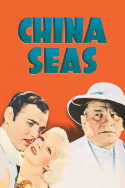
Clark Gable (who would be 112 today) is the steely-eyed captain of a boat that sails the eponymous seas, Captain Alan Gaskell. He has long been entangled with Harlow's "China Doll," Dolly Portland. He is trying to shed her, and just as she buys a ticket so that he can't get rid of her for the length of a voyage, out of his past steps the lovely English lady, Sybil Barclay (Rosalind Russell). Gaskell plans to quit his job at the end of the voyage, marry her, and return to Surrey. Of course, the route is dangerous; they are carrying a shipment of gold, and many ships have been taken by Malay pirates. It's almost as though they have an inside man who knows when the shipments are to be made--and they do. It is Jamesy MacArdle (Wallace Beery), friend to Gaskell and ardent wooer of the sexy, fierce Dolly. She finds out his secret and wants to tell Gaskell, but his own foolish actions make her just as willing to let him die for his mistake of jilting her.
It is strongly implied that Gaskell and Dolly have been sleeping together; certainly, when Gaskell finds out that Dolly has been in Jamesy's cabin late at night, he's willing to believe that she was sleeping with Jamesy. Her open sexuality is one of the primary differences between Dolly and Sybil, one of the ways you can tell that Sybil is really a lady. It is never suggested that Sybil cheated on her husband; it is suggested that Gaskell fled to Asia rather than try to seduce her and betray a friend. There is essentially no overt sex in the movie, Harlow's breast notwithstanding, but the implication of it is everywhere. The Code would later be ferocious about the implication of sex, rooting it out wherever they could find it. (The screenwriters were usually smarter than the censors and hid it in there anyway.) However, without that implication, Dolly's claim over Gaskell loses its force, and the characterization of Dolly slips a bit.
What's more, Crime Must Pay. I don't want to give away too much (yeah, I know; it's a seventy-eight-year-old movie, but had you ever heard of it?), but one conspirator with the pirates escapes punishment, as do the pirates, and the implication is that another will probably not get the sentence possible. Of course, "escaping punishment" is a slippery definition, but Joe Breen tended to be pretty adamant that the failure of crime to pay meant that [i]someone[/i] had to stand trial. It wouldn't matter that the route between Hong Kong and Singapore is now that much safer. What would matter was the Law. Only one character who had anything to do with the piracy is going to stand trial, and that simply wasn't considered good enough. Silly, I know, but there it is. Besides, he would have preferred that Gaskell reject all connection and merely look upon the whole thing with Noble Regret as the Sinner Was Made to Suffer. Think Humphrey Bogart saying goodbye at the end of [i]The Maltese Falcon[/i], and you'll start to get the idea.
I would have liked considerably less of the superfluous drunk guy (Robert Benchley) and considerably more of Isabel, Dolly's maid (Hattie McDaniel). A better writer could have developed Dolly's torment; a better writer probably would have realized that you can't be grabbed that forcibly around the throat that often and not be left with bruises. Dolly shouldn't have to tell anyone that she's being threatened; someone should be able to tell by looking at her. Come to that, a better writer might have thought to establish that Gaskell was the only person on the crew she trusted to give her information to. Okay; Jamesy says he will kill her if she goes to Gaskell with what she knows. He can do it; it wouldn't be all that difficult, and certainly it's easy for him to dispose of the body. However, he can't stop her from talking to any of the other crewmembers, can he? Or from sending her maid to talk to Gaskell? It just seems that the solutions are too obvious and are ignored anyway.
This review of China Seas (1935) was written by Dan S on 01 Feb 2013.
China Seas has generally received positive reviews.
Was this review helpful?