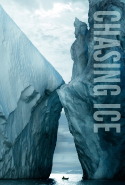
Review of Chasing Ice (2012) by James K — 25 May 2014
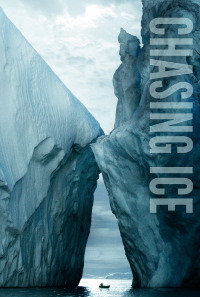
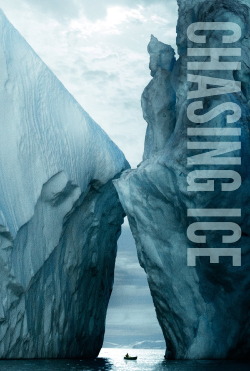
[Spoilers] "Chasing Ice" tells the story of nature photographer James Balog and the journey that led him to become a climate change activist. Beginning as a sponsored project with National Geographic, he develops a plan - called the Extreme Ice Survey (EIS) - to use time-lapse photography to show the change of size in glacial formations over time. However, the project soon progresses to more than just a unique art experience, becoming the catalyst behind a movement to raise awareness about the actual severity of global warming.
Immediately, it is evident that trained visual artists were in charge of the cinematography. The film is beautiful and stunning, depicting everything from doctor's offices to monumental glaciers in gorgeous detail. Despite the tragic nature of the message, I could not help but crave to watch every moment in the story of the "dying" landscapes, the beauty in the destruction. Perhaps that is the most resoundingly bittersweet element of the film's message - it is humans who are to blame for this complete transformation in the ecosystem of the planet. Clearly, the scope and skill of the cinematography is the defining feature of the documentary, if nothing else.
Yet, the story is filled with hope for the future through its depiction of the photographer. The journey of James Balog is captivating, making him a powerful character in a story that adds a new depth to the documentary. Over the course of the film, Balog transforms from a mere photographer striving for recognition for his work to a complete activist. The EIS project is a huge endeavor, consuming much of his time and requiring him to be away from his family for large periods of time. Additionally, the physical nature of the project's execution - involving mountaineering, climbing ice, kayaking, and hiking simply to find a place to secure the time-lapse cameras - takes a huge toll on Balog's body, resulting in numerous knee surgeries. Despite these setbacks (and ultimatums from doctors), he continues because of his conviction in the importance of the project's success.
However, the documentary does not portray Balog simply as an idealized human, but rather a complex, real individual. Throughout the film, he places his personal desire to see the project succeed in front of the needs of his family, his pride resulting in him using knee surgery not as a means of repairing his body but rather like putting a patch on a pair of extremely ripped jeans. Eventually, however, the pain becomes too much, and, in one of the most emotionally gripping scenes, he has to relinquish control of the project's on-sight execution to his younger assistants. The emotional pain he feels is equivalent to the physical; he no longer can be at the fore in the pursuit of accomplishing the project, instead having to trust others.
In fact, the film's most memorable and important scene - the capture of a 75-minute-long "calving" (or breaking off) event at Jakobshavn Glacier in Greenland - takes place in his absence. Yet, the decision to trust his assistants with capturing this on film allows him to fully manage the rest of the project, providing him the opportunity to organize public presentations of the accumulated images. Because he focuses more on the project as a whole rather than all of the specifics, Balog is able to do his best to bring awareness of the project into the public sphere, creating a more effective scientific and global impact.
Finally, the documentary as a whole is strengthened by the music. The score is haunting, able to capture the immensity of the glacial formations while maintaining the melancholy of Balog's prophesies. In cases where interviews or narrations are omitted, the music becomes a part of the scenery, inseparable from the beautiful images captured on film. At the end of the film, the song "Before My Time," featuring Scarlett Johansson's voice and Joshua Bell's violin playing, evokes a final encapsulation of the film's themes in a beautifully tragic depiction.
Immaculately-filmed and emotionally-rendered, "Chasing Ice" is a definite must-see. Balog's subtle evolution from artist to activist is extremely interesting on a human level, but the message of climate destruction resounds on a global stage for all humankind. However, the film does not come across as preachy, instead using the images as a visual gut punch of evidence for the scientific facts. Equally balancing themes of doom and hope, nature and humanity, the documentary succeeds on every level as a compelling, relevant call to action.
This review of Chasing Ice (2012) was written by James K on 25 May 2014.
Chasing Ice has generally received very positive reviews.
Was this review helpful?