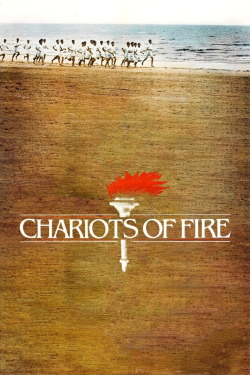
Review of Chariots of Fire (1981) by Carlos M — 28 Feb 2016
Being the Best Picture Oscar-winner and featuring an iconic soundtrack, Chariots of Fire sounded like an absolute classic.
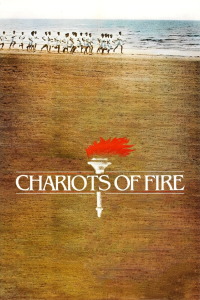
Hugh Hudson is clearly a passionate and patriotic director. It's clear from the first shot of men running along the beach that his main intention with Chariots of Fire will be to capture the brilliant achievements of the two central athletes, a notion which is supported by the rest of the film. But when it comes to the actual experience, there is only so much time you can spend watching a group of young European men running through a series of terrain. Chariots of Fire insists on making viewers sit through it for 120 minutes of it with a series of extensive upper-class conversations in between. The former boast stylish appeal, but the latter drags anchors the experience in an overly slow pace with an abundance of talking. There are some spirited moments of dialogue in the screenplay, but the majority of the dialogue is just endless conversations in which the main characters somehow get lost amid the countless generic supporting figures. Chariots of Fire would clearly be most influential in its homeland for how it depicts the achievements of its main characters, but looking at it from an Australian context I feel that the film is a little too esoteric in the modern day.
One of the supposed themes of Chariots of Fire is how English Jew Harold Abrahams is running to overcome prejudice. I actually struggled to find this within the film since everything was so focused on emphasizing the accomplishments of its athletes that it forgets to truly capture the challenges they succumb to along the way, aside from some of the general physical aspects of training and running in general. The meandering attempts to make Chariots of Fire a character piece are too far and in between in favour of the larger scale of things, even though the film fails to capture international value in its cultural history. The political context in Chariots of Fire feels ignored as the entire feature seems like such a simple historical drama which is little more than a reconstruction of events without much touching drama to go with it. The central problem is really that Chariots of Fire idolizes the achievements of its characters too much to depict them as much more than upper-class sporting heroes. There is no denying that the physical accomplishments of the stars and that Hugh Hudson's eye for imagery captures this with energetic flair, but his grip on finding actual edge in the material fails to supply appropriate drama to suffice.
Frankly, Chariots of Fire is a film which just goes in circles with all its extended periods of boring dialogue. And for a film about such fast athletes, Chariots of Fire is ridiculously slow. The races depicted in the film are over in seconds, yet the film takes more than two hours to stumble through all its pompous banter. The only scenes I really valued were the stylish moments, and even they were too sporadic over the course of two hours. The opening scene highlights everything about Hugh Hudson's keen eye for imagery because it depicts the fast skills of the film's athletic characters and just how well director of photography David Watkin is determined to capture them. The running scenes themselves are very inspired, capitalizing on the full power of the visuals and the music. The cinematography itself works to capture both the magnificent large spectacle of the scenery in its wide-angle shots while zeroing in on the characters doing the running. This gives the film colour and powerful sporting spirit.
But of course, the musical work of Vangelis is the greatest asset to Chariots of Fire. The Academy Award-winning musical score evokes a real 1980's feeling during some of its more subtle moments, but this aspect becomes restrained in the face of the big-scale sequences of racing. Vangelis' musical score works powerfully with the slow-motion in these scenes to capitalize on the full extent of glory in the stylish achievement of Hugh Hudson's work. Since the low-budget of Chariots of Fire managed to end up as such a strong exercise in style that was able to churn out massive box-office returns and contemporary critical acclaim, it has been heavily credited with revitalizing the fading British film industry. In that sense I will certainly praise Chariots of Fire for the value of its influence, but as a standalone film it just lacked the necessary entertainment value.
And though the characters in Chariots of Fire are from deep enough, the cast manage to contribute their natural charms to the roles.
Ian Charleson is the most likable character in Chariots of Fire. With the intention of his character Eric Liddell being simply to run for the grace of god, Ian Charleson tackles the determination of his part with natural energetic spirit. Aware of his challenges in the role, Ian Charleson takes them on without fear. The scenes depicting him running show the full extent of his athletic skills, and it is hardly a performance for him since everything comes to him so naturally in terms of both running and grasping the dramatic mood of things. Ian Charleson delivers a top effort in Chariots of Fire.
Ben Cross is also great. With a character that faces a greater modicum of genuine drama that Ian Charleson while also battling a physical challenge of his own, Ben Cross captures a strong performance in the part of Harold Abrahams. Ben Cross captures the vulnerability and insecurity of the character while overshadowing it with a focus on plain ambition, to prove himself both as a runner and a human being. Ben Cross takes a strong stand in Chariots of Fire, and the major training scene depicting him working with Sam Mussabini depicts the full inspiration in his effort.
The actor in the role of Sam Mussabini, Ian Holm, is one of the greatest cast members in the film. Though perhaps lacking sufficient screen time to deserve an Academy Award nomination, Ian Holm's performance is bolstered by a brilliantly passionate spirit which the man is able to articulate entirely through his manner of speaking. He shouts words with such a great passion that the inspiration is clear, and his chemistry with Ben Cross illuminates the greatest extent of spirit in the film. Ian Holm's acting skills prove to be a great asset to Chariots of Fire.
Chariots of Fire is a patriotic film with a brilliant musical score on behalf of Vangelis, but it is too esoteric with its language and simplistic with its characterization to offer much contemporary appeal outside of its native land, leaving it as an overly long and slow-paced historical drama which lacks sufficient edge for a sports film.
This review of Chariots of Fire (1981) was written by Carlos M on 28 Feb 2016.
Chariots of Fire has generally received positive reviews.
Was this review helpful?