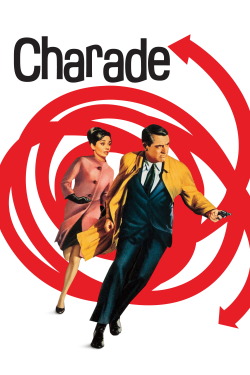
Review of Charade (1963) by Chris M — 26 Oct 2013
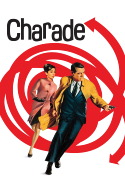
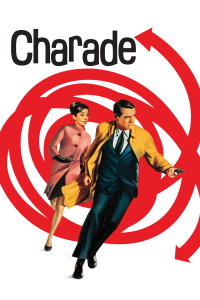
Director Stanley Donen's 1963 mystery Charade, starring Cary Grant and Audrey Hepburn, has often been considered the best film that Alfred Hitchcock had never made. And to give credit where credit is due, Charade does resemble a typical Hitchcock picture in terms of its style and premise. They even got Cary Grant to star in this picture, who starred in many of Hitchcock's earlier pictures such as To Catch a Thief (1955), North by Northwest (1959), and Notorious (1946). Whether or not Charade is truly worthy of comparison to Hitchcock's best films remains to be seen. In the meantime, let's venture forth into the premise behind this picture that Hitchcock didn't make.
A young lady by the name of Reggie Lampert (Audrey Hepburn) has recently learned that her husband has been murdered. The only item in his possession in which the informants were able to recover was his travel bag which is filled with other various items. During his funeral, she notices three suspicious men (James Coburn, George Kennedy, and Ned Glass) attending to see the body simply to confirm that this person is dead. A CIA administrator (Walter Matthau) informs her that these three men are after the money that was in her husband's possession.
He also informs her that her husband was with these men on an important mission to deliver $250,000 in gold to the French Resistance. But they all stole the gold, her husband double crossed these men, and he took all the gold for himself. Now this administrator tells them that not only do these three men want the money back, but so does the U.S. government. The administrator insists that Reggie has possession of the money, but she doesn't know where it is. So these three men are now coming after her to retrieve her husband's wealth. A stranger by the name of Peter Joshua (Cary Grant) helps her out with her dilemma. But not only does he need to know where the money is, he may or may not have been involved with the other three men and her husband in their mission.
It's important to note that Stanley Donen, the director of this film, was best known for directing such beloved musicals as Singin' in the Rain (1952), Seven Brides for Seven Brothers (1954), and On the Town (1949). With a resume like that, you wouldn't expect a director like Donen to be able to do justice in replicating a Hitchcock picture. But somehow even with his inexperience with Hitchcockian type thrillers, he gets Hitchcock's style down very well here. It helps that the plot to Charade bares many similarities to such Hitchcock classics as To Catch a Thief and North by Northwest. Chief among these similarities being that the main character is trying to evade someone or some people after them for something they didn't do, and finding love with someone along the way whom they can and can't trust.
The dilemma that Reggie gets into is relentless between the three guys interrogating her for information regarding her husband's fortune and Peter's many secrets that he's keeping from her. I admire how well she handles all of this madness that suddenly occurs in her life as a result of her husband's actions. Because of the way she handles this whole situation to the best of her ability, we are able to have an easier time sympathizing with her. And although he basically lies to her more than once, Peter is also worthy of sympathy as well. Without revealing any more about his character, we sympathize with him and the lies he has to tell because he basically has no other option in terms of helping Reggie out.
Are the antagonists in this film that memorable in any way? I'm afraid not, since they're pretty basic character wise and are simply there to progress the story and nothing more. Are there a few scenes that put the film to a halt or slow it down at least? Yes, one scene that comes to mind is when Reggie is conversing with Peter and they literally talk about the movie An American in Paris (1951) for whatever reason. In the end, I'm just not ready to consider Charade a great film yet mainly because it didn't quite blow my mind like some of Hitchcock's best work. I think it could have ended earlier and gotten to the point a tad faster, but that's just me. Any hardcore Hitchcock fans who see Charade will find plenty of things to admire about it, mainly how closely it resembles the work of the Master of Suspense himself.
This review of Charade (1963) was written by Chris M on 26 Oct 2013.
Charade has generally received very positive reviews.
Was this review helpful?