Review of Cave of Forgotten Dreams (2010) by Abbas M — 21 Jun 2011
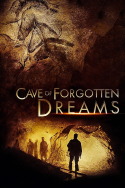
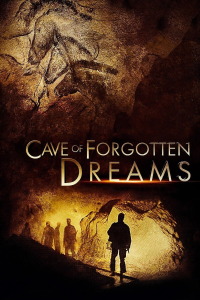
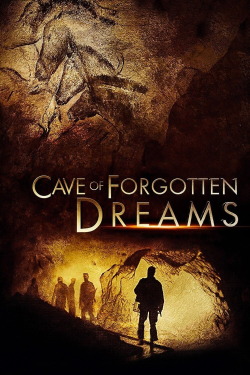
As a documentarian, Werner Herzog has never shied away from inserting his own off-the-wall, subtly irreverent comments into his narration; here, he compares the curves of a Paleolithic drawing of a woman to those of the stars of BAYWATCH. But these idiosyncrasies only add a bit of a color to the proceedings, rather than detracting from them. And in the instance of CAVE OF FORGOTTEN DREAMS, that's especially important, for Herzog here tackles perhaps the most vital subject of his documentary career; a cave in southern France, filled with 32,000 year old drawings--the earliest ever discovered.
The drawings themselves are startling: by any standards, they're a magnificent example of life drawing (the horses in particular are remarkable), but their value as a record of the early stages of modern humanity make this film a totally indispensable record. And the cave itself is filled with beauty as well; the skeletons of cave bears lie scattered about, some crusted over with many thousands of years' worth of sediment, and one skull perched on what appears to be an altar--perhaps an artifact of pagan worship.
Herzog also deals with the people who work with the cave and study this stage of human development; among them is an incomparably cool French anthropologist who shows, not with much skill but with much enthusiasm, how these early men may have hunted. The film thus serves as a fascinating (if occasionally dry) look at archaeological work, in addition to its other virtues.
What I haven't even mentioned yet is that this film makes the best use I've yet seen of 3-D, which genuinely enhances the feel of the cave, drawing one into this fascinating, forbidding world. If there was ever a film that justified the extra expense of a 3-D ticket, this would be it.
It's not entirely flawless: I found myself dozing during the middle third of the film, although that likely had nothing to do with the film. But more problematic is the epilogue, which deals with mutated alligators in a nearby preserve whose warm water comes from the cooling tanks of the adjacent nuclear power plant. Herzog valiantly tries to link this sidelight to the main story, but it doesn't quite work. It should have been a separate short or a prologue; as an epilogue it undercuts the haunting final moments in the cave.
Herzog's customary narration is calmly, intelligently spoken, and wittily written; as a documentary director, he shows his skill at picking the right people to talk to and getting them to say the right things. Ernest Reijseger's music adds the perfect haunting touch.
CAVE OF FORGOTTEN DREAMS, as a Werner Herzog documentary, should have been a cinematic event by that virtue alone. But the subject matter is so important, and the use of 3-D so cunning, that it becomes a must for any student of anthropolgy, art, or cinema.
This review of Cave of Forgotten Dreams (2010) was written by Abbas M on 21 Jun 2011.
Cave of Forgotten Dreams has generally received positive reviews.
Was this review helpful?