Review of Cave of Forgotten Dreams (2010) by Wayne S — 20 Jul 2011
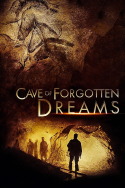
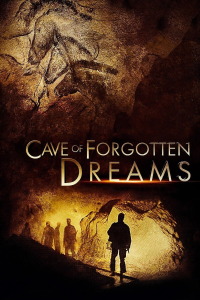
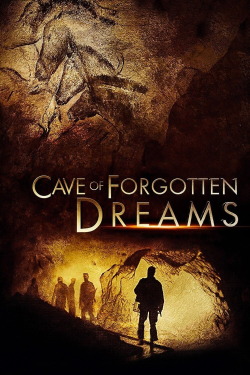
Werner Herzog's new documentary, "Cave of Forgotten Dreams," is a fascinating meditation on the passage of time, and man's perception of the world around him. It was filmed in 3D in the Chauvet Caves of southern France, which were only discovered in 1994, after having been sealed off by the collapse of a mountain face aeons ago. Air coming through a crack in the ground led to a re-entry of the caves, and what was found inside is amazing... scores of wall paintings from the dawn of time depicting a variety of animal life, and a floor littered with the skulls and bones of animals, some now known to have been extinct since prehistoric ages. There are paintings of lions, horses, bulls, birds and a variety of creatures, a few in apparent motion. Some of the paintings incorporate the contours of the rock and the scratches left by enormous "cave bears" to give the artwork a three-dimensional appearance. To preserve the ancient art and the fragile eco-system of the caverns, the French government allows extremely limited access to the underground chambers. Visitors are required to put on sterile boots and move only on a limited number of metal "cat-walks" that are placed strategically through the extensive cave system. This means that some of the paintings can only be viewed from a distance or a specific angle. No heat-producing lights are allowed and the time spent in the cave is also restricted, since even human breath and warmth can produce damaging mold.
So Mr. Herzog was filming under difficult conditions, and his time and technical apparatuses were limited. After some preliminary visits and extensive interviews with the administrators and research scientists, the project proceeded. Using flat "plate" LED lights and mostly hand-held cameras, the director was given a week of four-hour days to complete his work. What he has assembled is nevertheless satisfying and gives the viewer a unique look at the Chauvet paintings that could never be experienced by simply viewing the limited number of published photographs of the artwork. His narration is informative and is colored by Herzog's unique accent and his almost mystical way of interpreting what he shows us. Yet my favorite segments of the film are perhaps when the director steps back and just allows us to view the paintings in silence, or with the addition of carefully chosen music, the sound of heartbeats, or wordless vocalization.
Interspersed with the interior excursions, there are a series of interviews to flesh out the story. Curators, historians, scientists, experts on ancient weapons, even a master perfumer who prowls the wooded hills sniffing out possible still hidden caverns. Those of you who know Herzog through his documentaries are well aware of his fascination with people and faces. So these interviews are maybe showing us more than the topic at hand. We get a sense of personality, the editing is sometimes revealing of hidden emotions, with the interviewees almost becoming "objets d'art" themselves.
Since the movie has such built-in parameters of time and space, there's a chance some may find the finished project static or "stretched." One comment I heard among the audience was that the film would have been perfect as a one-hour television documentary. Indeed it was sometimes repetitive and claustrophobic, but depending upon one's interest in the Chauvet galleries, the film might seem to various viewers as being slightly boring, perfectly achieved, or unsatisfactorily limited. I myself love a tag-line from the Hollywood Reporter used on the movie poster: "To call this movie fascinating is akin to calling the Grand Canyon large.".
I will recommend "Cave of Forgotten Dreams" to anyone, with reservations. The viewer must be willing to watch and listen, to use his imagination, and to accept the project on its own terms. I myself enjoyed it immensely, even though my viewing was not a 3D projection. Herzog ends the film with some odd footage of albino alligators swimming in a pool of water superheated by a nuclear reactor not twenty miles from Chauvet. Speculating on the future, he wonders how our own achievements will be viewed, and by what strange creatures, in the farthest mists of time.
This review of Cave of Forgotten Dreams (2010) was written by Wayne S on 20 Jul 2011.
Cave of Forgotten Dreams has generally received positive reviews.
Was this review helpful?