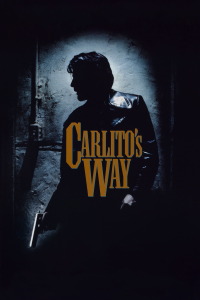
Review of Carlito's Way (1993) by Allan C — 02 Jun 2016
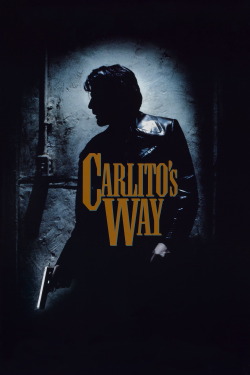
I absolutely love this film and consider it a modern classic. It received mixed reviews back when it was first released, although I loved the film immediately upon seeing it in the theater. And long before this film came out, I was a huge fan of director Brian De Palma, but "Carlito's Way" has since rightfully gained a significant following.
Much of the criticism of the film when it was initially released was that the film was too much of De Palma and star Al Pacino rehashing old material (i.e. this being a rehash of their earlier collaboration on "Scarface"), but this film is so much more and is a far more character driven of piece than "Scarface" ever was.
Set in a disco era 1970s NYC, Pacino plays an Latino ganster recently released from prison on a technicality by his sleazy lawyer, a brilliant and nearly unrecognizable Sean Penn who hadn't acted in anything for quite a while up until this film.
Carlito wants to go straight, but the street keeps sucking him back in. Outside of the superficial elements that De Palma is directing and Pacino is playing a Latino gangster, this film has nothing similar to "Scarface.
" Even if the film were to be considered a spiritual sequel to "Scarface" (or a retread if you're feeling more negative) I don't think that's a credible reason to dismiss this film.
I always appreciated Martin Scorcesse's defense of "Casino" being too similar to "Goodfellas" when he pointed out that John Ford (my all-time favorite American film director) essentially made the same movie three times over again with his Cavalry Trilogy (with nearly the same cast and story each time).
But more specifically to the attributes of "Calito's Way." Pacino actually tones his performance down quite a bit for Carlito. Most of his film since "Scent of a Woman" involve Pacino constantly being at the top of his lungs.
Pacino certainly does have his big moments here too, but it's his quite ones that are most memorable. Most of those quiet moments involve scenes with love interest Gail, played by Penelope Ann Miller.
I remember when I originally watched this film I wasn't sure if Miller was cast correctly, but I've come to decide she was perfectly cast. She and Pacino are not a typical match as an onscreen couple, but their characters are a mismatch as well, which is what makes it so effective.
Miller spent most of her career at this time doing light comedy, but she gives a strong moving performance as Carilo's long suffering girlfriend. The film is also filled with memorable supporting performances, ranging from Luis Guzmán as Carlito's henchman Pachanga, to James Rebhorn as the DA out to get Carlio, to Adrian Pasdar, Richard Foronjy, and Frank Minucci as Italian mafia figures, to a very memorable John Leguizamo as Benny Blanco from the Bronx.
One of my own personal favorite movie games going back to my video store clerk days was "Best One Scene Performances" and this film contains on of those on my list. It's the scene where Lalin (Viggo Mortensen before he was famous) meets with Carlito in the club and is wearing a wire for the DA.
Mortensen is such a weasley and pathetic character, but Mortensen somehow manages to almost generate sympathy for his awful character. It's a performance on the level of Peter Lorre in "M," where his child murder character is so sincere that he almost generates sympathy before the group about to kill him for his crimes.
Not quite as great, but nearly as good is the scene where Tony Taglialucci meets the Sean Penn's character on Ryder's Island and just commands the screen in bullying Penn. These are all amazing elements of the film that all add up to making it a classic, but I haven't even mentioned the beautiful and tragic score by Patrick Doyle, or the gorgeous production design by the always great Richard Sylbert, or the elegant photography by Stephen H.
Burum. But a majority of this films success lies with director Brian De Palma. I put this film among De Palma's best films, right alongside "Blow Out" or "The Untouchables." De Palma is known for his action/suspense set pieces and he delivers a number of such scenes in this film, but the chase scene at the end of the film that culminates at Grand Centra Station is a classic.
However, De Palma continues to demonstrative his mastery of the camera even in the more quite of moments, such as Carlito standing in the rain waiting for Gai, or elegantly moody black and white opening, are all undeniably De Palma in terms visual style.
What makes Brian De Palma one of my favorite filmmakers is that he is a true cinema-guy. His films are done in such a way that they could not be told in any other medium. Not a book, not a TV show, not a comic book.
The way he tells a story could only be told on film. Although based on a book, the book would not be the same full sensory experience that De Palma brought to the screen here with period music, arresting visuals and terrific suspense set pieces.
Overall, this film is absolutely brilliant and deserves to be recognized as such. In doing some reading on this film, I was very pleased to read that the French publication Cahiers du cinéma named "Carlio's Way" as Best film of the 1990s.
This review of Carlito's Way (1993) was written by Allan C on 02 Jun 2016.
Carlito's Way has generally received very positive reviews.
Was this review helpful?