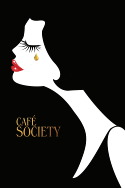
Review of Café Society (2016) by Alice S — 17 Aug 2016
Leave it to Woody Allen to coax a fabulous performance out of Kristen Stewart. I was hoping he'd make magic with her like he does for so many of his heroines/muses/ ingénues (I know, the paternal attention can be construed as icky), and he sure delivered, whether by crafty post-production or actually weaning her off her self-conscious tics (running her fingers through her hair, looking down and shaking/vibrating her head, squinting excessively, tsk-ing before speaking). I'd like to think he just tied her hair back with a cute headband, lit her like a sunset, trained the camera on her in his signature uncut shots, and dared her to move as little as possible.
The result is dazzling amber-hued perfection. She is natural and luminous as Vonnie, the affable, down-to-earth film studio secretary caught between her bigshot boss and his naïve, starry-eyed nephew. Her standing posture is willowy, her voice sounds a little more resonant, and there are a few languid body poses that just make her look oh-so foxy yet oh-so innocent at the same time. Even when she does tsk or shrug, she does it intentionally with volume and flat palms up, respectively. And her chic wardrobe of sunglasses, crop tops, and ankle socks under kitten heeled Mary Janes are defying me to make some terrible fashion decisions.
The scene of Phil and Vonnie's break-up is so reminiscent of Isaac and Tracy's in "Manhattan." KStew is just so still and quiet like Mariel Hemingway was, and it's sad. Not heartbreaking or poignant or whatever grandiose emotion. Just sad. Apparently, this was the first film since "Twilight" that KStew had to audition for, and I'm glad she seemed to have worked her bobby socks off.
So as you can tell, I barely paid attention to anything else when KStew was on screen. The story is a basic love triangle with a light sprinkling of Woody's ethical and nostalgia-infused subplots and an overdose of his pandering narration. Jesse Eisenberg is Jesse Eisenberg, and his character is ill-defined - sometimes gallant and diffident; sometimes cruel and artificial. Steve Carell's film exec character's impressive reputation is only spoken of and not shown, and Carell doesn't really possess that style of mogul charisma exuded by Bruce Willis - originally cast but fired for laxity - or even Paul Schneider, who plays a small role but with surprising gentlemanly elegance. Blake Lively is, of course, vibrant and classy as Bobby's wife. She doesn't seem to need coaching on how to be an ingénue. Anna Camp is rather sympathetic and unintentionally funny in her bit part as a nervous call-girl.
* Spoilers* The only portion of the film that I sensed KStew slipping is after her transformation into the Hollywood society wife. She shakes her head, furrows her brow, tucks her hair behind her ears - making her seem less secure despite her newly minted status. The huge feathered epaulets overwhelm her slim frame, and her hairstyle remains cutesy just sans headband, which invites her to play. Bobby and Vonnie's last goodbye in Central Park is also dully lit, and I wonder if Woody or KStew just got lazy or if it's all part of Woody's master plan. "A dream is just a dream," and their wistful romance, Vonnie's elite marriage, (and KStew's acting), are dimmed by the harsh light of reality.
This review of Café Society (2016) was written by Alice S on 17 Aug 2016.
Café Society has generally received positive reviews.
Was this review helpful?