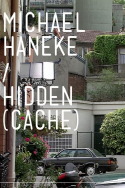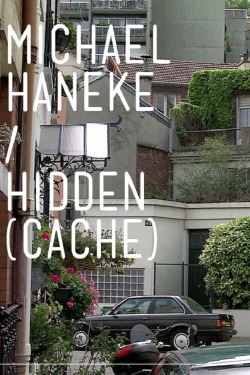
Review of Caché (2005) by Jonathan H — 26 Feb 2011
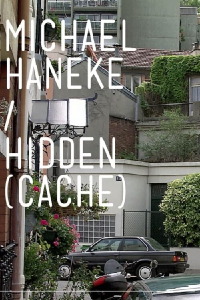
Michael Haneke's brilliant, challenging masterpiece begins with an outstanding solitary opening shot. At first it looks like a well framed long shot; then, he lets it linger for a while and you might think it's a POV shot. Is someone spying on the house in the center of the frame? Then, you realize it's a prerecorded videotape. The seamless integration of those three readings of one shot perfectly sets the stage for a thoughtful mediation on voyeurism and the age-old self-reflexive idea of the viewer being an active participant in the process by "watching.".
Then, Cache becomes a clinical, psychological and social study of a respectable individual in European society. Then, it morphs into a study of a larger contemporary European segment of its population. We start seeing themes of guilt and social responsibility develop, and we find out that a central character has a shaky past that correlates with the Paris massacre of 1961 (this is a Haneke film, after all). Then the film ends with a great, ambiguous medium static shot of a high school that will make you think for hours hence. But be careful: if you think too much about the plot, about "whodunit," you're missing the point. Sure, those things are fascinating to think about, and Haneke gives you plenty of clues to chew on (hell, even Ebert famously wrote about these clues), but the story is really a Macguffin about something much deeper -- which is Haneke's bold genius at work. This is his indictment of French bourgeois culture, and how we "hide" ourselves from the mistakes and despicable things we do. We avoid accountability at all costs. Georges' (Daniel Auteuil) final moments are directly symbolic of that.
Put it this way: everyone wants to know who sent the tapes. Haneke, when pressed with this question, slyly answered, "It was definitely one of the characters." He's absolutely right. It was him. He delivered a tape to France called "Cache" (hidden), so its citizens can hold the mirror up to their collective faces. It's a coy Brechtian clue, and a fantastic piece of self-reflexivity.
This review of Caché (2005) was written by Jonathan H on 26 Feb 2011.
Caché has generally received positive reviews.
Was this review helpful?