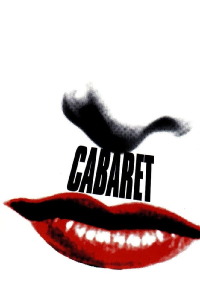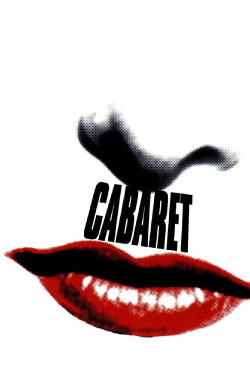
Review of Cabaret (1993) by Christopher M — 30 Mar 2008
Political upheaval in Weimar Germany sends the world of decadence and reverie which is Berlin in 1931 sailing straight into the heart of the apocalypse. Society, human rights, and happiness are all starting to crumble into a black hole of madness, greed, and hatred, all of which is masked as power and glory by Hitler and the Nazi party. Some can see through this masquerade, but most cannot, and Hitler's steady rise to power, though rarely mentioned, looms as a constant undertone to the film and places a dark and frightening atmosphere in continuous contrast to the world we do see.
That is a world of glamour, singing, dancing, booze, sex, fun, freedom, entertainment, and all sorts of other forms of 'je ne sais quois' which take place at one of Berlin's hottest spots, The Kit Kat Club. One of the club's performers, the free-spirited Sally Bowles, has met Brian Roberts, a serious, hard-working, and down to earth writer. They soon develop an unlikely friendship and he is taken out of his comfort zone and into The Kit Kat Club, where gender ambiguity, sex, sexuality, liquor, music and dancing are supposed to take our minds off of the seriousness of life, but where every act which takes place on stage strangely reflects what is going on in the outside world we are trying to forget. The Kit Kat Club's nameless, genderless Master of Ceremonies is the only one who seems to really know what is going on and we never know if he is for the Nazi party (which, if we take his lyrics and actions at face value, he is) or against the regime (which we can assume if we take everything he does in the film as irony and as a method of poking fun of his audience).
The film's musical numbers at the cabaret are brilliant because they are sung just as much to us as they are to the members of the club who are watching them. The best instance of this is the chorus line, in which the Master of Ceremonies is dressed in drag, happening at the same time as the murder of the Jewish family's dog. Those watching the film are wondering how people can just be at the Kit Kat Club, laughing and having a great time, while these acts of violence and hatred are simultaneously being committed. The sequence, however, goes beyond that and also asks us how we can sit down and laugh at a two-hour long movie when acts of hatred and violence that also need to be stopped are going on someplace right now, and we are doing nothing to put a stop to them. We know that these crimes against humanity are happening, and have sympathy for the victims, but there is nothing we can do, so why not entertain ourselves instead? The film's goal here isn't to ask us to have sympathy for the Germans, but instead to make us understand how it was that they let Nazis terrorize their country's citizens.
With the Master of Ceremonies acting almost as a twisted, seeing-eye, psychic, God-like figure, Sally Bowles as the wide-eyed, child-like, selfish whore we can't help but love, and Brian Roberts being the down-on-his-luck bisexual who can no longer watch the world come crashing down around him while the Nazi regime rises, we are given what is truly one of the most interesting and well-rounded sets of characters in film history. Bob Fosse's passionate direction of the movie is brilliant, as he presents us with show-stopping numbers which always contain an air of gloom and forboding, as we slowly watch Berlin, and the characters who live there, change and shift their paradigms and beliefs as, throughout the film, the Nazi party becomes more and more powerful. The technical aspects of the film, most importantly the cinematography and editing, are integral to the film's quality and are nothing short of top-notch. The film is equal parts comedy and drama, hilarious and disturbing. It makes you want to stand up and dance and yet still manages to leave you devestated and terrified. Under the hands of any other director, I think that this film would have been sloppy and all over the place, but Fosse had a vision and knew how to capture it all on camera perfectly.
This review of Cabaret (1993) was written by Christopher M on 30 Mar 2008.
Cabaret has generally received very positive reviews.
Was this review helpful?