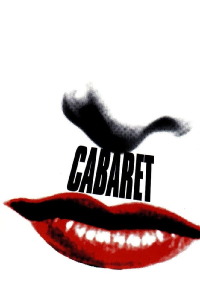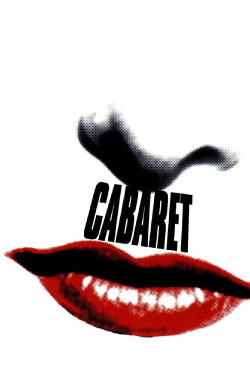
Review of Cabaret (1993) by Alec B — 01 Jun 2016
In the manner of 1979's "All That Jazz," Bob Fosse's other masterpiece, "Cabaret," released in 1972, is more kitchen sink real than it is shinily Technicolored. It's a musical without the sticky sweet dispositions of its sentimental peers. Without its superior soundtrack, it would, nonetheless, remain to be a tragic period drama of the highest quality - it's an astute piece of work whose puncturing storyline, whose soul-baring lead performance, arguably blur out its swankiest elements. It's the first musical I've ever seen (besides that 1979 Earth-shaker) in which the characters don't seem to be performing in stagey spectacles because they enjoy it, because they want to entertain us. They're performing to survive. The show will, at some point, stop. But for now, it must go on, or else their realities might really sink into their psyches and destroy them.
"Cabaret's" subversion of musical givens is the thing that has made it so much a part of the public conscious. Though we might envision Liza Minnelli's Sally Bowles, fitted with a top hat and cheap black lingerie, before we think of its downer of a plot, and though we tend to gravitate toward the grand finale rendition of its titular song instead of reliving its devastating social commentary, it doesn't so much feel like a musical as it does a darkened masterwork that just so happens to feature a hell of a lot of music.
It's an unparalleled experience that marked for the comeback of Fosse, a cherished theatrical director whose "Sweet Charity" (1969) bombed at the box-office, and it's the film that solidified Minnelli's rep as a star that could live up to the expectations set by her extraordinary mother.
"Cabaret" is set in 1931 Berlin, where decadence runs amok, where sexuality is fluid, and where the misanthropic Nazi party is slowly gaining momentum. Considerable time is spent in the Kit Kat Klub, a hip local joint that utilizes aspiring talent as a way to divert tourists and passersby.
With its many shows hosted by an unnamed but endlessly boisterous emcee (Joel Grey), the brightest aspect of the club is Sally Bowles, a bubbly American singer who dreams of someday making it as an actress. With magnificent stage presence and a sometimes intimidatingly unfiltered personality, she seems destined to become a star - but a young woman living in such a cruel world doesn't always have it so easy, which is why the inclusion of two men, who don't quite understand her, could lead to her downfall.
One of them is Brian Roberts (Michael York), an intellectual Brit in the process of earning his doctorate. The other is Maximillian von Heune (Helmut Griem), a charming baron. Sally and Brian meet through his moving into her boarding house; Max insinuates himself into her social circle and sweeps her off her feet through material seduction.
A love triangle is the last thing Sally needs in her already torrid life, especially one in which the men interested in her might also be interested in each other. Of the two, though, we prefer Brian, who is sharp, a little selfish and a little sad, but is nevertheless considerate of Sally and her stability. A conventional conclusion appears to await them, despite his sexual ambiguities. But an explosive setback, paired with the rising Nazism in Germany, only leaves personal land mines in their paths.
And while tragedy is generally not so welcome in a genre that prides itself in its ability to make its viewers feel good, it seems just about right in "Cabaret." As it unfolds, introducing itself as a showy romp only to shift gears toward three-hankie misfortune, we find ourselves in the presence of a film with a lot more in mind than mere engrossment. It's a musical that possesses performers that continue to act as they sing and dance - behind their smiles, we can still see the effects of the messy personal live of their characters. It's a historical piece wise enough to avoid overtly recreating the horrors of its time, characterizing menace and hate with gradual subtlety that shakes us in the way it builds until it becomes distinctly unavoidable.
"Cabaret" never forgets its period setting - it likes its style and its costumery, but it doesn't skimp on atrocity, either - and it never takes the abilities of its ensemble for granted. Minnelli, delivering an iconic performance, captures the spirit of Sally with such persuasion that she doesn't much seem to be a fictional character. She could also just be well-written (Jay Allen's screenplay is, after all, masterful), but Minnelli is so good that we are never able to see Sally as anything but a vulnerable figure. Her loud mouth and her infectious swagger are all a part of a front in need of maintaining. Breaking it would be cataclysmic.
Terrific, too, is Grey, who won and Oscar for his performance and who is not much more than an embodied narrator. Starring in some of the film's best musical moments, he's pivotal in defining the movie's ascending feeling that, no matter how well one entertains, societal evil is not something that can easily be stopped. York is understated as a love interest whose eloquence loses its flash as his own doubts radiate; Griem is damaging as a playboy so self-involved that he can hardly tell that his actions do, as a matter of fact, have ramifications.
But Fosse's direction is "Cabaret's" finest component. To make a movie as aesthetically complicated as this one seem seamless takes incredible dedication and perception. His fostering of cocksure song-and-dance sequences ("Maybe This Time" and "Money, Money" are highlights) and his determination to portray genuinely effectual scenes (the chilling performance of "Tomorrow Belongs to Me" will never lose its malevolence, and Sally and Brian's break-up is an outstanding showcase of acting) make "Cabaret" so much more than your typical musical - it's often been recognized as being the "last great" one (whatever that really means), and it more likely has to do with the way it emotionally moves us than it does with its music.
Comparing its artistic characteristics, though, is not completely necessary in distinguishing "Cabaret" as the masterpiece that it is. It's a tour-de-force, a marrying of varying types of performative perfection. Its freshness is still unprecedented. Maybe it is the last great musical, but only because so few are able to top it. We've had some good ones since. But none have matched in their poignancy, their power.
This review of Cabaret (1993) was written by Alec B on 01 Jun 2016.
Cabaret has generally received very positive reviews.
Was this review helpful?