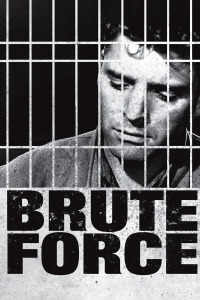
Review of Brute Force (1947) by Al M — 01 Oct 2010
Jules Dassin was one of American cinema's most daring and artful creators of film noir cinema, but he would eventually be blacklisted as a communist sympathizer by the House Committee on Un-American Activities.
And, in many ways, Brute Force exemplifies the type of anarchist, fight-the-power beliefs that would have grabbed the attention of McCarthy's gestapo cronies. On the surface, Brute Force is an indictment of the American penal system that further professionalizes and dehumanizes inmates while simultaneously transforming the guards into sadistic madmen who seem more ethically bankrupt than the prisoners from whom they supposedly protect society.
Already, on this most superficial level, Brute Force is a powerfully subversive piece of cinema, but it proceeds to make much more profound statements about the nature of power in general. Dassin uses the American prison as a microcosmic expression of institutionalized power, and Bruce Force ultimately argues that power corrupts the ethics of those who wield it and that any structure of power will inherently oppress, dehumanize, and alienate the laborers upon whom it has erected its structure.
As we watch the convicts revolt against the brutally oppressive guards, Brute Force becomes a film not just about abuses within the penal system but about inherently corrupt nature of leaders in general.
Undoubtedly, it is a powerfully Marxist tale about the ability of the proletariat to band together and overthrow the forces that enslave them. One of the most brutal noir films of its era, Brute Force will still make you squirm in sections while simultaneously inciting you to cheer for the downfall of the system.
This review of Brute Force (1947) was written by Al M on 01 Oct 2010.
Brute Force has generally received very positive reviews.
Was this review helpful?