Review of Bridesmaids (2011) by Dan P — 06 Dec 2012
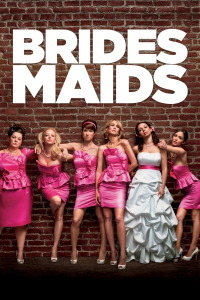
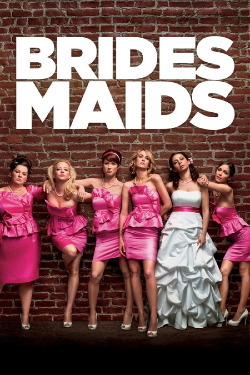
Like few comedies have done before, Bridesmaids reminds us that yes, women tell dirty jokes, cuss and get drunk, too. The new film by producer Judd Apatow is the funniest, freshest comedy to come around since he helmed the raunchy and intelligent Knocked Up. What many have failed to realize is that this movie is not, by any means, strictly pandering to a female audience, nor is it remotely close to being a "chick flick." What Bridesmaids does, among many things, is appeal very effectively to both sexes while generating laughter in an outlandish, clever and sustainable fashion. But, let's face it; the film's overarching subject matter is more relatable to females. Things such as the necessity for and acquisition of perfectly matched dresses are obvious, forlorn concepts to males, but this should not deter you in the least, dudes. These details are not what the movie sets out to tamper with. As I sat in the theater watching the humorous, quirky interplay between Annie (Kristen Wigg) and Lillian (Maya Rudolph), I was reminded, with an audible chuckle below my breath, of my own female friends. Several critics have labeled Bridesmaids as offensive and degrading to women, but why? The women in my life interact with me and others just as Annie and Lillian do. These friends of mine are beautiful, intelligent people, but they're also refreshingly candid, forthcoming and can tell a damned good dirty joke. That's exceptionally likeable, thus making the appeal of the women in Bridesmaids just the same.
Saturday Night Live's Kristen Wigg stars in this film, and is noticeably successful at projecting (if not channeling) the same kind of physical comedy that came so naturally to Lucille Ball and Carol Burnett. She's the lonely, down-and-out woman of middle age who has stumbled upon a temporary rough patch in her life. After the foreclosure of her business and the subsequent disappearance of her boyfriend, she begins taking part in no-strings-attached sex with a local businessman, but is otherwise left unsatisfied by his presence. The opening scene of the film contains a hilarious bout of intercourse between the two, leaving little to the imagination and much to be laughed about. Her childhood friend, Lillian, presents Annie with an unexpected surprise one evening, revealing that she's just become engaged-an occurrence that, much earlier, seemed unlikely to Lillian, especially after she reveals to Annie that "I don't know. He calls me dude a lot." What follows could be over-simplified as a female version of The Hangover. If we're looking for comparisons, perhaps the two are similar. If it can be seen that way, Bridesmaids most certainly puts its own touch on the formula. Annie quickly establishes a feud with Lillian's newest companion Helen (Rose Byrne), which creates a giving amount of laughs. Unfortunately for her, she can never quite outdo her newfound nemesis. Annie's first decision backfires, quickly giving way to the films' "gross out moment"-a scene that struck me as unfitting, but nonetheless created the shock it was intended to instill. If you're going to be eating at the theater, take precautions. You've been warned.
As the movie progresses, Annie can't seem to catch a break, especially as she struggles to keep up with the ultimate party planner. The funniest scene of the film occurs when all of the bridesmaids decide to fly to Las Vegas. Fearing the ensuing flight, Annie takes a mystery pill given to her by Helen, downs a class of scotch, then proceeds to suffer the unfortunate, albeit humorous side effects of an ill-advised mixture of prescription medicine and alcohol. But, take heed. I still haven't introduced the movie's funniest character, the crass, forthcoming and wheels-off Megan (Melissa McCarthy). Her scenes alone carry a vast majority of comedic weight, and delightfully so. Her introduction into the film stems from a hilarious verbal exchange between herself and Annie. It's made of the type of stuff you'd hear coming from the crazy cousin at a distant relatives wedding: humorously bizarre and always perplexing. As the film continues, Annie's world continues to break down, but is resurrected bit by bit by the presence of an Irish Policeman named Nathan (Chris O'Dowd). His role as a sort of revivalist plays out as expected, but that turns out to be just what Annie needs.
Through and through, Bridesmaids remains fresh, clever, raunchy-good comedy. The screenplay was co-written by Wiig, who, with this film, has legitimized herself as a genuinely funny presence in motion picture comedy. What's refreshing about Bridesmaids is how it creates well-developed characters that feel realistic as opposed to the formulaic caricatures that sometimes find themselves at the center of comedies. The screenplay never feels forced, nor does it pander to the type of humor that begs for our laughter. Sure, there are moments when it does aim for bigger-than-normal laughs, but it always remains reasonable. The path of our protagonist becomes predictable from about midway through the movie, but that's not necessarily a bad thing. In films like this we come to expect the expected. But, the expected is always acceptable in this genre when there's substance, good humor and catchy dialogue to support it. Another strength of Bridesmaids lies, believe it or not, in its tendency to drift effectively from seriousness to comedy. Outside of its laughs, it maintains a substantive message about the nature of regrouping after loss, and does it effectively. Finally, we have a movie that pays homage to the women I'm familiar with: the smart, funny, beautiful ones that can be just as crass and imperfect as their male counterparts.
This review of Bridesmaids (2011) was written by Dan P on 06 Dec 2012.
Bridesmaids has generally received positive reviews.
Was this review helpful?