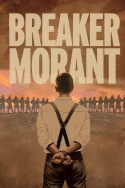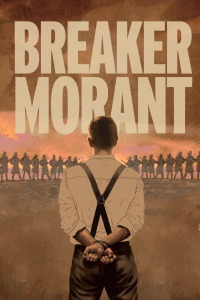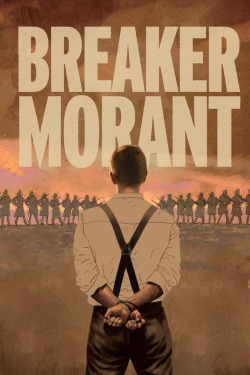
Review of Breaker Morant (1980) by David C — 22 Nov 2014
If a producer had received the stereotypical Hollywood pitch for "Breaker Morant," I imagine it would have gone something like this: "It takes place during a war-no, not one of the popular ones, it's the Boer War-and the protagonists are three probable war criminals, quite unrepentant... Likable? Well, one of them likes to recite his own poetry... Yes, it does have some beautiful outdoors shots, so we'll need to pay to send the whole cast and crew to South Africa, but most of the action will take place in an ugly little army prison where the characters debate the finer points of British military law and Edwardian era geopolitics.".
Luckily, if any producer at the South Australian Film Corporation received such a pitch, they agreed to make the film. Patriotism may have had something to do with the decision, however it was made, because as it turns out this is a thoroughly Australian historical drama. Rather quietly, beneath the shouted legalese of a movie court martial and the coldblooded depiction of a brutal guerrilla war, "Breaker Morant" is about three men from different strata of turn-of-the-century Australian society, and how their loyal service to the British crown in time of war lands them in deadly peril when the crown decides that they are more useful as scapegoats than as soldiers or subjects. In the most moving, character-driven scenes, each man remembers and longs for home, Australia, where they have families and where the title character once enjoyed riding and "breaking" horses. Meanwhile, the script takes numerous not-so-subtle digs at the part-German royal family and at Lord Kitchener, Britain's most famous soldier.
For a certain kind of patriotic and historically-minded Australian, this based-on-a-true story which was originally a play that premiered in Melbourne must be a rousing defense of Australian independence and Australian bravery. It's a fascinating watch even for those without a dog in that hunt, but it is also fair to ask whether the movie is too uncritical of its subjects. Are they, after all, war criminals? Or does the movie successfully make the case that the real guilt lay farther up the chain of command, and that the King's Australian soldiers were caught up in an unprecedented and complex kind of war from which nobody could come out both alive and clean? The tone at the end is harder to swallow if you haven't been persuaded of the latter interpretation. But those beautiful shots of the veldt, and the thoughtful examination of a historical moment not often brought to the big screen, make it a satisfying film regardless.
This review of Breaker Morant (1980) was written by David C on 22 Nov 2014.
Breaker Morant has generally received very positive reviews.
Was this review helpful?