Review of Born into Brothels: Calcutta's Red Light Kids (2004) by Shawne ~ — 04 May 2007
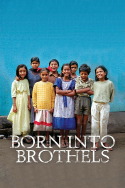
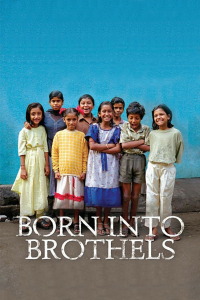
It's probably wrong to come away from a documentary feeling both enlightened and disappointed by the efforts of one person to make a huge difference in the lives of others... especially when the lives concerned are those of children, trapped as they are in a neverending cycle of poverty, destitution and plain, unspeakable horror. But [b]Born Into Brothels[/b], the Oscar winner for Best Documentary Feature in 2005, certainly had that (largely unintended) effect on me.
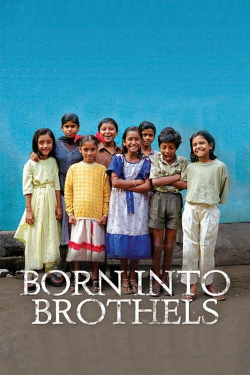
[b]BIB[/b] is about the tireless efforts of photographer Zana Briski (who, together with Ross Kauffman, writes and directs this film) to help eight bright, incredibly talented kids ensnared in Calcutta's infamous red light district. None of them seems to have much of a future: adorable Kochi is an errand girl for a local madam, quiet Suchitra born of a family of prostitutes and seemingly destined for the same fate, Avijit is the son of a hash-addicted father and a mother who works the streets in another village. Briski's plan is to allow them an outlet from the squalor and destitution that form the backdrop of their lives: she introduces the kids to cameras, takes them on field trips, holds photo exhibitions to display their work and raise awareness of the plights of such children. She also tries to get them off the streets, out of their homes and into schools, as paths to a future none of them would have otherwise.
You'd have to be a hopeless optimist on crack to think that there's a happy ending for every kid you'll meet here, however hard you wish for that to be the case. To the movie's credit, [b]BIB [/b]is, if nothing else, an unrelentingly tough picture of the seamy underbelly of Calcutta, flashing through narrow alleys teeming with life and death, where the hope in a young girl's eyes is as easily extinguished by her surroundings as by her need to support her family - making it both a history and a predetermined future she can't quite escape. It is particularly heartbreaking when Briski manages to get three of the sunniest, sweetest girls into a boarding school - and, despite the mumbled commitments of reluctant parents, you can't help but feel they're not going to last long in there. As Briski fights also for the remarkably talented Avijit, whose eye for composition and skill with a camera can't trump a family situation that leads him inexorably down the path of waywardness, it's nigh on impossible to shake the feeling that what you're seeing is just the smallest example of the hopeless existence led by much of millions of India's troubled poor. It's here that Briski's film finds its way into your heart: just as much through the kids' occasionally heartbreaking, raw photos of their lives that are sprinkled throughout the film, or via the haunting spectacle of a row of prostitutes waiting for their next client, captured by a shaky handheld camera hidden in a bag or wherever it would draw the least attention.
But here's what frustrated me about [b]BIB[/b] - unlike documentaries with consciously narrower scopes that focus on a very specific topic or event and explore the relevant ideas and implications thereof, such as [i]Murderball[/i] or [i]Capturing the Friedmans[/i], this one feels like it rightfully belongs to the category of educational documentaries. Sure, the narrow focus here is reserved for the lives of these eight kids, and it's certainly a useful prism to examine the intractable social problems that will always keep these kids from moving beyond their tragic origins. But the film barely hints at the far more fascinating, festering problem that informs the entire enterprise: the poverty trap and how this relates to the prostitution racket in India. [b]BIB [/b]could have been so much more, if it had taken the time to lay out the nature and extent of the problem, and to show, at least cursorily, how little there's been, and how much can still be done, and finally, [i]how [/i]it can be done.
While it's entertaining enough to watch Briski shepherd these kids through their photographic journeys, getting a glimpse of their individual personalities and the difficult circumstances in which each one finds him or herself along the way, it's difficult to shake the feeling that the documentary ultimately suffers from a disappointing lack of ambition. It could have meant so much more - instead, you come away with the rather unsatisfying impression that, aside from the fact that you [i]don't [/i]know much more about how change can be effected to at least try to ameliorate this particular problem, Briski barely made an impact in the lives of some of these kids however hard she tried. On both counts, that's a darn shame.
This review of Born into Brothels: Calcutta's Red Light Kids (2004) was written by Shawne ~ on 04 May 2007.
Born into Brothels: Calcutta's Red Light Kids has generally received very positive reviews.
Was this review helpful?