Review of Bonnie and Clyde (1967) by Philip C — 21 Dec 2010
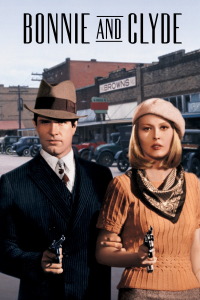
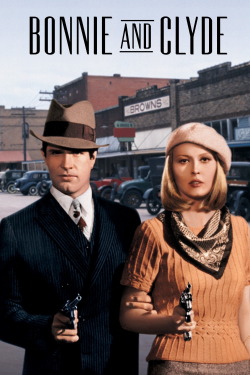
Warren Beatty and Faye Dunaway play the titular pair Clyde Barrow and Bonnie Parker. Now having not been born in the 30â(TM)s I have no idea whether or not their performances were accurate to the real deal, but on performance of the film alone I can say that they both did very commendable jobs. Beatty plays an impotent-start-up-excitable-gangster who lives and thrives off of a life of crime. He then meets Faye Dunaway when he happens upon her house. She drapes her naked frame over the window to her room and within a matter of seconds the viewer knows exactly what her character will be like for the rest of the film. Her physical nakedness can be symbolic of the carefree demeanour which is indicative of the free spirit that her character embodies. Dunaway plays a very excited young woman who wants something more from her boring life. When she meets Beatty, they immediately strike up a rather flighty romance over guns and bullets. Theyâ(TM)re both people looking for a way out of the daily grind. They both need something to spice up their tedious lives and they find that within each other. As well as Clyde and Bonnie mesh together, Beatty and Dunaway mesh together just as well. They work incredibly well onscreen and hereâ(TM)s what I think is the best part of the film. To have the film be believable while still entertaining is that the two main leads need to work together with solid chemistry, otherwise thereâ(TM)s no film worth watching. The two characters and the two actors come off as great character foils for each other and that works out quite nicely on screen.
Thereâ(TM)s also Michael J. Pollard as C.W. Moss whoâ(TM)s the third member to join the Barrow gang. I have actually never seen any of his other films but after his performance here I definitely think that I should, because he was very likeable in his role. He seems like the kind of character and actor that you could very easily be friends with who would back you up in a bar-fight without a second of hesitation. Thereâ(TM)s also Gene Hackman who shows up as Beattyâ(TM)s brother and Estelle Parsons who plays his wife. While I did very much enjoy seeing Hackman show up because I had no idea that he was in the film, the same canâ(TM)t be said for Parsons. The fact that she was so painfully unattractive decreased my enjoyment of the film tenfold so that every time she would be on screen I would have to look away in disgust. Now I donâ(TM)t want to be mean or anything but man she could probably win People Magazineâ(TM)s âMost Unattractive Woman In The Worldâ? Award. So much so that Sarah Jessica Parker would easily be bumped out of her so completely undeserved spot. On top of that, other than how incredibly unattractive she looks, her character in the film is just as equally irritating. Sheâ(TM)s like that person in a group of friends who nobody wants to hang around with and just tags along. She becomes part of the group by affiliation only because in the film sheâ(TM)s married to Hackman, so she has to go along for the ride.
Itâ(TM)s like when you and your friend want to hang just like the good old days until you realize that he brings his girlfriend over and it ruins your âguy timeâ?. Your friend who in no way ever could have gotten a girl actually âgets a girlâ?, so both you and he canâ(TM)t believe his luck. Then they begin to spend more and more time together until he forsakes the most important rule of all from The Bro Code: Bros Before Hoes. Watching her react to Hackman and Beatty felt very much like this kind of situation. She was the kind of character that you hope dies a horribly painful death. Naturally, she dies during one not-so lucky escape from the cops, or so I thought. My rejoicing at her death was bittersweet when it was cut too short, as I realized that no she hadnâ(TM)t died, but had just been grievously injured. What? Are you kidding me? She got shot in the eye, and if Iâ(TM)m not mistaken a bullet through there would kill a person unless theyâ(TM)re just really bloody lucky. The feeling I got in the pit of my stomach when I realized that she wasnâ(TM)t dead was akin to when the Calgary Flames being the underdogs that they were, lost in Game 7 of the 2003-2004 Stanley Cup Finals. The whole hockey season and this whole film I had been waiting for what Iâ(TM)d hoped and prayed would happen, but alas it was not meant to be. Last I checked, a bullet to the face was a kill-shot, but apparently anyone, even the worst kind of person who deserves to die can take it.
Despite how much I ruminated on her awful demise, I was still awarded with a small and relatively less satisfying consolation prize. Even though she was shot in the face and should have died, the bullet still caused large disfigurement so they had to bandage her up after her loss of sight. Now at least I donâ(TM)t have to look at her and turn away while shuttering. Now the only thing left to do is shoot her in the mouth to shut her up so it stops her from jabbering on. Then and only then, would I be able to die in restful peace. There was also a brief appearance by Gene Wilder as a man whoâ(TM)s kidnapped by the gang and is taken along for a ride that was most enjoyable to watch. If only he was in the film more as part of the gang then I think it would have made the film even better and I would have almost completely forgotten about Estelle Parsonsâ(TM) character, almostâ¦.
Having one writer working on a script is good because thereâ(TM)s a certain consistency to the way that theyâ(TM)ll write a story. If one writer works on a script then itâ(TM)s certain that theyâ(TM)ll know the story up and down from beginning to end. One writer knows exactly whatâ(TM)s needed in the story to keep it going. Adding on a second writer can be a little disconcerting because it usually indicates that the first writer was having issues with their draft and rewrites are needed. Now at the same time having a second writer can be a great benefit because it helps the writing process have a fresher perspective on the story and characters. But more often than not, having more than one writer onboard is the kiss of death, and God forbid have three writers work on the same project. Too many egos all working in the same room on the same thing at once can often lead to far too many prima donnas on set (just watch Tropic Thunder and thatâ(TM)ll give a good indication of what it could potentially turn into). The film is written by David Newman, Robert Benton and an unaccredited Robert Towne. Between the three men they share a large well of experience and genuine creativity that many writers can only dream of working on: Superman I and II, Kramer vs. Kramer, Bad Company, Chinatown and Mission Impossible I and II. Having all of these films under their collective belt is a very reassuring thing to look at when wondering if having three writers working on the same script is a good idea. I was a little hesitant before seeing the film due to the use of three writers but after looking at their collective filmographies I was far less concerned. Bonnie and Clyde fits seamlessly into the aforementioned list of classic films. The film like the other classics is as fast-moving as the bank-robbers themselves. The film clocks in at 1 hour and 52 minutes long and is never for one second disinteresting or disengaging. I found myself entirely involved within the fast-paced fabric of the storyâ(TM)s structure. From the opening minute of Bonnie and Clydeâ(TM)s introduction to their Tarantino-esque shoot-out demise I was fully enraptured in their bank-robbing story and waited in wide-eyed and excited anticipation of what would happen next. All one has to do is look at the three filmographies and the audience already knows that theyâ(TM)re in for a well paced and well written story with solidly fleshed out characters that you actually do care about before and up to the point where they die.
The music is composed by Charles Strouse who has had a rather lengthy career. Having worked on such popular films and television movies such as âAnnieâ?, âSupermanâ?, âJust Tell Me What You Wantâ?, âAlice in Wonderland Or Whatâ(TM)s A Kid Like You Doing In A Place Like This? Strouse has made a name for himself by not only working on many successful and highly popular films but also being credited for his work in many other such instances. His legacy lives on in things such as âFamily Guyâ?, âCharlie Bartlettâ?, âBeyond the Seaâ?, âShrek 2â?, âSecondhand Lionsâ?, âAdams Family Valuesâ?, âSaved By The Bellâ?, âDaveâ?, âThe Golden Girlsâ?, âAll Dogs Go To Heavenâ? and even âThe Price is Rightâ?. Strouse is a man who has worked for a very long time doing what he does by filling in films with some highly popular songs such as âTomorrowâ?, âOnce Upon a Timeâ?, âWhatâ(TM)s Mine Is Yoursâ?, âPut On a Happy Faceâ?, âYou Canâ(TM)t Keep a Good Dog Downâ? and âApplauseâ? just to name a few. After several decades of adding music into many films Charles Strouse has greatly added to the industry by filling out scene after scene, year after year that have left a lasting impact on many films in the past, the present and most certainly in the future.
I also definitely liked how well shot the film was. The cinematography was done by Burnett Guffey. For over forty years and ninety five films Guffey has worked on the cinematography on films rendering beautiful landscapes and filming many stars in his respectably lengthy career. Guffey has had much experience within his lifetime with cinematography working on such classic films such as âFrom Here To Eternityâ?, âAll The Kingâ(TM)s Menâ?, âHow To Succeed in Business Without Really Tryingâ?, âThree Stripes in the Sunâ?, âMeet Me on Broadwayâ? and âTahiti Nightsâ? just to name a few. The thing that I find most interesting about Bonnie and Clyde is that while it may be a movie from the 60â(TM)s, it looks like it was shot in the 30s and 40â(TM)s when the film takes place, but just in colour. This sense of nostalgia is ever-present here because it harkens back to the film noir genre. Morally ambiguous main characters and a femme fatale who would kill you just as quickly as sheâ(TM)d sleep with you. Despite the somewhat fictionalized story and the often-times over-the-top sequences, the way that the film is shot in the old 30â(TM)s and 40â(TM)s way, adds depth to realism which gives the film a much-needed âdocumentary feelâ? to it. What I think would have made the film even better which both Warren Beatty and I agree on, is that upon filming he wanted the film to be shot in black and white but unfortunately that never happened. Though while Iâ(TM)ve never really been a fan of black and white films (other than âSchindlerâ(TM)s Listâ?, âPsychoâ? and âItâ(TM)s a Wonderful Lifeâ?) Iâ(TM)m still interested to see what it would have looked like in black and white.
The film is directed by Arthur Penn who has had a rather long and prosperous career with film directing (âThe Left Handed Gunâ?, âThe Miracle Workerâ?, âThe Chaseâ? and âLumièreâ? as some examples) where most of his work has been critically praised. Bonnie and Clyde while still a very good film, feels like the runt of the litter here in terms of direction. I wasnâ(TM)t entirely sure what kind of tone Penn was going for here because it jumped around far too often. The film feels pretty inconsistent a lot of the time because it tries to be too much all at once. It starts out as a serious drama, then a burgeoning romance and then it devolves into a slapstick comedy then back to a drama, romance and comedy all over again. The film feels like it goes off on far too many tangents. When characters were shot and killed I wasnâ(TM)t sure whether to be sad or not because they didnâ(TM)t seem to take anything seriously. I think the genre-juggling was an especially poor choice back in 1967 upon the filmâ(TM)s initial release. People were shocked and appalled by the filmâ(TM)s blatant sexual overtones and relatively graphic imagery. Not to mention that the glorification of violence didnâ(TM)t help matters either. Now I didnâ(TM)t have a problem with the violence at all in the film (thanks to todayâ(TM)s increasingly desensitized viewership standards), in fact it was quite tame from my perspective (but of course shocking given the time) but it didnâ(TM)t really have any effect on me. It was less the actual violent acts and more the tone of the film that ruined it for me. Could the glorified violence have had more of an effect on me if the tones were more even or if there was only one tone? Iâ(TM)m sure that would have been the case. Had I been Mr. Penn I would have just stuck with drama and that way there would have been a much more poignant, poetic and hard-hitting ending as was probably intended. The end of the film details the bloody massacre as both Bonnie and Clyde are shot hundreds of times and blood pours out endlessly. Was it as effective as Iâ(TM)d hoped it would be? Thanks to the lighter tone of the earlier parts of the film I didnâ(TM)t think so. If Penn had kept the film more drama-heavy and the comedic parts less centric, then the brutal ending would have ended the way I think they originally intended it to be.
Overall Bonnie and Clyde is a well-acted, well-written, beautifully and somewhat esoterically shot, nicely composed cops and robbers classic that while very good could have been much better if it werenâ(TM)t for the irritatingly inconsistent tone of its otherwise masterful direction.
This review of Bonnie and Clyde (1967) was written by Philip C on 21 Dec 2010.
Bonnie and Clyde has generally received very positive reviews.
Was this review helpful?