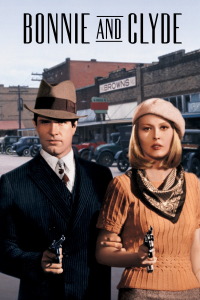
Review of Bonnie and Clyde (1967) by Spangle — 24 Mar 2017
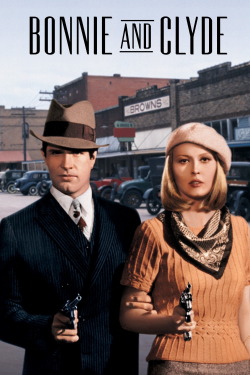
While not containing any nudity, Bonnie and Clyde jumps out of the gates by showing audiences that a new era was about to kick off in American cinema. No longer would sexuality be left to flirtatious hints in the dialogue and no longer would the violence be safe. Instead, Bonnie and Clyde ushered in New Hollywood, an auteur driven era that found American directors reveling in the lifting of the Hays code and lifting all censors from their work. However, American audiences still had to shed their own conceptions as to what can and cannot be allowed in a work of art and it was Bonnie and Clyde that started to make critics and audiences alike realize the potential of this new era. Opening up with Faye Dunaway nude with her back to the camera, it was clear that cinema was about to become far friskier. Rushing to the window without clothes on after hearing the mysterious Clyde Barrow (Warren Beatty) poking around with her mother's car, Dunaway's Bonnie Parker soon takes up with Clyde with Dunaway turning the iconic crime spree girl into a real sexpot. From trying to help Clyde with his impotence to stroking his gun and looking seductively into his eyes, Bonnie Parker practically single-handedly lifts America into this new era with her sultry disposition and raw sexuality.
Criticized for celebrating these two murderers, the film actually does anything but when you really look at it all. Bonnie and Clyde are the protagonists, yes, but the film shows their insanity, their hubris, their stupidity, and their greed. Always confident they will never be caught, they take chances and mock those that chase them. They take photos with the police and meet up with random people from whom they had stolen a car. These are two dumb kids who, while maybe not wholly evil, are malevolently moronic. Any average criminal would get caught, but the duo were the benefits of their free wheeling attitude and willingness to drive across the whole of America in committing their crimes. Turning them into myths, the two would show up randomly into a town and rob a bank while the newspaper would attribute them with three times as many robberies in places they had never been. They were ghosts and the go-to for any news story. Had they not driven all over and the media not started printing falsehoods, it is entirely possible they would have been able to be tracked by the police. Instead, it was a wild goose chase until they were able to turn CW Moss (Michael J. Pollard) against the couple.
Unafraid to show the graphic results of the couple's violence, we see them kill innocents and kill cops right up close. We see them take on the cops and, yet, we root for them. Through all of their stupidity and murderous intent, the couple are classic cinematic antiheroes who make you root for them out of respect for their pure brazenness and utter lack of inhibition. The film's portrayal of violence, however, breaks through this a bit. From when they kill innocents to when they are finally executed in a hail of bullets, we see what this life of crime brings: violence and a lot of it. Director Arthur Penn uses this violence, alongside the sexuality, to usher in that new era of Hollywood, but to also jar the audience. The violence is unexpected from a film released in 1967. For it to be so bloody and so graphic, audiences at the time had to be running for the hills. I mean, we see a guy get shot five inches from the camera. We see a woman lose her eye. This is a brutal, brutal film. Penn does this shocking level of violence to underscore that Bonnie and Clyde are not to be revered. Their hands are covered in blood and their hubris has caused many good people to die and leave their families behind. While the papers and their legacy has romanticized their status to an insane degree, the gritty details are simple: they are murderers. Bonnie and Clyde is a film that is unafraid to confront this reality, no matter how much it may shock.
A boundary smashing film, Arthur Penn's rendition of the classic crime couple Bonnie and Clyde finds Penn introducing overt sexuality, sensuality, and violence to American films in telling this classic story. Not romanticizing it in the least, Penn offers up gruesome recountings of the couple's crime spree across America and shows their immaturity and pride, which ultimately led to their demise in a hail of bullets. Finding Warren Beatty and Faye Dunaway doing some of their best work as the classic couple alongside a charismatic and scenery chewing Gene Hackman, Bonnie and Clyde ushered in a new era in film while decisively closing the book on the more romantic beliefs some had regarding Bonnie and Clyde. There is no romance in violence, underscored by Clyde's impotence and the film's refusal to show them as anything but remorseless idiots that stole from others simply because they could, while being unafraid to shoot their way out of a tight spot.
This review of Bonnie and Clyde (1967) was written by Spangle on 24 Mar 2017.
Bonnie and Clyde has generally received very positive reviews.
Was this review helpful?